
Amlodipine Side Effects: What to Expect and How to Manage Them
If you were given amlodipine for high blood pressure or angina, you likely expected a treatment that would help without causing too much disruption. Still, many people notice new symptoms soon after beginning the medication. Swollen ankles, unusual tiredness, headaches, dizziness, or a sudden warm flush in the face are among the most commonly reported changes.
These side effects can be unsettling, especially when you are already focused on protecting your heart health. The reassuring part is that most of them are known, usually mild, and often improve as your body gets used to the medicine. In many cases, simple daily adjustments can make them easier to handle.
This guide explains the most common side effects of amlodipine using clear, everyday language. You will also learn why they happen and what practical steps may help reduce discomfort.
What Is Amlodipine and Why Can It Cause Side Effects?
Amlodipine is a calcium channel blocker, a type of medicine that relaxes and widens blood vessels. This makes it easier for blood to move through the body, which helps lower blood pressure and decreases strain on the heart.
That blood vessel relaxation is the reason the drug works so well, but it can also explain many of its side effects. As circulation changes, some people experience fluid buildup, flushing, dizziness, or fatigue.
Medical references such as the Mayo Clinic and Drugs.com note that side effects tend to be more noticeable:
- when treatment first begins
- after a dose increase
- in people taking higher doses
Not everyone has problems with amlodipine, but understanding the possible reactions makes it easier to know what is normal and when to call your doctor.

The Most Common Amlodipine Side Effects
Below are the side effects most often reported in clinical data and patient experience.
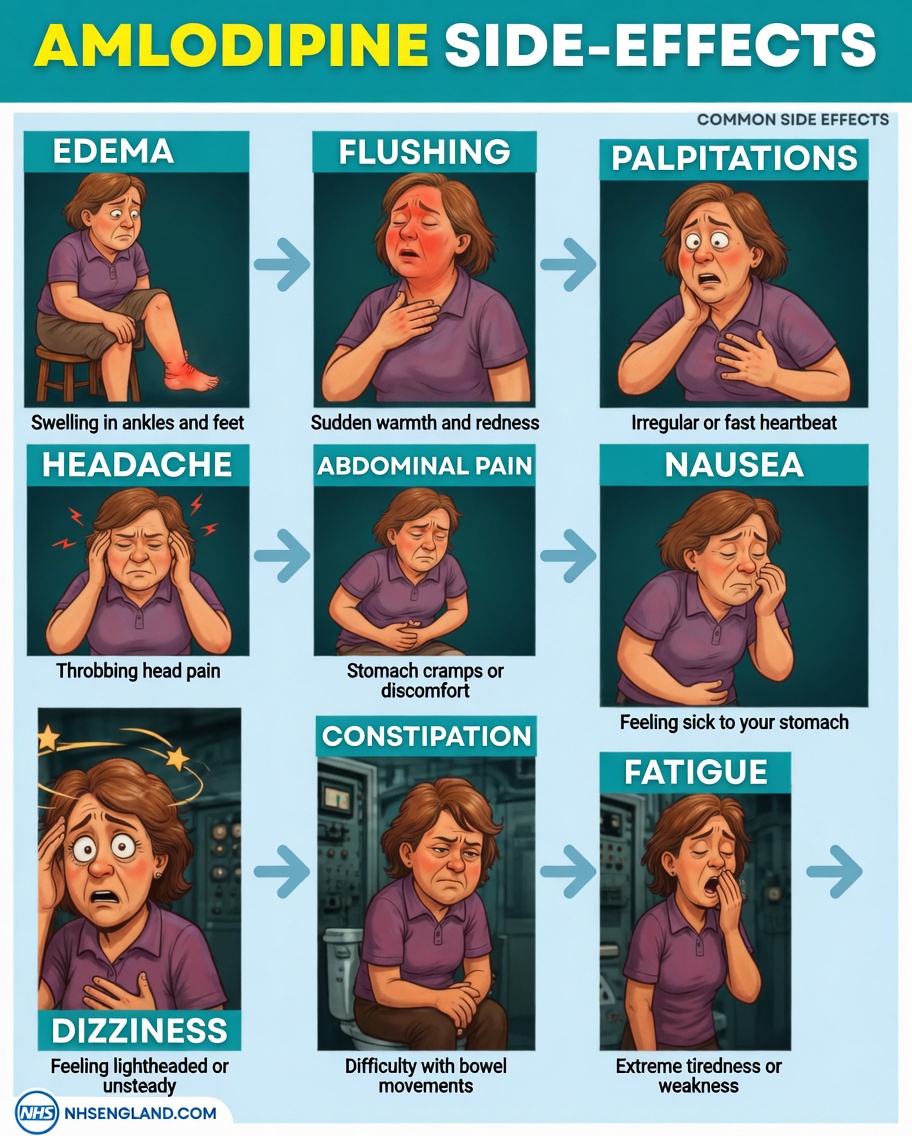
1. Swelling in the Ankles, Feet, or Lower Legs
Swelling, also called edema, is one of the best-known side effects of amlodipine. Some reports suggest it affects around 10% to 15% of users. Because the medication relaxes blood vessels, fluid can collect more easily in the lower body, especially later in the day.
You may notice:
- tighter shoes by evening
- deeper sock marks
- puffiness around the ankles or feet
This swelling is usually mild, but it can become uncomfortable.
What may help:
- raise your legs when sitting
- limit salt if your doctor recommends it
- use compression socks if approved by a healthcare professional
- discuss dose changes if swelling continues
2. Fatigue or Low Energy
Many people report feeling more tired than usual after starting amlodipine. This can show up as general fatigue, sluggishness, or reduced stamina during the day.
This often happens because the body is adjusting to changes in blood pressure and circulation.
Helpful steps:
- drink enough water
- keep a regular sleep schedule
- try light movement such as walking
- tell your doctor if tiredness does not improve
3. Dizziness or Lightheadedness
Amlodipine can sometimes make you feel dizzy, especially when standing up quickly. This is often related to a drop in blood pressure and may be more noticeable at the beginning of treatment.
To reduce the risk:
- stand up slowly from bed or a chair
- avoid sudden changes in position
- sit or lie down if you feel faint
If dizziness becomes severe or causes fainting, seek medical advice promptly.
4. Flushing or Warmth in the Face
Some people notice a sudden feeling of heat or redness in the face, neck, or upper chest. This happens because blood vessels widen, increasing blood flow near the skin.
Although usually harmless, it can feel uncomfortable or embarrassing.
Try this:
- stay in cooler rooms when possible
- avoid overheating
- give it time, since it often fades as the body adjusts
5. Headaches
Headaches are commonly reported when starting amlodipine. They are usually mild and tend to improve over time.
You may get relief by:
- staying hydrated
- resting when needed
- using an over-the-counter pain reliever only if your doctor says it is safe
6. Nausea or Upset Stomach
Some users experience nausea, indigestion, stomach discomfort, or mild abdominal pain while taking amlodipine.
Simple changes can help, such as:
- eating smaller meals
- avoiding very heavy or greasy foods
- taking note of whether symptoms appear at a certain time of day

7. Palpitations or a Noticeable Heartbeat
You may occasionally become more aware of your heartbeat, or feel pounding, fluttering, or skipped beats.
This can be related to the drug's effects on the cardiovascular system. It is often not dangerous, but it should not be ignored if it continues.
What to do:
- monitor how often it happens
- write down when it occurs
- contact your doctor if it becomes frequent or concerning
8. Muscle Cramps or Weakness
Some people mention muscle cramps, mild weakness, or a heavy feeling in the limbs while taking amlodipine.
These symptoms may improve with:
- gentle stretching
- regular movement
- staying active within your comfort level
9. Sleepiness or Drowsiness
In addition to general fatigue, amlodipine may cause drowsiness in some individuals. This can affect concentration and alertness.
Until you know how the medication affects you:
- avoid driving if you feel sleepy
- be careful with machinery or tasks that require focus
10. Swollen or Tender Gums
A less common but notable side effect is gingival hyperplasia, which means the gums become enlarged, puffy, or tender.
Good dental care can help reduce this risk:
- brush thoroughly every day
- floss regularly
- keep routine dental appointments
11. Skin Warmth, Flushing, or Mild Rash
In some cases, flushing is not limited to the face. Mild skin warmth or rash may also occur in other areas.
It is a good idea to:
- keep skin moisturized
- watch for worsening irritation
- report persistent skin changes to your doctor
12. Other Less Common Effects
Less frequently reported side effects include:
- back pain
- nasal congestion
- changes in urination
- mild digestive complaints
These are usually not serious, but they are still worth discussing if they become bothersome or persistent.
How to Manage Amlodipine Side Effects
If side effects are mild, a few practical habits may make a big difference.
Useful strategies include:
- Track your symptoms: Keep a simple daily record of what you feel, when it happens, and how severe it is.
- Take the medication consistently: Use amlodipine at the same time each day.
- Stay hydrated: Drinking enough water may help with headaches, fatigue, and dizziness.
- Reduce excess salt: This may be especially useful if swelling is a problem.
- Stand up slowly: This can help prevent lightheadedness.
- Elevate your legs: Useful if you develop ankle or foot swelling.
- Keep regular appointments: Blood pressure checks and follow-up visits are important.
Small lifestyle changes, combined with awareness of your symptoms, can often make treatment much more comfortable.
What Can Increase the Chance of Side Effects?
Several factors may affect how strongly amlodipine side effects appear.
Common influences include:
- Dose: Higher doses are more often linked to swelling and other reactions.
- Sex: Some side effects may be reported more often in women.
- Other medications: Drug interactions can change how amlodipine works in the body.
- Dietary factors: Large amounts of grapefruit juice may raise amlodipine levels and make side effects worse.
Always check with your healthcare provider before changing your dose, adding supplements, or making major dietary changes.
When to Contact Your Doctor
Most amlodipine side effects are mild and improve over time, but some symptoms need prompt medical attention.
Contact a healthcare professional right away if you experience:
- severe dizziness
- fainting
- chest pain or pressure
- irregular heartbeat
- significant or worsening swelling
- signs of an allergic reaction, such as rash, itching, or swelling of the face or throat
- yellowing of the skin or eyes
- dark urine, which may suggest a liver problem
If side effects are interfering with daily life, your doctor may adjust the dose, recommend ways to ease symptoms, or switch you to another medication.
Conclusion
Amlodipine is a widely prescribed medicine that helps many people control high blood pressure and reduce heart-related strain. Like any medication, it can cause side effects, but the most common ones, such as swelling, fatigue, dizziness, or flushing, are generally manageable.
For many users, these symptoms lessen after the first days or weeks of treatment. Staying informed, paying attention to how your body responds, and keeping open communication with your healthcare provider can help you get the benefits of amlodipine while minimizing discomfort.
FAQ
Is amlodipine swelling dangerous?
Usually, no. Swelling from amlodipine is often mild and happens because blood vessels relax, allowing fluid to collect in the lower legs or feet. However, if the swelling is severe, sudden, or painful, you should contact your doctor to rule out other causes.
How long do amlodipine side effects last?
Many side effects improve within a few days to a few weeks as the body adapts. Some, especially ankle swelling, may continue longer and may require management or a dose adjustment.
Can I stop taking amlodipine if the side effects are bothering me?
Do not stop amlodipine suddenly unless your doctor tells you to. Stopping on your own can cause your blood pressure to rise quickly. If side effects are difficult to tolerate, speak with your healthcare provider about safer options.