7 Early Heart Warning Signs You Should Not Ignore
Many people notice small day-to-day changes in their body and assume they are caused by a packed schedule, getting older, or normal stress. However, these mild symptoms can sometimes be early signs of heart-related problems that build slowly over time and remain unnoticed until they become serious. The encouraging part is that recognizing your body’s signals early can help you take action. One sign in particular—the sixth one—often shows up in the lower body and is commonly brushed aside.
The 7 Main Warning Signs to Notice
According to information from trusted organizations such as the American Heart Association and the Mayo Clinic, some individuals report early symptoms weeks—or even about a month—before a cardiac event. These signs do not guarantee a heart problem, but they are recurring patterns seen in research.
The seven warning signs include:
- Ongoing fatigue that does not improve with rest
- Shortness of breath during everyday activities
- Mild chest pressure or discomfort
- Trouble sleeping or restless nights
- Nausea, indigestion, or stomach discomfort
- Swelling in the feet, ankles, or legs
- Dizziness, lightheadedness, or unexplained anxiety
Let’s break down each symptom so it is easier to identify in real life.
1. Persistent Fatigue Even After Rest
If you feel unusually drained after getting enough sleep or find that simple activities leave you exhausted, this may be worth paying attention to. Medical studies have found that severe tiredness appears in many women before heart events, with some research reporting rates as high as 70 percent.
When blood flow is reduced, the heart has to work harder to do its job. That extra effort can quickly reduce your energy. Unfortunately, many people assume this kind of fatigue is due to work stress, poor sleep, or a vitamin deficiency and never look deeper.
2. Shortness of Breath During Routine Activity
If climbing stairs, doing housework, or taking a walk suddenly feels more difficult than usual, your heart may not be circulating oxygen-rich blood efficiently. The Mayo Clinic notes that shortness of breath can appear weeks before a heart event and often shows up along with fatigue.
This symptom is especially important if it happens during normal activity rather than intense exercise.
3. Mild Chest Pressure or Discomfort
Early heart symptoms are not always dramatic. Instead of severe pain, you may notice a dull ache, tightness, pressure, or fullness in the center of the chest that comes and goes. Because it can feel similar to heartburn, muscle strain, or simple indigestion, many people overlook it.
Research consistently shows that chest discomfort is one of the most common early warning signs, even when it seems mild.
4. Sleep Problems or Restless Nights
Another possible clue is a sudden change in sleep quality. You may wake up often, struggle to fall asleep, or feel restless at night despite being tired. Some studies suggest that poor sleep may be linked to increased strain on the heart, especially when the body is under stress overnight.
If your sleep pattern changes without a clear reason, it may be worth noting alongside other symptoms.
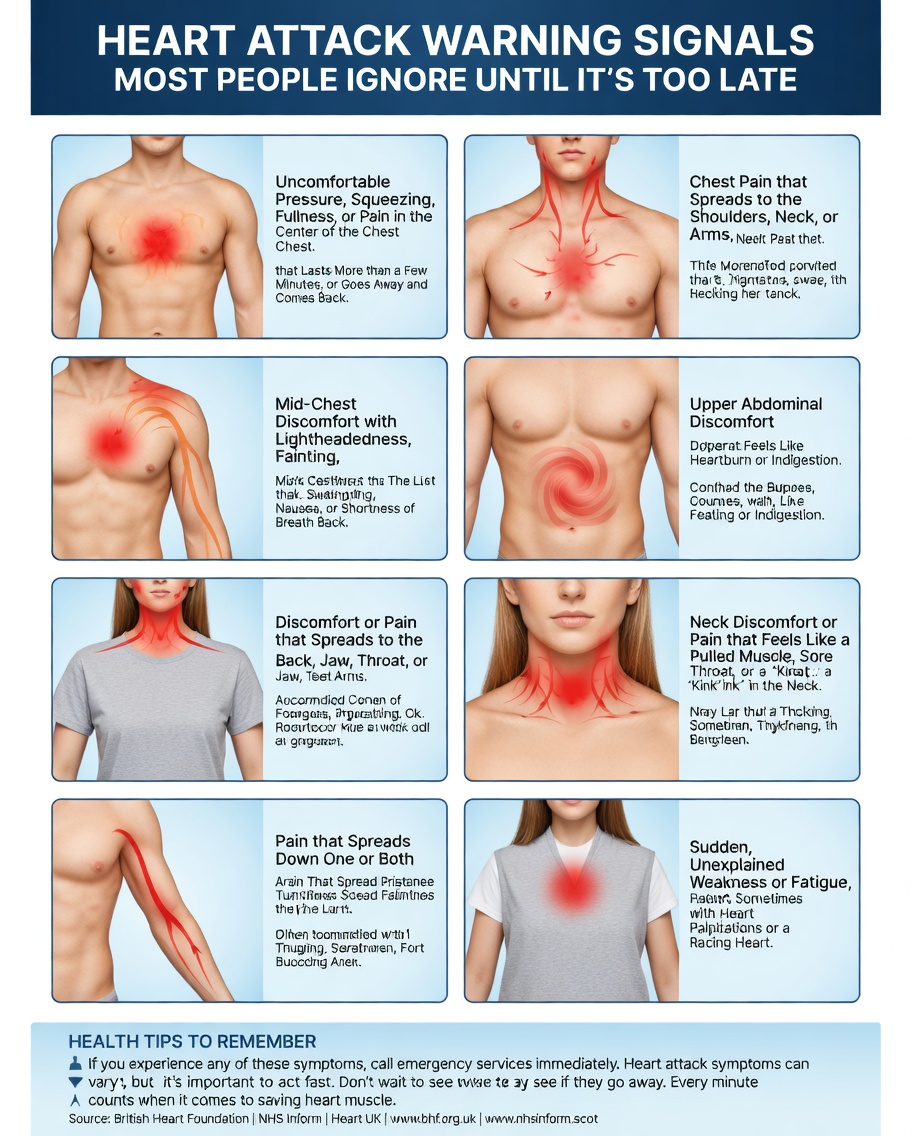
5. Indigestion, Nausea, or Stomach Upset
A bloated feeling, queasiness, or unexplained stomach discomfort can easily be mistaken for something you ate. But the heart and digestive system share nerve pathways, which means heart-related distress can sometimes feel like a digestive issue.
Health experts point out that this symptom may be more common in women and can begin subtly before other warning signs become stronger.
6. Swelling in the Feet, Ankles, or Legs
This is one of the most overlooked signs and often the most visible. Puffiness in the lower legs, swollen ankles, tight shoes, or deep marks left by socks may indicate fluid retention.
When the heart is not pumping effectively, blood can begin to back up in the veins. Gravity then causes fluid to collect in the lower body. Heart health resources frequently mention swelling in the feet, ankles, or legs as a possible early warning sign because it is easy to see—but also easy to dismiss.
Many people blame it on standing too long, eating too much salt, or simply aging. Still, if the swelling is new, ongoing, or affects only one side, it deserves closer attention.
7. Dizziness, Lightheadedness, or Sudden Anxiety
Feeling faint when you stand up, becoming unexpectedly dizzy, or having a sudden sense that something is wrong can also be important warning signs. These sensations may happen when blood flow to the brain becomes less stable.
Research suggests they often appear together with other symptoms and should not be ignored, especially when there is no obvious explanation.
Why These Symptoms Matter
Any one of these signs can be caused by common issues such as dehydration, stress, poor sleep, or a minor illness. That is why doctors focus on patterns instead of isolated symptoms. When several of these warning signs appear together over days or weeks, they become more meaningful.
The American Heart Association emphasizes that early recognition can save lives. Getting medical attention sooner rather than later can make a major difference.
Practical Steps You Can Take Today
You do not have to simply wait and wonder. There are a few simple things you can do right away to support your heart health and monitor changes more clearly:
- Keep a symptom journal and write down when each symptom happens and what you were doing
- Book a medical check-up, even if the symptoms seem minor
- Add gentle physical activity, such as a 30-minute walk each day
- Choose heart-supportive foods like leafy greens, berries, and whole grains
- Reduce excess salt to help manage fluid retention
- Use stress-management techniques such as deep breathing or short meditation sessions
These everyday habits may seem small, but together they can support better cardiovascular health over time.
Why These Signs Are Easy to Miss
What makes these early heart warning signs so important is also what makes them easy to overlook: they often seem ordinary. One day you may just feel more tired than usual, and the next day you may notice swollen ankles or mild nausea.
The goal is not to panic, but to stay aware. Many people who later experienced serious heart issues reported that they had noticed these symptoms earlier and wished they had taken them more seriously.
Frequently Asked Questions
Can these symptoms really begin a month before a heart event?
Yes, some studies show that early symptoms can start weeks or even about a month beforehand. In other cases, they may appear much closer to the event. The timeline is different for each person.
Do men and women experience the same heart warning signs?
Not always. Women are more likely to report subtle signs such as fatigue, nausea, or discomfort outside the chest area. Men may notice chest pressure sooner. Both should take any unusual pattern seriously.
What if I only have one or two of these symptoms?
A single symptom does not automatically mean there is a heart problem. However, if it continues, becomes stronger, or appears along with other signs, speaking with a healthcare professional is a smart step.
Listen Early, Act Early
Paying attention to your body is one of the best ways to protect your long-term health. By recognizing these seven early warning signs—especially the commonly ignored swelling in the feet, ankles, or legs—you can respond sooner and make more informed decisions.
Small signs should not always be dismissed. Sometimes, noticing a change today can help protect your heart tomorrow.