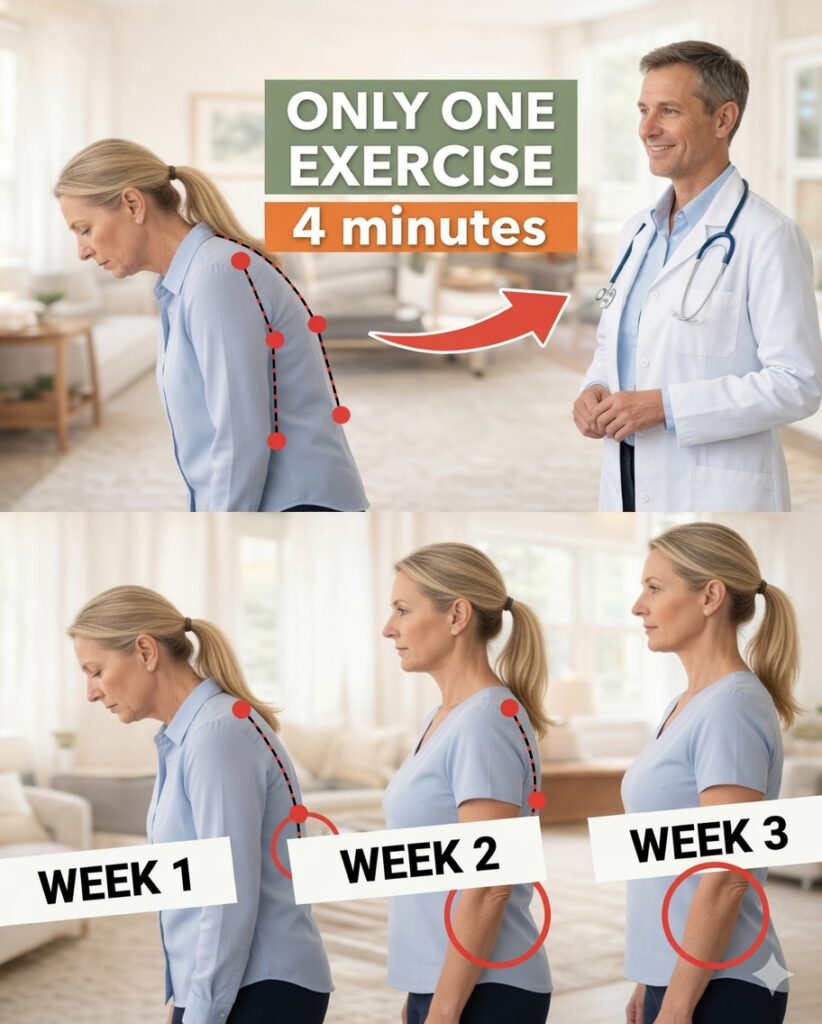
Stiff Neck and Rounded Shoulders After 60? A Simple 4-Minute Routine Can Ease Cervical Pressure and Improve Posture Naturally
Have you noticed that as the years go by, your head seems to drift forward and your shoulders start to round? Many adults over 60 experience this shift without knowing exactly when it began. Decades of desk work, frequent screen use, and everyday habits can slowly pull the head out of alignment—building tension in the neck and upper back.
This “forward head” posture doesn’t just change how you look. It can contribute to discomfort, low energy, shallower breathing, and even subtle balance issues. Many people assume it’s an unavoidable part of aging—but it doesn’t always have to be.
The encouraging news: gentle, intentional movement can help your body return toward a more natural alignment. There’s a short daily routine that takes about 4 minutes and may help reduce tension, support better posture, and help you feel taller and lighter again. Read to the end to learn how to do it.
Why Forward Head Posture Often Increases After 60
As we age, posture changes commonly develop due to long hours of sitting, reduced physical activity, or the body adapting to avoid old aches and pains. When the head sits forward of the shoulders, the load on the cervical spine increases significantly.
Over time, that extra strain may contribute to:
- Neck stiffness
- Shorter, shallower breathing
- Daytime fatigue
- Subtle changes in balance
And while many people try quick fixes—like forcing themselves to “stand up straight” or wearing rigid posture devices—these approaches often fall short because they overlook a key player: the nervous system. If your brain has learned that a forward-leaning posture is “normal,” sudden corrections can trigger muscle guarding and resistance.
That’s why gentle approaches often create more lasting change.
Why a Gentle 4-Minute Routine Can Make a Difference
After 60, improving posture is often less about brute strength and more about relaxing, restoring mobility, and retraining the body. Slow, mindful movements can signal safety to the nervous system, allowing deep support muscles to re-engage naturally.
This routine includes four easy steps:
- Neck awareness warm-up
- Gentle chin tuck with shoulder blade activation
- Light cervical traction using a towel
- Upper-back opening (thoracic extension)
For best results, do it once daily—in the morning or after long periods of sitting.
Step 1: Gentle Neck Warm-Up (60–90 seconds)
Sit or stand comfortably. Rest your hands on your thighs or let them relax behind your back.
Move slowly:
- Turn your head to the right, return to center
- Turn your head to the left, return to center
Continue for about 30 seconds.
Then add these gentle motions:
- Chin toward the chest
- Look slightly upward (without compressing the neck)
- Side bends (ear toward shoulder)
Breathe slowly throughout. Only move within a comfortable range.
This warm-up helps reduce stiffness and improves your awareness of where your neck sits in space.
Step 2: Chin Retraction with Active Shoulder Blades (60 seconds)
Sit or stand with your spine in a comfortable, tall position.
- Gently draw your shoulder blades slightly together (as if holding a pencil between them).
- Glide your head straight backward to create a mild “double chin.”
- Keep your eyes looking forward (avoid tilting the head up or down).
Hold for 10–15 seconds, breathing calmly.
Relax, then repeat 3 times.
This step supports the deep neck stabilizers and mid-back muscles that help keep the head stacked over the shoulders.
Step 3: Light Cervical Traction with a Towel (60 seconds)
Use a small rolled towel.
Sit on a sturdy chair and place the towel at the base of your skull (where the head meets the neck). Let your head rest gently into it.
Imagine the crown of your head lengthening slightly upward.
Take slow breaths and hold for 15–20 seconds.
Repeat 3 times.
This may reduce the sensation of compression in the neck and create a subtle “lightening” effect.
Step 4: Upper-Back Opening (Thoracic Extension) (60–90 seconds)
Lie on your back with a rolled towel or small cushion placed under your upper back (just below the shoulder blades).
- Knees bent
- Feet flat on the floor
- Arms open with palms facing up
Breathe deeply—let the chest expand as you inhale, and allow the shoulders to soften as you exhale.
Stay here for 30–60 seconds.
This position encourages the chest to open, improves upper-back mobility, and makes an upright posture feel more natural.
Tips to Get Better Results
- Attach the routine to an existing habit (for example, after brushing your teeth).
- Check your posture in a mirror once a week to notice gradual progress.
- Practice a few slow belly breaths during the day to reduce tension and support alignment.
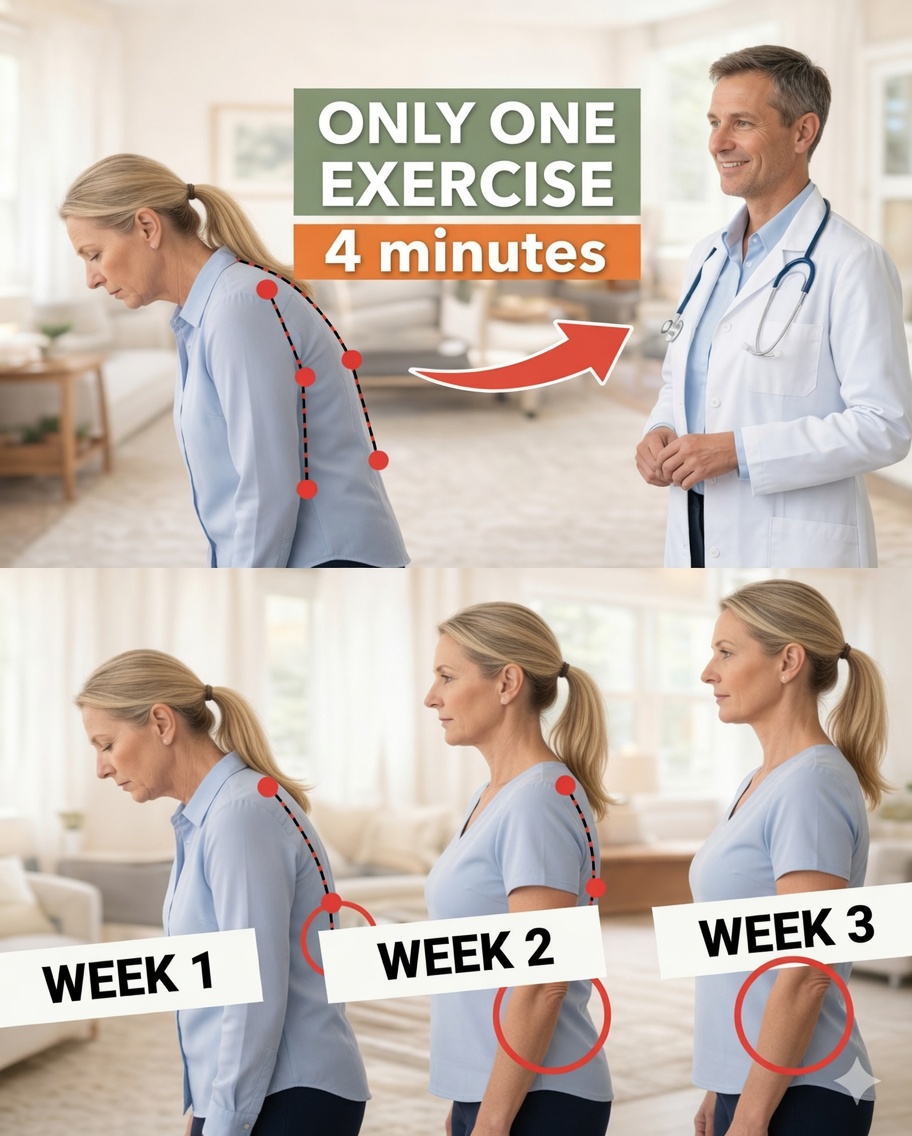
With consistent practice, many people begin to notice changes within 1–4 weeks, such as less neck tightness, easier breathing, and a more upright, relaxed posture.
One Key Idea to Remember
Posture isn’t only about muscles—it’s also nervous system memory. Gentle movements, steady breathing, and attention help the body learn a new alignment pattern without fighting against it.
Start slowly, stay consistent, and give your body time to adapt.
Safety Note
This content is for informational purposes and does not replace professional medical advice. Speak with a qualified healthcare provider before starting new exercises—especially if you have neck pain, dizziness, osteoporosis, or balance concerns.