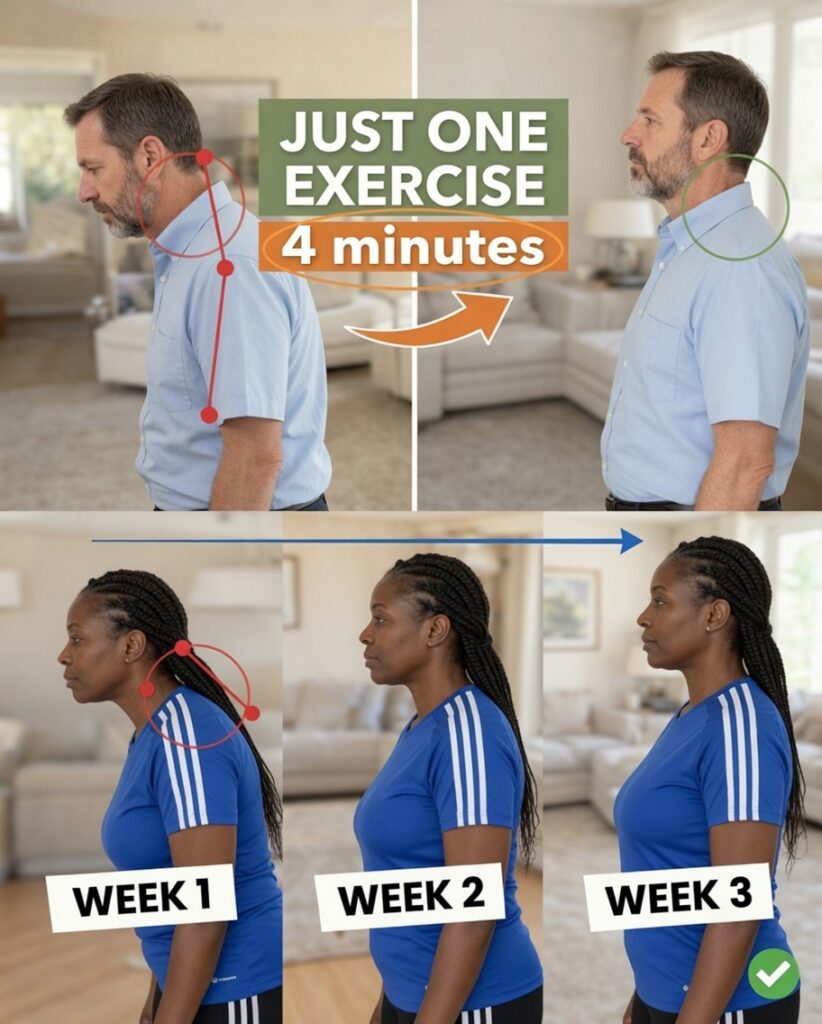
Is Your Head Quietly Drifting Forward? A Gentle 4-Minute Routine to Ease Neck Tension and Improve Posture After 60
Have you noticed that, over the years, your head seems to sit farther in front of your body—while your shoulders round forward and your upper back starts to curve? Many adults over 60 recognize this shift. It can lead to neck discomfort, daytime fatigue, shallower breathing, and even a slight feeling of unsteadiness while walking.
The encouraging news: you can make progress in a simple, safe way—without pushing hard or forcing your body.
With slow, mindful movements, your body can gradually return toward a healthier alignment. A short routine—just 4 minutes a day—may help your neck and upper back feel lighter and more supported over time. Read to the end to learn exactly how to do it.
Why Forward Head Posture Often Gets Worse After 60
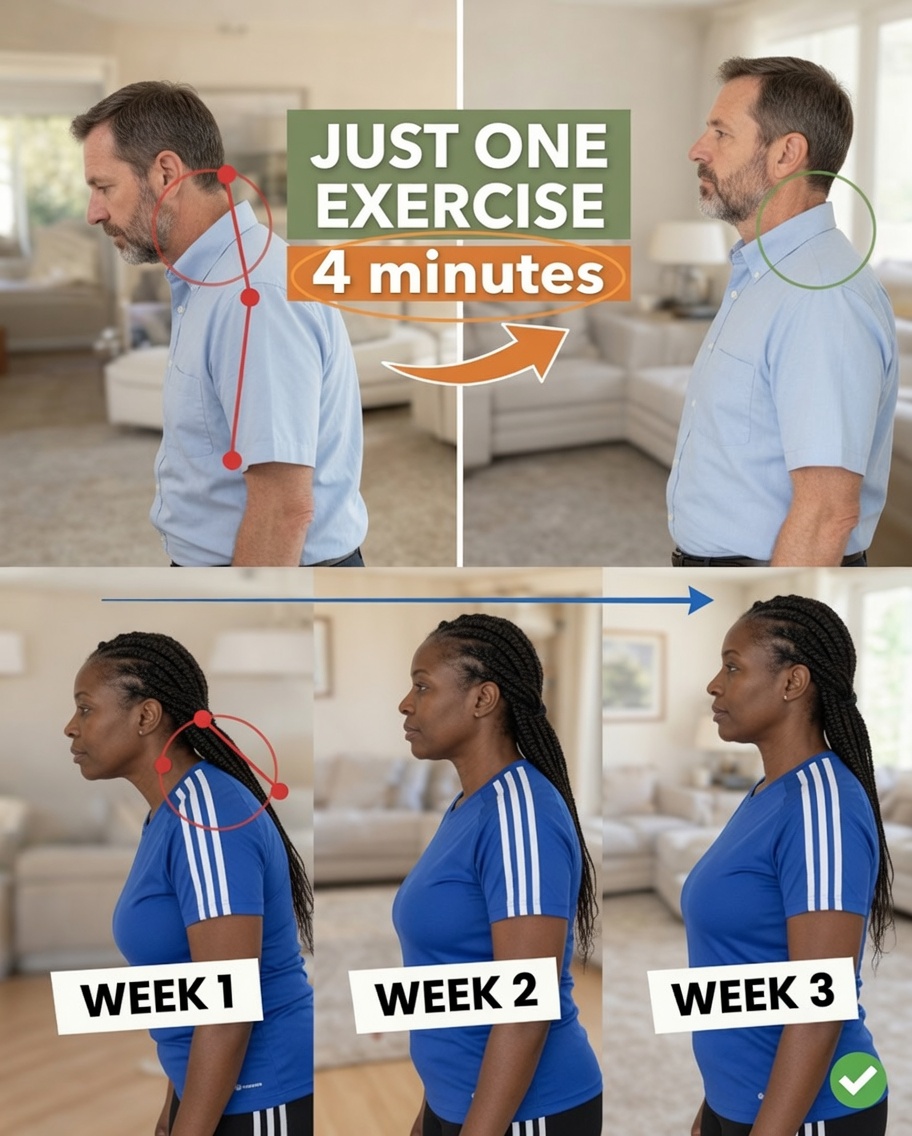
As we age, we accumulate years of looking downward—at phones, books, tablets, and screens. At the same time, natural changes in muscle function and spinal flexibility can make it easier for the head to drift forward relative to the shoulders.
Even small changes matter: every centimeter your head moves forward significantly increases the load on the neck. That extra demand may contribute to muscle tightness, reduced mobility, and can even affect breathing and balance.
Many people try to “just stand up straight,” but forcing posture rarely lasts. The body often snaps back into familiar patterns.
That’s why gentle approaches that calm the nervous system tend to create longer-lasting improvements.
The Science Behind a Gentle Routine
After 60, many bodies respond better to slow, controlled movement than intense workouts. When movements feel safe and manageable, the nervous system is more likely to allow deeper postural muscles to engage naturally.
This 4-minute routine supports four key goals:
- Improving neck awareness and control
- Bringing the head and shoulders back into better alignment
- Gently lengthening the cervical spine (neck)
- Opening the upper back and chest for easier breathing
What you need: a sturdy chair and a small towel rolled into a firm cylinder.
The Gentle 4-Minute Routine
1) Sensory Neck Warm-Up (60–90 seconds)
Sit or stand in a comfortable position.
Slowly turn your head:
- right → center → left
Repeat 5–6 slow cycles, staying relaxed.
Then move gently through these ranges:
- lower your chin toward your chest
- look slightly upward (only as far as comfortable)
- bring one ear toward the same-side shoulder, then switch sides
Keep the motion small, breathe slowly, and stay within a pain-free range.
Why it helps: this “wakes up” neck sensors, reduces stiffness, and prepares you for better alignment.
2) Chin Retraction with Shoulder Blade Activation (60 seconds)
Sit tall (without forcing it).
Gently draw your shoulder blades slightly toward each other, as if holding something between them.
Then:
- glide your head slightly backward (not downward)
- keep your eyes looking forward
- create a soft “double chin”
Hold for 10–15 seconds with calm breathing.
Repeat 3 rounds.
Why it helps: activates deep neck stabilizers and upper-back support muscles that often weaken with forward head posture.
3) Supported Neck Lengthening with a Towel (60 seconds)
Sit on a firm chair.
Roll a small towel and place it under the base of your skull (not under the neck curve). Let your head rest lightly against it while your shoulders relax.
Breathe deeply and imagine the crown of your head gently lengthening upward.
Hold 15–20 seconds, then relax.
Repeat 3 times.
Why it helps: uses gentle support and gravity to reduce pressure and encourage a more neutral head position.
4) Upper Back Opening (60–90 seconds)
Lie on your back with your knees bent.
Place a rolled towel (or a small cushion) under your upper back, just below the shoulder blades.
Rest your arms out to the sides with palms facing up.
Take slow breaths:
- inhale and allow the chest to expand
- exhale and let the shoulders soften downward
Stay here for 30–60 seconds.
Why it helps: restores mid-back mobility, opens the chest, and supports deeper, easier breathing.
Why This Routine Works
Compared with other common approaches:
- High-intensity exercise can create unnecessary tension
- Posture braces may lead to dependence rather than true control
- Aggressive stretching can irritate the nervous system and increase guarding
This routine is designed to be:
- gentle and low-stress
- easy to practice consistently
- supportive of natural alignment re-learning
- noticeable for many people within 1–4 weeks of daily practice
Tips to Get Better Results
- Attach it to a habit: do the routine right after brushing your teeth in the morning.
- Check your posture in a mirror once per week (not obsessively).
- Every hour, take a few deeper breaths and relax your shoulders.
- Take a side-profile photo before you begin, then compare again after 2 weeks.
Small visible changes can be highly motivating.
One Key Insight
Forward head posture is often a long-standing nervous system pattern, not just a “bad habit.” Instead of fighting your body, this routine helps it re-learn balance gradually.
Over time, many people report:
- easier breathing
- steadier steps
- less neck and shoulder tension
Start small: try Exercise 1 today. Tomorrow, do the full routine.
Frequently Asked Questions
When will I notice improvements?
Some people feel lighter and less tight within a few days. More visible postural changes often appear after 1–4 weeks of consistent daily practice.
Can I do this every day?
Yes. Gentle daily movement typically produces the best results.
What if I already have neck issues?
Only move within a comfortable range and stop if you feel pain.
Important Note
This article is for informational purposes and does not replace professional medical advice. Speak with a qualified healthcare provider before starting any new exercise routine—especially if you have neck pain, dizziness, osteoporosis, or balance concerns.