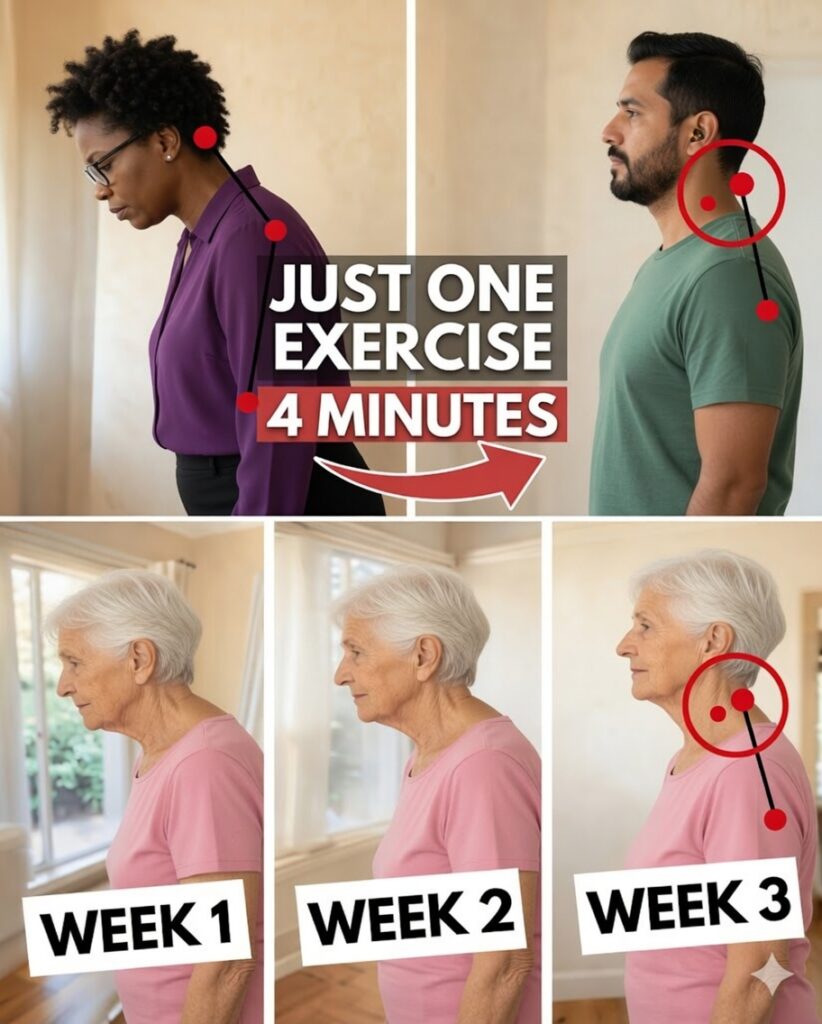
Neck Pain and Rounded Shoulders? This 4-Minute Habit Can Help Ease Tension and Improve Posture Naturally
Rounded shoulders. A chin that gradually drifts forward. Neck stiffness that seems to build year after year. If you’re over 60, you may have noticed these changes in the mirror or when looking at older photos. Even when they feel minor, they can influence daily comfort, balance, and confidence.
The encouraging news: consistent, gentle movement can create meaningful improvement. By the end of this article, you’ll learn a simple four-minute alignment routine that many older adults overlook—yet it can make a real difference.
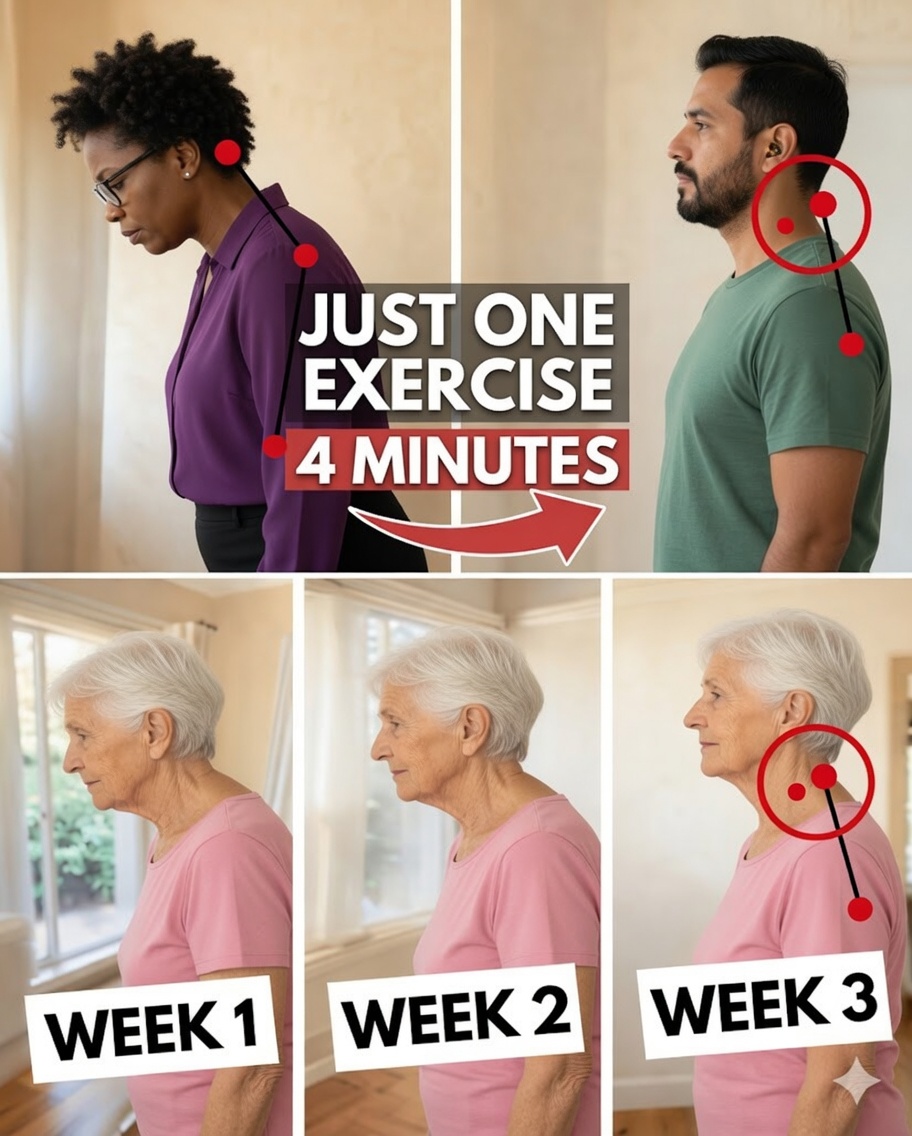
Why Forward Head Posture Becomes More Common After 60
Forward head posture happens when the head sits in front of the shoulders instead of stacking directly above them. Over time, this forward shift increases strain on the neck and upper back.
As we age, several common changes can make this pattern more likely:
- Reduced strength in the upper back muscles
- More time spent sitting or looking down (phones, books, tablets)
- Decreased joint mobility and flexibility
- Habitual slouching while watching TV or reading
Spine health research consistently links muscle weakness and long sedentary periods with posture changes in older adults. While forward head posture is common, it’s not something you have to simply “accept.”
One more detail matters: head position affects more than appearance. It can influence breathing mechanics, balance, and how easily you can turn your neck. Even small alignment shifts can increase tension through the shoulders and upper back.
The Hidden Effect on Everyday Comfort
Here’s what many people don’t realize.
When the head moves forward by only a few centimeters, the neck muscles must work much harder to support its weight. Over time, this can contribute to:
- Neck tightness and stiffness
- Shoulder fatigue
- Tension-related headaches
- Reduced neck mobility
Biomechanics research shows that as the head shifts forward, the load on the neck rises significantly. That doesn’t mean damage is inevitable—but it does explain why gentle corrective habits can be so helpful.
This is where the four-minute routine comes in.
A Balanced Way to Improve Alignment (Without “Holding Yourself Rigid”)
Good posture isn’t about staying stiff all day. It’s about muscle balance.
- Stronger upper-back muscles help support a more upright position.
- More flexible chest muscles reduce the pull that rounds the shoulders forward.
Physical therapy research often finds that combining strengthening + mobility tends to work better than focusing on only one.
This routine is built around three essentials:
- Body awareness
- Gentle strengthening
- Controlled mobility
The 4-Minute Alignment Routine (No Equipment)
Do these movements at home, ideally once or twice daily. Move slowly, stay relaxed, and stop if anything causes sharp pain.
1) Posture-Reset Breathing — 1 minute
Sit or stand with your feet firmly on the floor.
- Gently draw your chin straight back (as if making a subtle “double chin”).
- Do not tilt your head down—just slide it back.
- Place one hand on your chest and one on your abdomen.
- Breathe slowly, letting your belly expand more than your chest.
Continue for one minute.
Why it helps: This activates deep neck support muscles and improves ribcage positioning. Breathing patterns influence posture more than most people expect.
2) Wall Chin Glide — 1 minute
Stand with your back to a wall.
- Let your head, shoulders, and hips lightly touch the wall.
- Slowly glide your chin straight back—no looking up or down.
- Hold for 5 seconds, then relax.
- Repeat 8–10 times.
This targets the deep neck flexors, which are often underactive with forward head posture. If it feels surprisingly challenging, that’s usually a sign these muscles need re-training.
3) Shoulder Blade Squeeze (Scapular Retraction) — 1 minute
Sit or stand tall.
- Gently draw your shoulder blades toward each other, as if holding something soft between them.
- Keep shoulders relaxed and away from your ears.
- Hold 5 seconds and repeat 10 times.
The upper-back muscles play a major role in supporting improved head and shoulder alignment.
4) Chest-Opening Stretch — 1 minute
If comfortable, interlace your fingers behind your back.
- Slowly lift your hands slightly as you open your chest.
- Keep your chin gently tucked and breathe deeply.
- Hold 20–30 seconds, rest, then repeat once more.
Tight chest muscles commonly pull the shoulders forward. This stretch helps restore front-to-back balance.
Why Consistency Beats Intensity
It’s reasonable to wonder whether four minutes can really help. It can—because posture is largely a learned movement pattern.
Motor learning research suggests that frequent, low-intensity practice often creates better long-term change than occasional intense sessions. In other words, doing this routine daily matters more than doing a lot once a week.
Everyday Habits That Support Better Posture
To reinforce results, pair the routine with small daily adjustments:
- Bring reading materials up to eye level
- Take movement breaks every 30–60 minutes
- Adjust your monitor so the top of the screen is near eye height
- Choose chairs that support an upright sitting position
- Sleep with a pillow that keeps your neck in a neutral position
How Long Until You Notice Improvements?
Responses vary.
Some people report less neck tension within 1–2 weeks of daily practice. Visible posture changes may take several weeks.
Remember: posture habits develop over years, so steady, gradual improvement is the goal.
A simple “secret” makes a big difference: awareness. Each time you notice your head drifting forward during the day, gently correct it. That repeated mini-reset can build lasting change.
When to Get Professional Guidance
Forward head posture is common, but seek professional help if you have:
- Persistent neck pain
- Numbness or tingling in the arms
- Balance problems
- Major limits in neck movement
A personalized assessment can identify contributing factors and ensure you’re doing the safest, most effective exercises.
Conclusion
Forward head posture after 60 is widespread, but it doesn’t have to be ignored. With gentle strengthening, controlled mobility, and daily awareness, you can support better alignment in as little as four minutes a day.
Start small, stay consistent, and give your body time to adapt. Simple daily habits can lead to meaningful changes over time.
Disclaimer: This article is for informational purposes only and does not replace medical advice or individualized professional assessment.