
Hair Loss? This Natural Rosemary Remedy May Wake Up Dormant Follicles
Thinning hair or slow growth can feel incredibly discouraging. You brush your hair and notice more strands in the bristles, or you check the mirror month after month and see little to no change—despite trying product after product. Over time, that cycle can chip away at confidence, making you avoid certain hairstyles or even step out of photos.
Here’s a simple fact many people overlook: a familiar kitchen herb may support hair growth naturally. Research—including a widely discussed 2015 study comparing rosemary oil with minoxidil—suggests rosemary can encourage regrowth in hair-loss cases, often with fewer side effects such as scalp irritation. Newer studies continue to spotlight rosemary as a promising natural option.
Even better, you can start using rosemary right away. Below are three easy, practical ways to add it to your routine today.
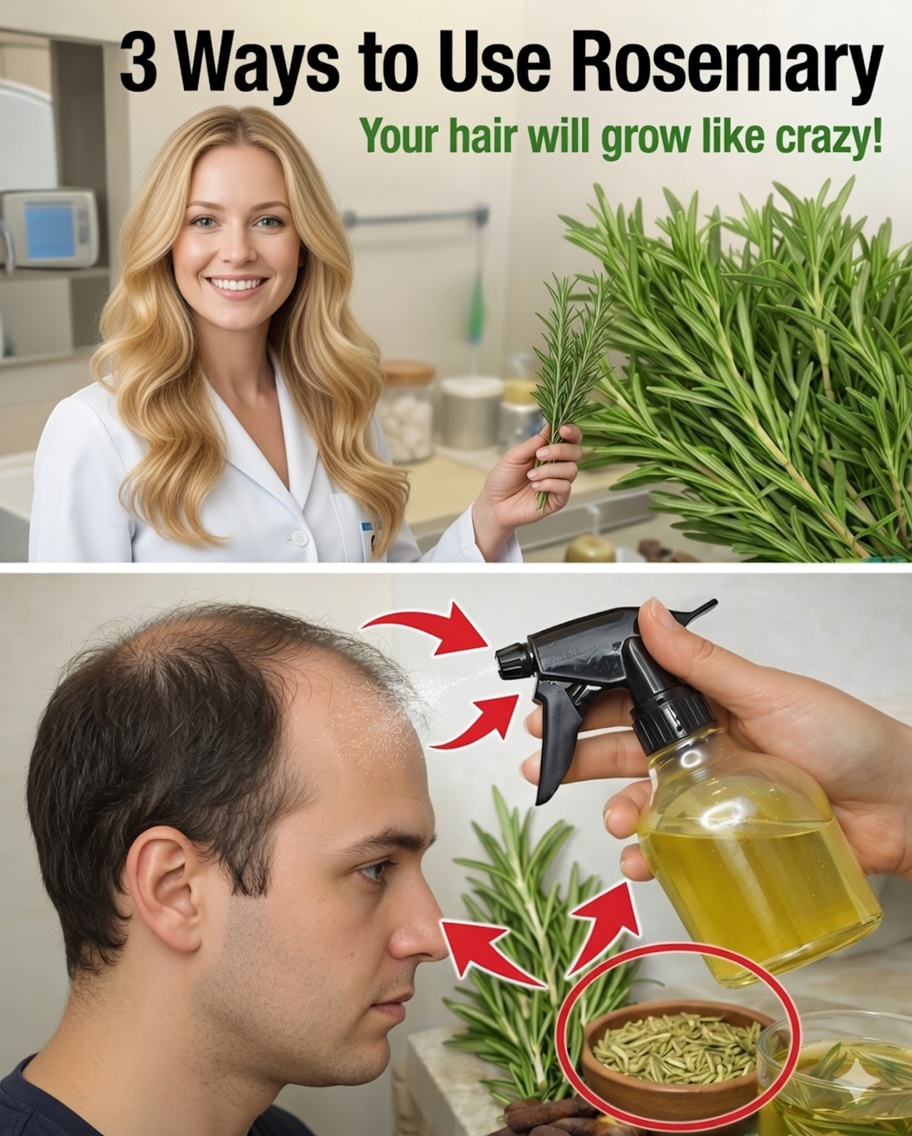
Why Rosemary Can Support Hair Growth
Rosemary contains active compounds (including carnosic acid) that may help:
- Improve scalp circulation
- Calm inflammation
- Support and strengthen hair follicles
It may also contribute to:
- Encouraging growth in a way comparable to some conventional approaches
- Reducing shedding and breakage
- Improving overall scalp health
The goal is simple: a healthier scalp environment where hair can grow stronger and longer.
3 Effective Ways to Use Rosemary for Hair
1) Scalp Massage with Rosemary Essential Oil
This is one of the most direct methods to nourish follicles and stimulate the scalp.
How to do it:
- Mix 2–5 drops of rosemary essential oil with 1 tablespoon of a carrier oil (coconut, jojoba, or olive oil)
- Warm the blend between your palms
- Massage into your scalp for 5–10 minutes
- Leave it on for at least 30 minutes (or overnight)
- Shampoo and wash as usual
Many people report less shedding within a few weeks and thicker-looking hair in 1–3 months, especially with consistent use.
2) Rosemary Hair Rinse
A great option if you want freshness and shine without making hair feel greasy.
How to prepare:
- Simmer a handful of rosemary in 2 cups of water for 10–20 minutes
- Let it cool, then strain
- After washing your hair, pour the rinse over your scalp and lengths
- Massage gently and leave it on (or lightly rinse if you prefer)
This method can help balance the scalp and improve how your hair looks and feels.
3) Infused Rosemary Oil (Overnight Treatment)
Ideal for deeper nourishment and a more intensive routine.
How to make it:
- In a double boiler, gently warm 1 cup of carrier oil with 3–4 tablespoons of dried rosemary for 30 minutes (do not boil)
- Cool and store in a clean container
- You can use it immediately, though many people prefer letting it infuse for 2–4 weeks for a stronger blend
How to use it:
- Apply to the scalp at night
- Massage in
- Cover with a towel or shower cap
- Wash in the morning
For best results, use it 3–5 times per week, adjusting based on how your scalp and hair respond.
Safety Tips Before You Start
- Never apply undiluted essential oil directly to the skin
- Do a patch test before first use
- Begin 1–2 times per week, then increase gradually
- Choose high-quality oils and reliable sources
- If you have ongoing scalp issues, consult a qualified professional
Build Stronger, Longer Hair with a Simple Routine
What if a few minutes a day could change how your hair looks and feels over time? A massage can stimulate the scalp, a rosemary rinse can refresh and support texture, and infused oil can provide deeper nourishment. Together, these methods may help improve hair health and encourage faster, stronger growth.
Pick one method and start today—then track your progress week by week. Consistent small habits often lead to the most noticeable results.
Frequently Asked Questions
How long does it take to see results?
Many people notice reduced shedding in 4–8 weeks, with more visible growth typically around 2–3 months.
Can I use rosemary with other hair products?
Yes—just make sure rosemary essential oil is properly diluted, and avoid mixing too many strong actives at once if your scalp is sensitive.
Is rosemary safe for color-treated hair?
Generally, yes. Still, it’s smart to test first—especially if your hair is chemically treated or your scalp reacts easily.
Note: This article is for informational purposes only and does not replace professional medical advice. If needed, consult a healthcare provider or a scalp/hair specialist.