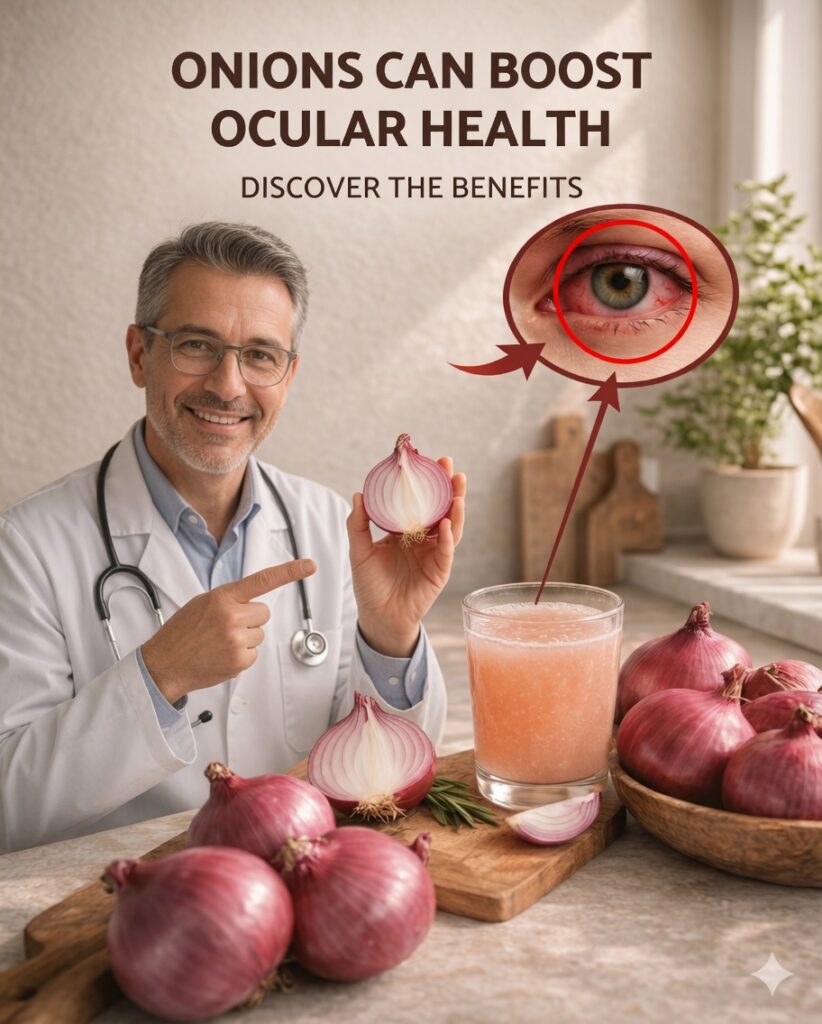
Are Your Eyes Dry and Tired? This “Onion Remedy” Might Surprise You—But Read This First
In today’s fast-paced world—packed with screens, pollution, and daily stress—many people wake up with dry, tired, irritated eyes. Even routine tasks like reading emails or driving can feel uncomfortable, and vision may become slightly blurry. Over time, this leads many to rely on expensive eye drops that often provide only short-term relief instead of addressing what’s really causing the problem.
That’s where a viral idea comes in: could something as ordinary as an onion, sitting in your kitchen, support eye comfort naturally?
Why Onions Affect Your Eyes So Strongly
When you cut an onion, a chemical reaction releases a gas called syn-propanethial-S-oxide. This gas irritates the surface of the eye and triggers the body’s defense response—producing tears to dilute and flush out the irritant.
Because onions reliably stimulate tearing, some traditional practices have assumed that “onion tears” can help cleanse the eyes. But what feels like a natural rinse is not necessarily safe—especially when done intentionally or repeatedly.
The Viral “5-Day Onion Remedy” Trend
The so-called “5-day onion remedy” has spread widely on social media, with claims that it can “restore eye moisture” and refresh tired eyes using onions alone. Common versions include:
- Placing onion slices near closed eyes
- Using diluted onion juice on compresses
- Drinking onion-based teas or tonics
- Following a five-day routine meant to “reset” tear production
The main goal is to stimulate tearing in order to remove impurities. However, most of these methods come from popular tradition and internet trends—not from strong clinical evidence.
What Science Actually Says About Onion and Eye Health
Onions do contain nutrients and compounds that are linked to overall health, such as:
- Quercetin (a well-known antioxidant)
- Vitamin C
- Sulfur-containing compounds
Some laboratory and animal research suggests that onion extracts may help support tear production and protect eye tissues under certain conditions.
Key limitations you should know
- Many findings are based on animal studies, not human trials
- Research typically uses standardized extracts, not raw onion juice
- There is no solid proof that applying onion directly to the eyes is safe
Why Eye Specialists Warn Against Putting Onion Near Your Eyes
Eye care professionals generally do not recommend direct onion use around or on the eyes. It can lead to:
- Intense burning and redness
- Excessive tearing that worsens irritation
- Increased risk of infection
- Potential harm for people with sensitive eyes or pre-existing eye conditions
In short, the same chemical that makes you cry may also aggravate inflammation and discomfort, rather than improve dry eyes.
How Onion Can Support Your Eyes Safely
While topical onion use is risky, eating onions as part of a balanced diet may offer indirect benefits for eye health by supporting the body’s defenses and tissue protection.
Nutrients linked to general eye support include:
- Quercetin: helps fight oxidative stress
- Vitamin C: contributes to tissue protection
- Selenium: supports normal cellular function
A diet rich in vegetables, fruits, and healthy fats is a far safer and more effective long-term approach than irritating the eyes to force tears.
Safer Natural Ways to Relieve Dry, Tired Eyes
If you want natural, evidence-aligned habits to improve eye comfort, focus on simple daily strategies:
- Drink enough water throughout the day
- Eat leafy greens, carrots, and citrus fruits
- Take screen breaks using the 20-20-20 rule (every 20 minutes, look 20 feet away for 20 seconds)
- Use preservative-free artificial tears if needed
Many people notice improvement in comfort within a few days when they apply these consistently.
When to See a Professional
Seek medical advice if you experience:
- Persistent redness
- Pain or swelling
- Changes in vision
- Light sensitivity
- Unusual discharge
These symptoms may indicate an infection or another condition that requires proper evaluation and treatment.
Conclusion
The onion trend highlights how quickly “natural remedies” can capture attention—especially when people struggle with dry eye symptoms and irritation. While onions contain beneficial compounds when consumed, there is no reliable evidence that placing onion or onion juice near the eyes is safe or effective.
Protecting your vision is best done through proven habits and professional guidance when symptoms persist.
Disclaimer: This article is for informational purposes only and does not replace medical advice. Consult a qualified healthcare professional before trying any new method.