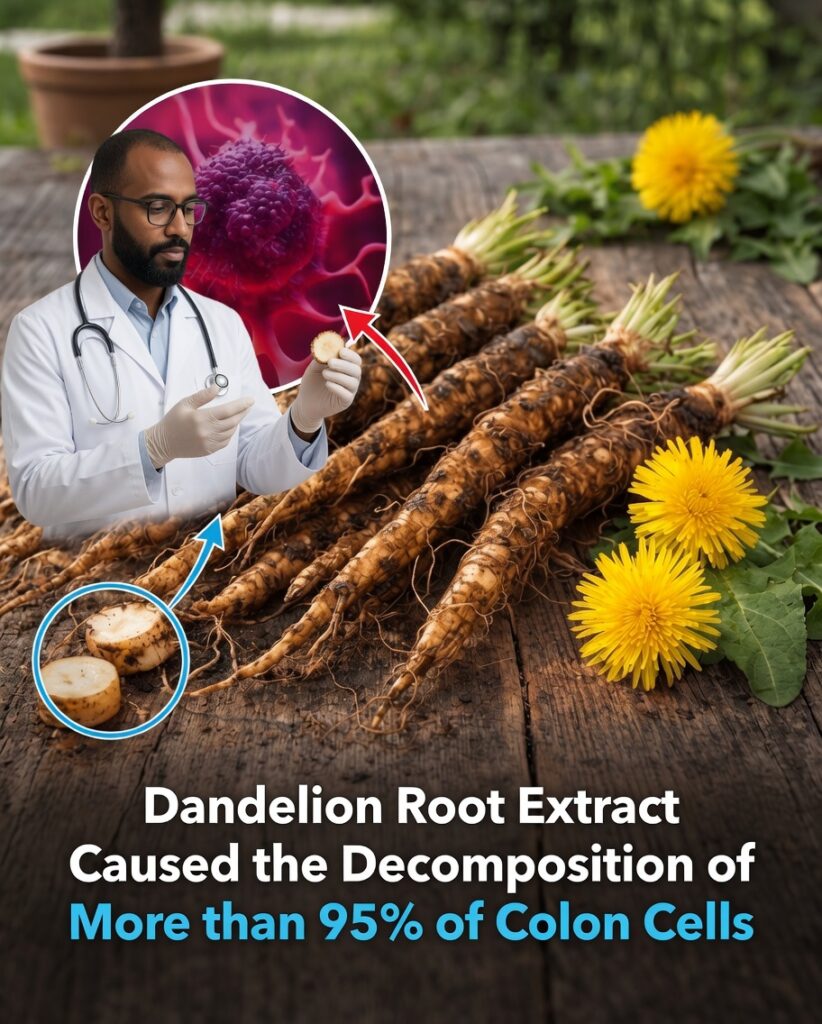
Can a Simple Root Trigger the Death of Over 95% of Cancer Cells in the Lab? The Natural Discovery Behind Dandelion Root Extract
If you’re concerned about colorectal cancer and constantly searching for reliable, science-based information to support your health, you’re far from alone. Many people feel overwhelmed by the complexity of modern cancer care and wonder whether familiar plants—when studied under controlled conditions—might reveal new, useful insights.
One widely discussed example is a 2016 study published in Oncotarget. The research explored how an aqueous dandelion root extract behaved in laboratory and animal models focused on colon cancer cells. What makes this study compelling is not hype, but how it reframes a very common plant through a rigorous scientific lens—while also highlighting how much still remains unknown about its compounds and real-world usefulness.
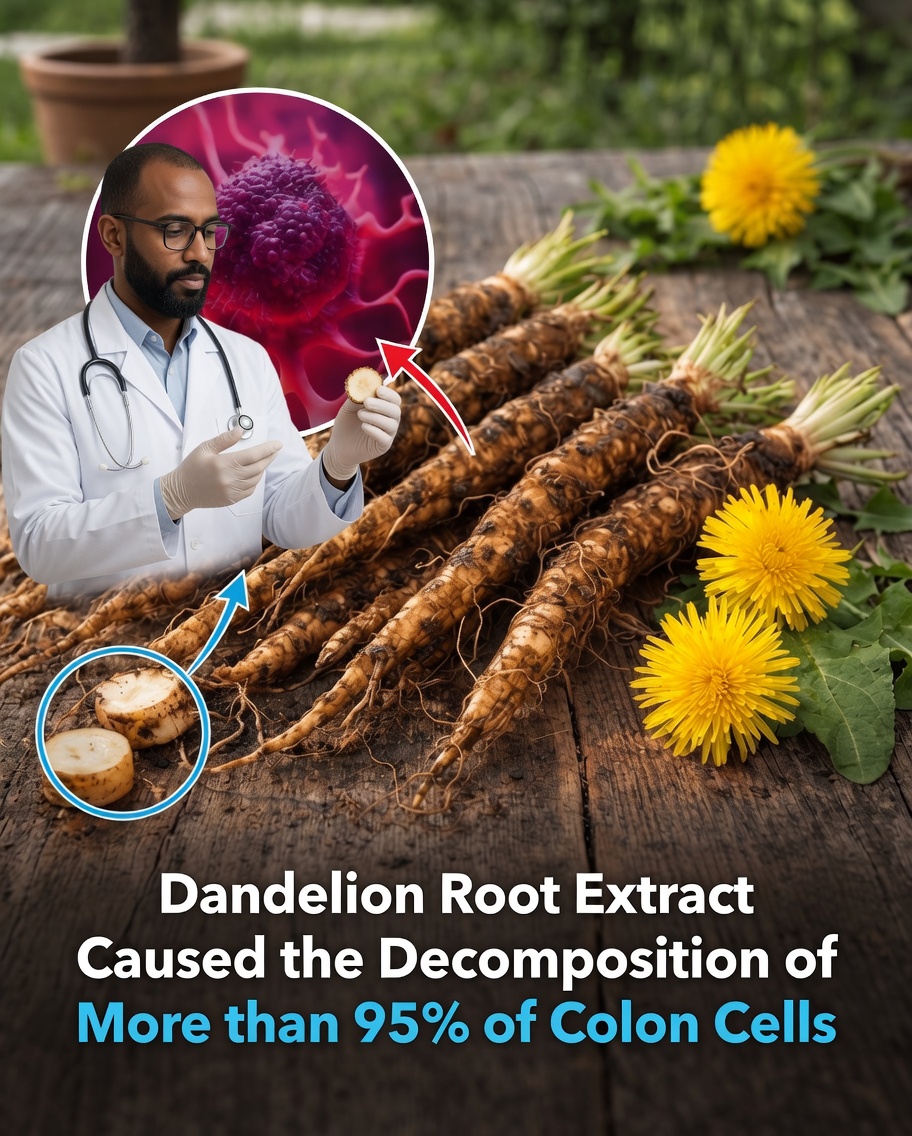
Understanding the 2016 Study on Dandelion Root Extract (DRE)
Scientists at the University of Windsor conducted experiments using human colorectal cancer cell lines. They tested an aqueous preparation known as dandelion root extract (DRE) and recorded striking outcomes in cell-based models.
In lab conditions, the extract triggered programmed cell death (apoptosis) in more than 95% of cancer cells within 48 hours. Notably, this effect appeared across multiple cancer cell types, including those with alterations in the p53 gene, a change often linked to more aggressive cancer behavior and treatment resistance.
Just as important, the same experimental conditions did not show meaningful toxicity to healthy (non-cancerous) cells, which is a key point when assessing early-stage therapeutic potential.
Genetic analyses also suggested the extract may stimulate several cell-death signaling pathways at the same time, which could help explain why the effect remained consistent even in cells with common mutations.
Key Findings in Laboratory and Animal Models
The research did not stop at petri-dish testing. The team also used mouse models in which human tumors were implanted. When the extract was given orally, the results indicated a greater than 90% reduction in tumor growth, with no obvious signs of toxicity observed in the animals.
Main reported outcomes included:
- Over 95% cancer cell death within 48 hours (in vitro)
- Effects observed regardless of p53 gene status
- Multiple mechanisms of cell-death activation appearing simultaneously
- More than 90% suppression of tumor growth in animal models
- Minimal toxicity to healthy cells in the tested conditions
It’s essential to keep perspective: these are laboratory and pre-clinical findings, meaning they do not confirm the same results will occur in humans.
Natural Compounds Identified in Dandelion Root
A phytochemical analysis highlighted several compounds, including:
- α-amyrin
- β-amyrin
- lupeol
- taraxasterol
An interesting detail from the study is that when these compounds were tested individually, their effects were weaker than the complete extract. This supports the possibility of a synergistic effect, where multiple plant compounds work together in a way that a single isolated ingredient cannot fully replicate.
Beyond this study, dandelion root has long been used in traditional wellness practices, often associated with digestion and general support, and it contains triterpenes and other natural constituents still being actively investigated.
Traditional Ways People Use Dandelion Root
Many people add dandelion root to their routines in straightforward ways, such as:
- Dandelion root tea: dried (often roasted) root steeped for 5–10 minutes
- Capsules or tinctures: choose products from reputable, quality-tested sources
- Culinary use: blended into soups or added to smoothies
Practical tips to consider:
- Opt for organic sources when possible
- Start with small amounts to gauge tolerance
- Pay attention to how your body responds
- Use it as a complement—not a replacement—for a healthy diet and movement
Safety Considerations and Possible Interactions
Dandelion root is often considered generally safe, but it isn’t risk-free for everyone. Some individuals may experience digestive discomfort or allergic reactions, particularly those sensitive to plants in the Asteraceae family.
It may also interact with certain medications, including:
- Diuretics
- Blood thinners (anticoagulants)
- Diabetes medications
If you are pregnant, breastfeeding, or managing a medical condition, it’s wise to speak with a qualified healthcare professional before using dandelion root supplements or taking it regularly.
What This Could Mean for Everyday Well-Being
The 2016 Oncotarget study offers an intriguing look at how a widely available plant might show anti-cancer activity in controlled scientific settings. At the same time, it reinforces an equally important point: lab results are an early step, not a clinical conclusion.
For day-to-day health, the strongest proven foundations still include:
- a balanced, fiber-rich diet
- regular physical activity
- appropriate screening and checkups
- professional medical guidance tailored to your risk factors
Frequently Asked Questions
Does dandelion root replace cancer treatment?
No. The findings discussed come from cell and animal studies, not human clinical trials. It should not be viewed as a substitute for medical treatment.
How long would it take to see results?
There is no defined timeline for people. Effects observed in a lab setting do not translate directly into measurable outcomes in humans.
Is it safe to take daily?
In moderate amounts, it is often tolerated, but daily use still requires caution, especially if you have allergies, underlying conditions, or take medications. Professional guidance is recommended.
Disclaimer: This content is for informational purposes only and does not replace medical advice. Always consult a qualified healthcare professional before starting any new supplement or health routine.