Onion Juice for Skin: A Simple Natural Addition to Your Skincare Routine
Many people start seeing fine lines sooner than they expected. At the same time, uneven skin tone, dullness, and darkened areas caused by sun exposure or everyday stress can slowly make the complexion appear tired and less fresh. This often leads to disappointment, especially after trying multiple skincare products with limited or inconsistent results.
Thankfully, some everyday kitchen ingredients have gained attention for their skin-supporting properties. One of them is the onion. Rich in natural antioxidants, sulfur compounds, and vitamin C, onions are often discussed as a gentle, home-based option that may help support healthier-looking skin.
What if this common ingredient could become part of a simple skincare habit? Below, you’ll learn why onion juice is being talked about in natural skincare, how it may help with common skin concerns, and how to prepare and use it carefully at home.
Why Onions Are Mentioned in Natural Skincare
Onions—particularly red onions—contain quercetin, a flavonoid recognized for its antioxidant activity. Antioxidants are important because they help fight free radicals, which are linked to visible skin aging such as fine lines and a dull appearance. Research on onion extracts has suggested they may help improve how skin looks by supporting brightness and smoother texture.
Sulfur is another valuable component found in onions. This mineral helps support the skin’s natural collagen production, which plays a key role in keeping skin firm and elastic. Onions also provide vitamin C, a nutrient that may help improve skin tone and reduce the appearance of spots caused by sun exposure over time.
There is more to consider. Onion extracts have also been studied for their calming effect on the skin. Some clinical research has reported improvements in redness and scar appearance with regular topical use. Although additional human studies are still needed, these findings help explain why onions continue to appear in both traditional beauty remedies and modern skincare discussions.
Key Onion Compounds That May Benefit the Skin
Here is a quick look at the main skin-supporting elements found in onions:
- Quercetin: A strong antioxidant that may help reduce oxidative stress and support a smoother-looking complexion.
- Sulfur: Helps support natural collagen formation, which may contribute to firmer-looking skin.
- Vitamin C: Can help brighten the skin and improve the appearance of uneven tone.
- Natural antibacterial properties: May help support clearer skin and reduce minor irritation linked to excess oil.
Together, these compounds make onions an interesting option for people who prefer simple, natural skincare methods at home.
How Onion Juice May Help Common Skin Concerns
Many people want to improve fine lines, patchy pigmentation, and loss of radiance without using overly harsh treatments. Onion juice is often considered because its natural compounds may offer gentle support in these areas.
The antioxidants in onions may help defend the skin against environmental stress, which can speed up visible aging. Some sources suggest that regular use may also help the skin appear brighter and more even by gradually softening the look of dark spots caused by sun exposure or age.
When it comes to texture, sulfur may support the skin’s natural renewal process. Over time, this could help the skin feel softer and look more supple. This matches findings from studies on onion extracts, where users reported improvements in softness and overall appearance.
Here is a simple overview of the potential benefits:
- Fine lines and firmness → Supported by sulfur and antioxidants that help maintain collagen and defend against damage.
- Dark spots and uneven tone → May improve with the help of vitamin C and natural brightening effects.
- Glow and moisture → Can be enhanced when onion juice is blended with soothing ingredients like honey or yogurt.
As with any skincare approach, results depend on skin type, consistency, and how well the skin tolerates the ingredient.
How to Make and Apply an Onion Face Treatment at Home
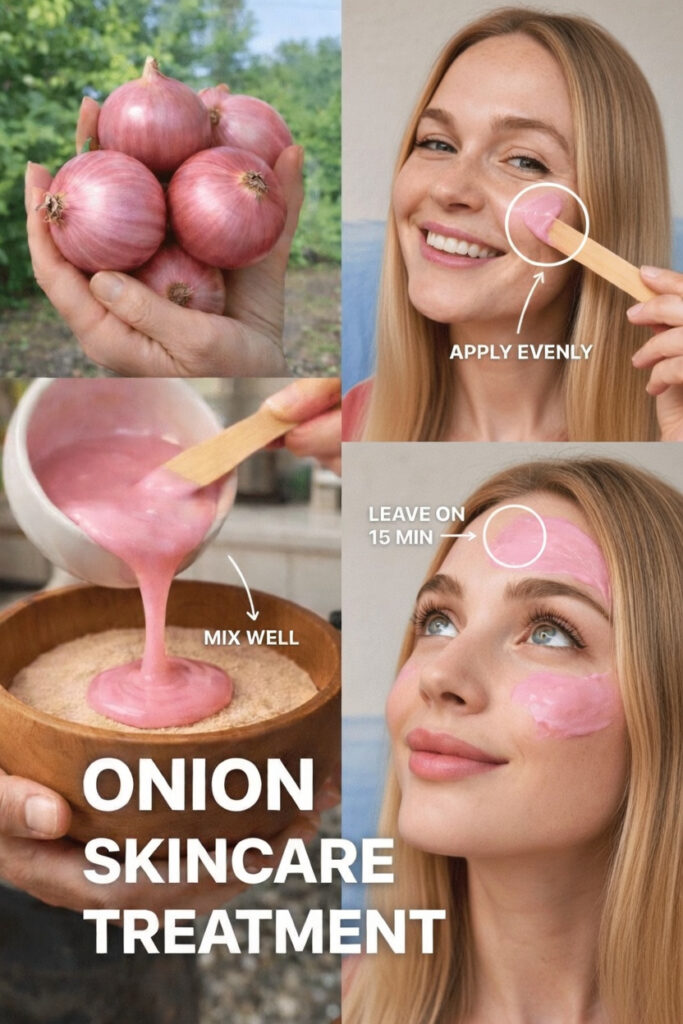
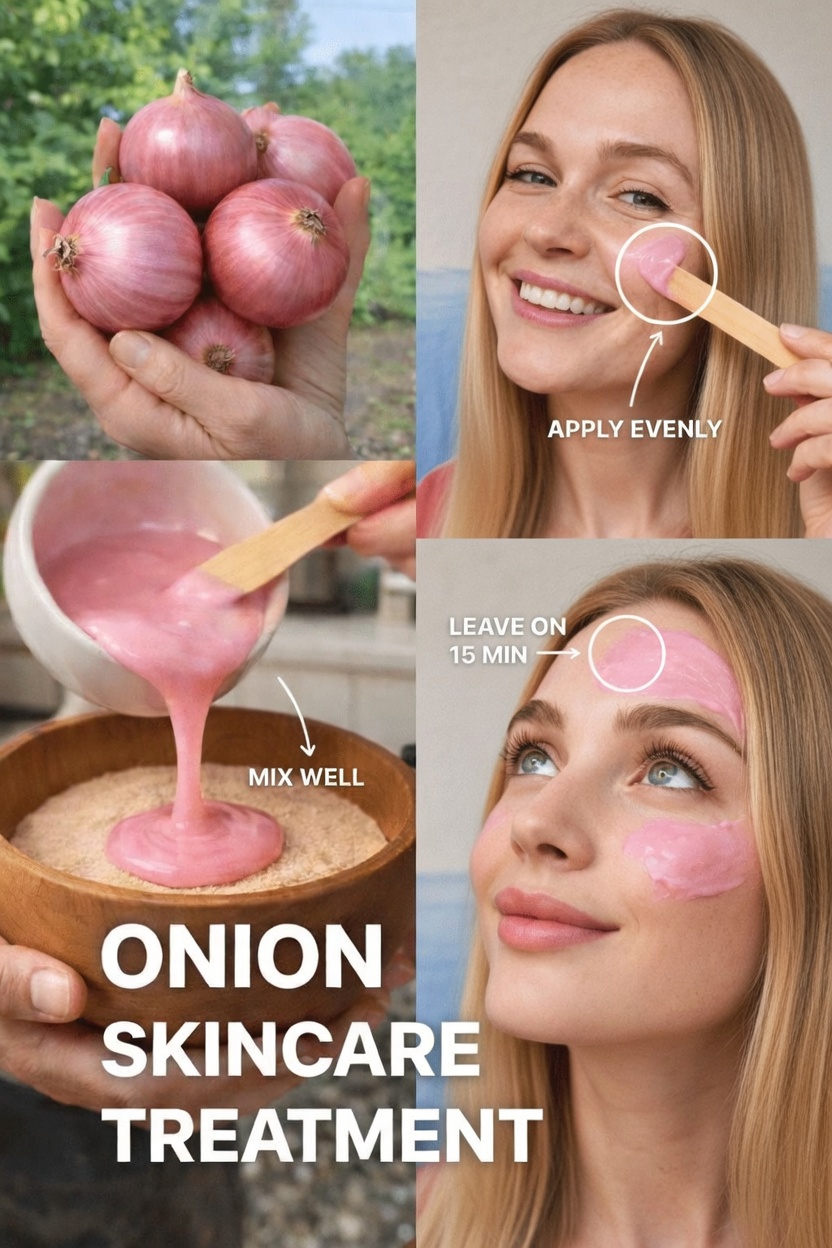
If you want to try onion juice in your routine, a gentle face mask is one of the easiest ways to start. Mixing it with calming ingredients such as honey can make it more comfortable for the skin.
Ingredients
- 1 medium red onion
- 1–2 tablespoons raw honey
- Optional: 1 teaspoon plain yogurt or aloe vera gel for extra soothing
Preparation
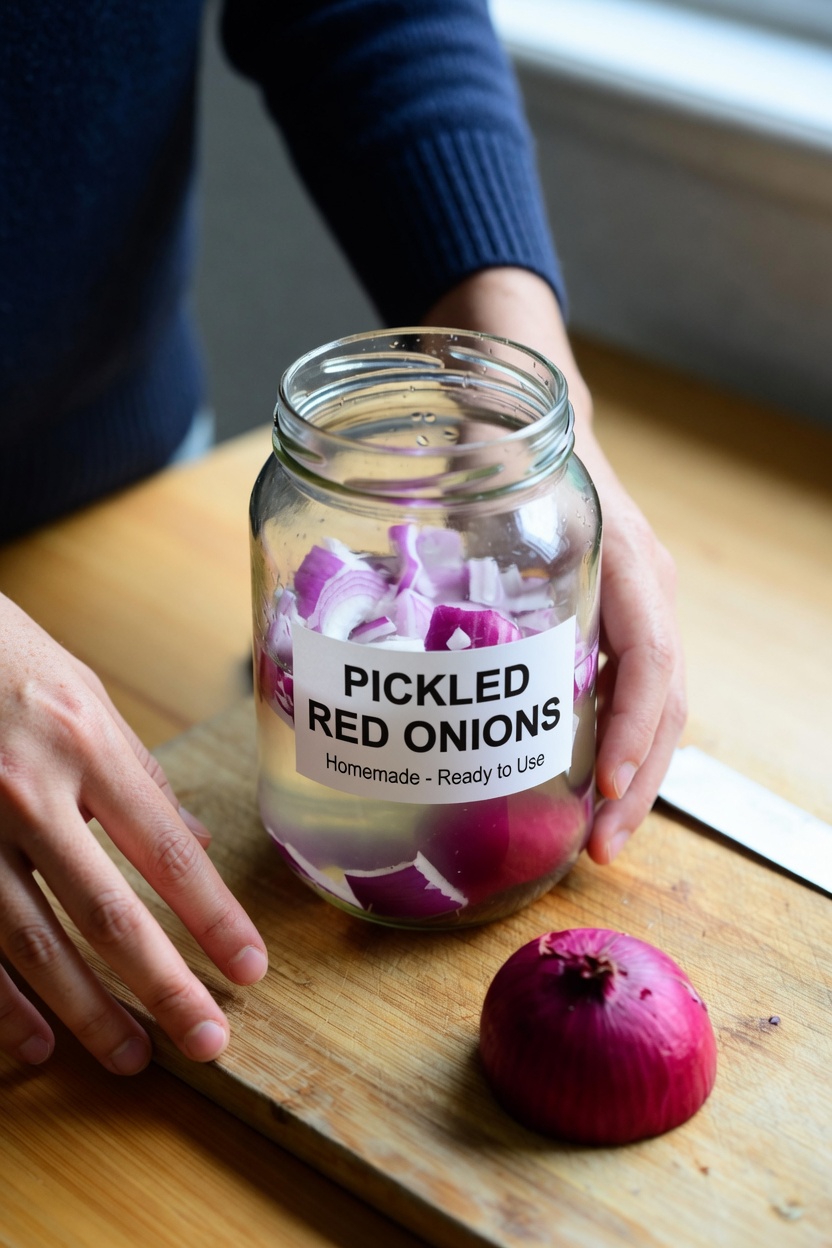
- Peel the onion and cut it into small pieces.
- Blend or juice the onion until you can extract fresh liquid.
- Strain the mixture through a fine cloth or cheesecloth to collect clear juice. You should get about 2–3 tablespoons.
- In a small bowl, combine the onion juice with the honey and stir until smooth.
- If you want a gentler texture, add the yogurt or aloe vera at this stage.
- Before using it on your face, do a patch test by applying a small amount to your inner arm and waiting 24 hours to check for irritation.
How to Apply It
- Wash your face thoroughly with a gentle cleanser.
- Spread the mixture evenly over the skin, avoiding the eye area.
- Leave it on for 10–15 minutes. If this is your first time, start with less time.
- Rinse well with lukewarm water.
- Pat your skin dry with a soft towel.
- Finish with your usual moisturizer.
- Use this treatment 2–3 times a week, rather than every day, to give your skin time to adjust.
This method is easy to follow and uses ingredients many people already have in their kitchen.
Tips to Improve Comfort and Results
To make this routine more pleasant and effective, keep these tips in mind:
- Never use onion juice undiluted if your skin is sensitive, as it may sting or irritate.
- Store leftovers in the refrigerator for no more than 2 days, though fresh preparation is ideal.
- Wear sunscreen daily, especially if your goal is brighter, more even-looking skin.
- Be consistent, since subtle improvements often become more noticeable after 4 to 8 weeks.
- Start slowly if your skin is reactive—once a week may be enough at first.
What to Expect from Onion Juice for Skin
Onion-based skincare is not an instant solution, and it should not be seen as a miracle treatment. Instead, it may serve as a supportive step within a well-rounded skincare routine that also includes hydration, sun protection, and a healthy diet.
Some users notice skin that looks smoother, fresher, and more radiant over time. However, patience is essential. Natural remedies generally work gradually, and visible changes often depend on regular use and individual skin response.
Safety Considerations
Even though diluted onion juice is tolerated by many people, it may not suit everyone. Sensitive or allergy-prone skin should always be tested first. Mild tingling can happen at the beginning, but if strong burning, redness, or irritation occurs, stop using it immediately.
Because onion juice can be active on the skin, it is best used carefully and in moderation. Pairing it with soothing ingredients and following with moisturizer can help reduce discomfort.
Frequently Asked Questions
Is onion juice suitable for every skin type?
Diluted onion juice works well for many people, but those with sensitive skin or a history of allergies should patch test first. A mild stinging sensation may happen at first, though it often fades quickly.
How long does it take to notice results?
Changes in skin tone or texture may take 4 to 8 weeks of regular use. This timeline is similar to what has been observed in studies involving onion-based extracts.
Can onion juice be mixed with other natural ingredients?
Yes. It is commonly combined with:
- Honey for hydration
- Yogurt for a soothing effect
- Oatmeal for extra comfort and softness
- Aloe vera to help calm the skin
Final Thoughts
Onion juice may sound unusual, but it has become a topic of interest in natural skincare for good reason. With compounds like quercetin, sulfur, and vitamin C, it may help support brighter, softer, and healthier-looking skin when used carefully and consistently.
If you are looking for a simple DIY skincare option, onion juice mixed with calming ingredients could be worth exploring as part of a gentle weekly routine.