Ancient Spices for Skin: 7 Time-Tested Ingredients That Support a Youthful Glow
Across history, many cultures have relied on spices and aromatic plants not only to flavor food, but also to support natural skincare. A number of these traditional spices contain antioxidants, vitamins, and bioactive compounds that may help the skin defend against premature aging—especially when used as part of a balanced, healthy lifestyle.
Below are 7 ancient spices for skin health that have been valued for generations. When used correctly, they can help enhance overall radiance, soften the look of fine lines, and support a smoother-looking complexion.
1. Turmeric: “Gold” for a Brighter-Looking Complexion
Turmeric is one of the most researched spices for its antioxidant potential. Its best-known active compound, curcumin, is associated with helping the skin cope with oxidative stress from environmental exposure and free radicals.
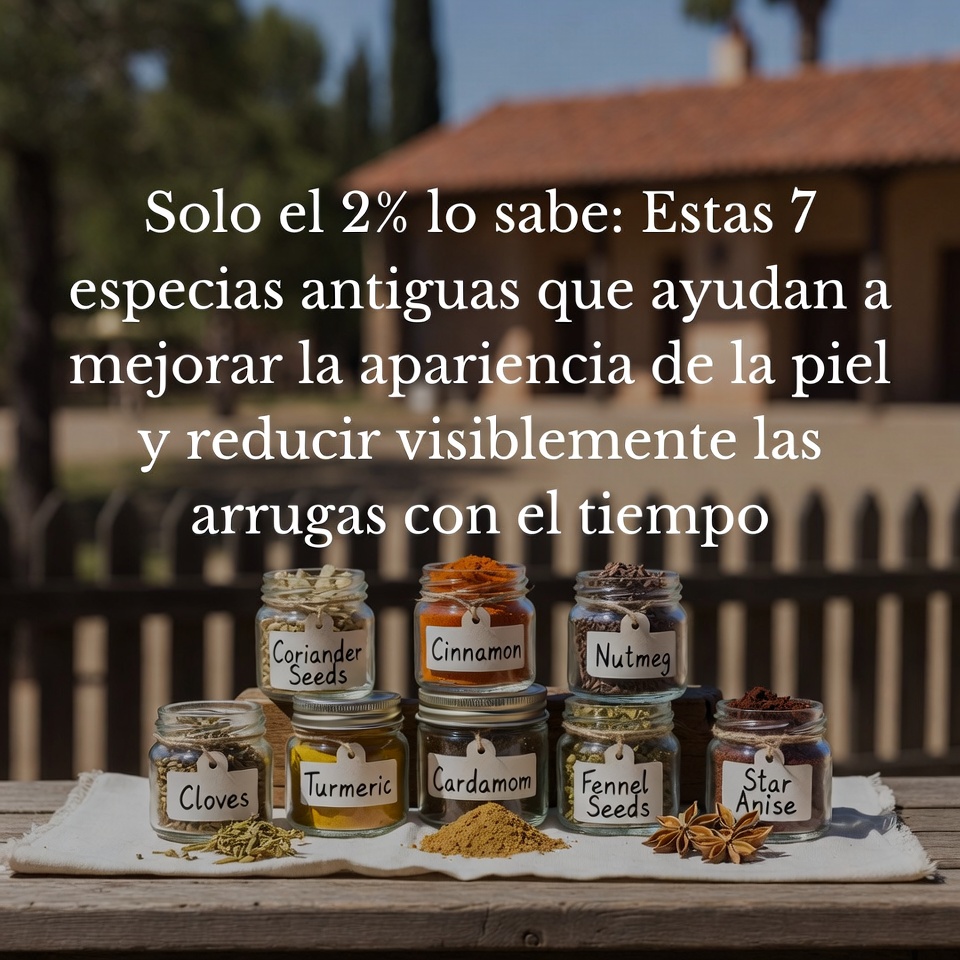
Why turmeric is popular in skincare
- Helps the complexion look more even-toned
- Can reduce the appearance of dullness and uneven-looking spots
- Often used in DIY masks for a brighter-looking finish
How to use it
- Mix a small pinch of turmeric with plain yogurt or honey.
- Apply as a mask for 10 minutes, then rinse thoroughly.
2. Cinnamon: A Classic Eastern Spice for a Smoother Look
Cinnamon has long been appreciated for its warm aroma and traditional uses. In topical blends, it’s sometimes used to encourage a more refined, soft-looking texture—but it must be handled carefully.
How cinnamon may support skin appearance
- Provides antioxidant compounds that help protect skin cells
- When diluted properly, it can support a smoother-looking surface
Important precaution
- Never apply cinnamon powder directly to skin. It may cause irritation.
- Always dilute it with a gentle base such as honey or yogurt.
3. Ginger: A Natural “Tone-Boosting” Spice
Ginger is widely known for supporting circulation when included in the diet. Healthy circulation can help deliver nutrients that contribute to healthy-looking skin.
Skin-friendly highlights
- Naturally rich in antioxidants
- Helps reduce the look of a tired, dull complexion
- Works well in simple DIY toners
Easy idea
- Make a gentle toner by infusing water with a few slices of ginger, then apply lightly (avoid the eye area).
4. Clove: A Small Spice with Big Antioxidant Power
Clove has a strong scent and a long history in traditional wellness routines. It contains notable antioxidant compounds, including eugenol, which is often associated with protective properties.
Why clove is used in traditional beauty
- Contains aromatic compounds that may help defend against daily stressors
- Can help improve the look of skin that appears tired or lackluster
Safer ways to use clove
- Add 1–2 cloves to herbal tea
- Infuse into a carrier oil for a gentle massage (do not apply clove directly to skin)
5. Saffron: An Ancient Luxury for Radiance
Saffron is one of the world’s most prized spices and has been used historically in beauty rituals to support a more luminous appearance.
Traditional benefits
- Helps promote a radiant, glowing look
- Commonly used in masks blended with milk or honey
How to use it
- Soak a few strands in warm milk, then mix with honey and apply briefly as a mask.
6. Cardamom: The “Green Perfume” That Refreshes the Look of Skin
Cardamom is loved for its sweet, refreshing fragrance. It also contains antioxidant compounds that may help the skin maintain a youthful-looking texture.
How cardamom can help
- Supports a smoother, more refreshed look
- Complements the skin’s natural defense against daily wear
Ways to incorporate it
- Drink as an infusion/tea
- Use a tiny amount of powder in recipes
- Add to masks with oats for a gentle, soothing blend
7. Nutmeg: A Traditional Spice for the Look of Fine Lines
Nutmeg has been used in home beauty routines for centuries thanks to its warm aroma and fine texture. In small amounts, it’s sometimes included in very gentle exfoliation blends.
Why nutmeg appears in traditional skincare
- Offers antioxidant support
- Often used in mild DIY exfoliating mixtures
Precaution
- Use only small quantities
- Limit to once per week to reduce the risk of irritation
How to Use These Spices Safely in Natural Skincare
To get noticeable results while protecting your skin barrier, follow these best practices:
- Do not apply spices “straight” to the skin.
- Always dilute with a gentle base: honey, plain yogurt, oatmeal, or a plant-based carrier oil.
- Do a patch test on a small area before applying any new mixture.
- Avoid combining many spices in one mask—keep formulas simple.
Remember: Spices Support Skin, But They Don’t Replace the Basics
A healthy, youthful-looking complexion still depends on core habits:
- Consistent hydration
- Adequate sleep
- Balanced nutrition
- Daily sun protection
Think of spices as a helpful addition, not a substitute for foundational skincare.
Conclusion
These **7 ancient spices—turmeric, cinnamon, ginger, clove, saffron, cardamom, and nutmeg—**have been valued for generations for their antioxidants and natural compounds that support a brighter, smoother, more youthful-looking complexion. Used thoughtfully in skincare routines or included in a balanced diet, they can be a simple, traditional way to enhance long-term skin appearance.
Warning: If you have sensitive skin, allergies, or any dermatological condition, consult a qualified professional before trying DIY remedies or topical spice-based mixtures.