Early Warning Signs of Stroke You Should Never Ignore
A stroke is a critical medical emergency that can cause permanent disability or even death if not treated quickly. What many people don’t realize is that the body often sends warning signals days, weeks, or even months in advance.
One of the most important red flags is a Transient Ischemic Attack (TIA), commonly called a “mini-stroke.” These brief, stroke-like episodes can occur up to 90 days before a major stroke and signal a significantly higher risk. Recognizing these early symptoms and getting prompt medical care can be life-saving.
9 Early Warning Signs of a Stroke
If you notice any of the following signs in yourself or someone else, treat them as an emergency:
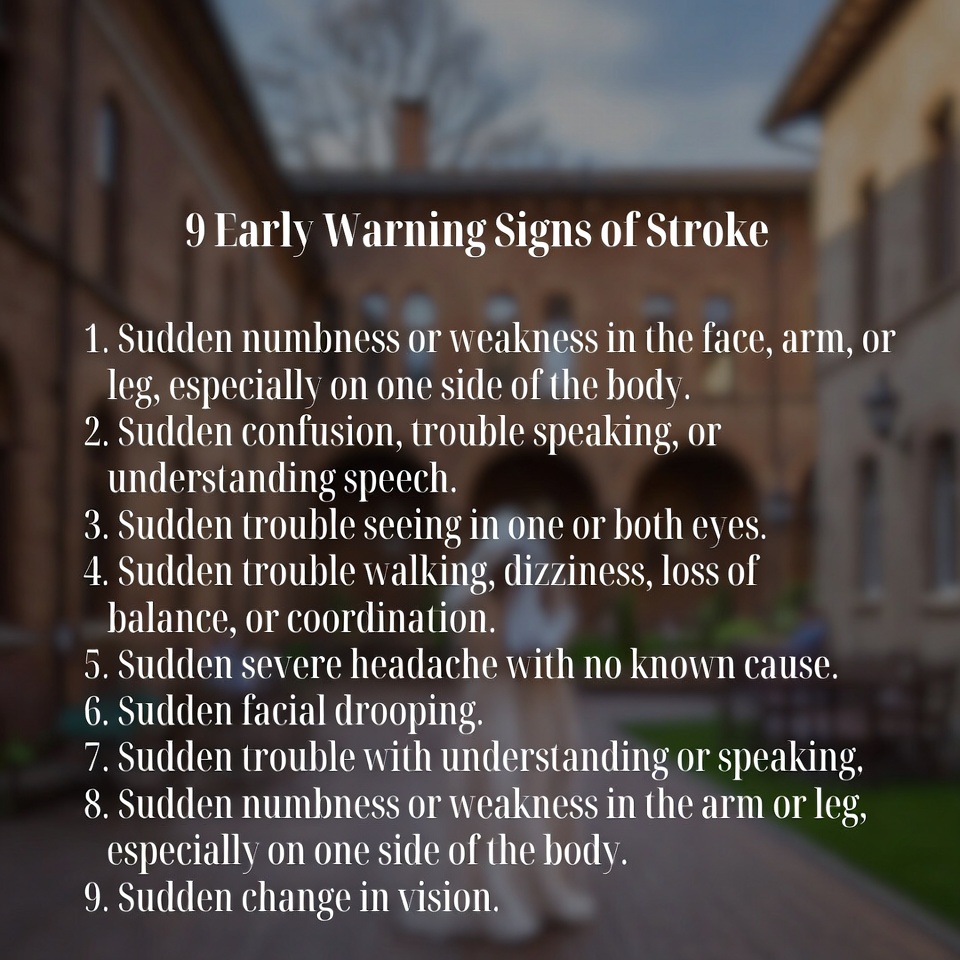
-
Sudden Weakness or Numbness
- Especially affecting one side of the body
- May involve the face, arm, or leg
-
Trouble Speaking or Understanding Others
- Slurred or unclear speech
- Difficulty finding the right words
- Problems understanding what people are saying or sudden confusion
-
Vision Changes
- Blurred vision
- Double vision
- Sudden loss of sight in one or both eyes
-
Loss of Balance or Coordination
- Dizziness or feeling lightheaded
- Unsteady movements or difficulty walking
- Stumbling or inability to keep balance
-
Severe, Sudden Headache
- An intense headache that comes on abruptly
- No obvious cause (not related to usual migraines or tension)
-
Sudden Extreme Fatigue or Weakness
- Feeling unusually exhausted without a clear reason
- A sudden drop in energy or strength
-
Facial Drooping
- One side of the face appears to sag or feel numb
- An uneven smile or difficulty moving facial muscles on one side
-
Short-Term Memory Problems or Confusion
- Trouble remembering recent events
- Moments of disorientation or not knowing where you are or what you’re doing
-
Tingling or Numbness Sensations
- “Pins and needles” or unusual tingling
- Often affecting only one side of the body
Why These Symptoms Are So Important
Any of these signs—especially when they appear suddenly—may indicate a Transient Ischemic Attack (TIA) or an impending stroke. TIAs are serious warning events, not minor incidents to brush off.
They often point to underlying problems such as:
- Uncontrolled high blood pressure
- Diabetes
- High cholesterol
- Narrowed or blocked blood vessels
Addressing these risk factors early can dramatically reduce the chance of a major, disabling stroke.
What to Do If You Notice These Warning Signs
If you or someone around you experiences any of these symptoms—even if they disappear after a few minutes—do not wait to see if they get better.
- Call emergency medical services immediately.
- Do not drive yourself if you might be having a stroke.
- Act fast: early treatment can save brain function and save lives.
When it comes to stroke, time lost is brain lost. Prompt action can make the difference between full recovery and lifelong disability—or even death.