How to Make Your Sansevieria (Mother-in-Law’s Tongue) Bloom Beautifully
Sansevieria, commonly known as snake plant or mother-in-law’s tongue, is loved for being tough, low-maintenance, and almost indestructible. Seeing it bloom indoors is uncommon, but with the right care, it can produce elegant, fragrant flowers. Flowering is rare, yet entirely possible if you create the proper conditions.
1. Give It the Right Light
Snake plants tolerate a wide range of light levels, from low light to bright spaces. However, if your goal is flowering, light becomes crucial.
- Place the plant in bright, indirect light. A spot near an east- or south-facing window is ideal.
- It can survive in low light, but this significantly reduces its chances of blooming.
- Avoid harsh, direct sun for long periods, especially in very hot climates, as this can scorch the leaves.
2. Water Sparingly and Carefully
Water management is one of the most important factors for Sansevieria.
- Sansevieria is a succulent and stores water in its leaves, so it is highly prone to rot if overwatered.
- Water only when the potting mix is completely dry.
- In spring and summer, this often means watering about every two weeks.
- In winter, reduce watering to roughly once a month.
Excess moisture can cause root rot, weaken the plant, and greatly reduce its ability to produce flowers.
3. Use a Well-Draining Potting Mix
The type of soil you use plays a key role in keeping your plant healthy enough to bloom.
- Choose a cactus or succulent mix and improve drainage further with coarse sand or perlite.
- Make sure the pot has drainage holes so excess water can escape.
Good drainage allows the roots to access nutrients and oxygen without sitting in water, preventing rot and stress.
4. Fertilize Correctly to Encourage Flowers
Feeding your Sansevieria at the right time and with the right formula can support blooming.
- During spring and summer, apply a liquid fertilizer for succulents about once a month.
- Look for a balanced NPK fertilizer with slightly higher phosphorus and potassium, as these nutrients support bud and flower formation.
- Do not fertilize in winter, when the plant is in a resting phase and its nutrient needs drop.
Over-fertilizing or feeding during dormancy can stress the plant instead of helping it.
5. Keep Temperature and Humidity in the Ideal Range
Mother-in-law’s tongue is adaptable, but it has preferred conditions if you want it to thrive and potentially flower.
- Ideal temperature range: 15°C–30°C (59°F–86°F).
- Avoid exposing the plant to temperatures below 10°C (50°F), which can weaken or damage it.
- It prefers dry to moderately humid environments and does not like excess humidity.
Keep it away from heaters, radiators, and air-conditioning vents that blow directly on the plant, as sudden temperature changes and drafts can affect growth.
6. Use Controlled Stress to Trigger Flowering
A lesser-known but effective method to encourage Sansevieria to bloom is applying mild water stress.
- Allow the plant to go slightly longer than usual between waterings, without letting it dry out to the point of severe wilting.
- After this period of reduced watering, resume a moderate watering schedule.
This controlled stress can activate a survival response, pushing the plant to reproduce by forming flowers.
What Do Sansevieria Flowers Look Like?
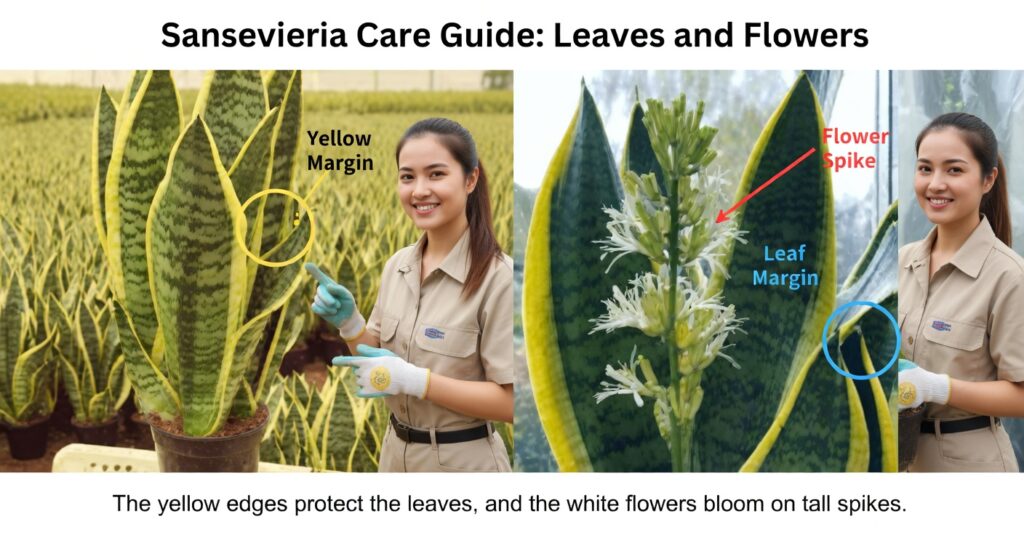
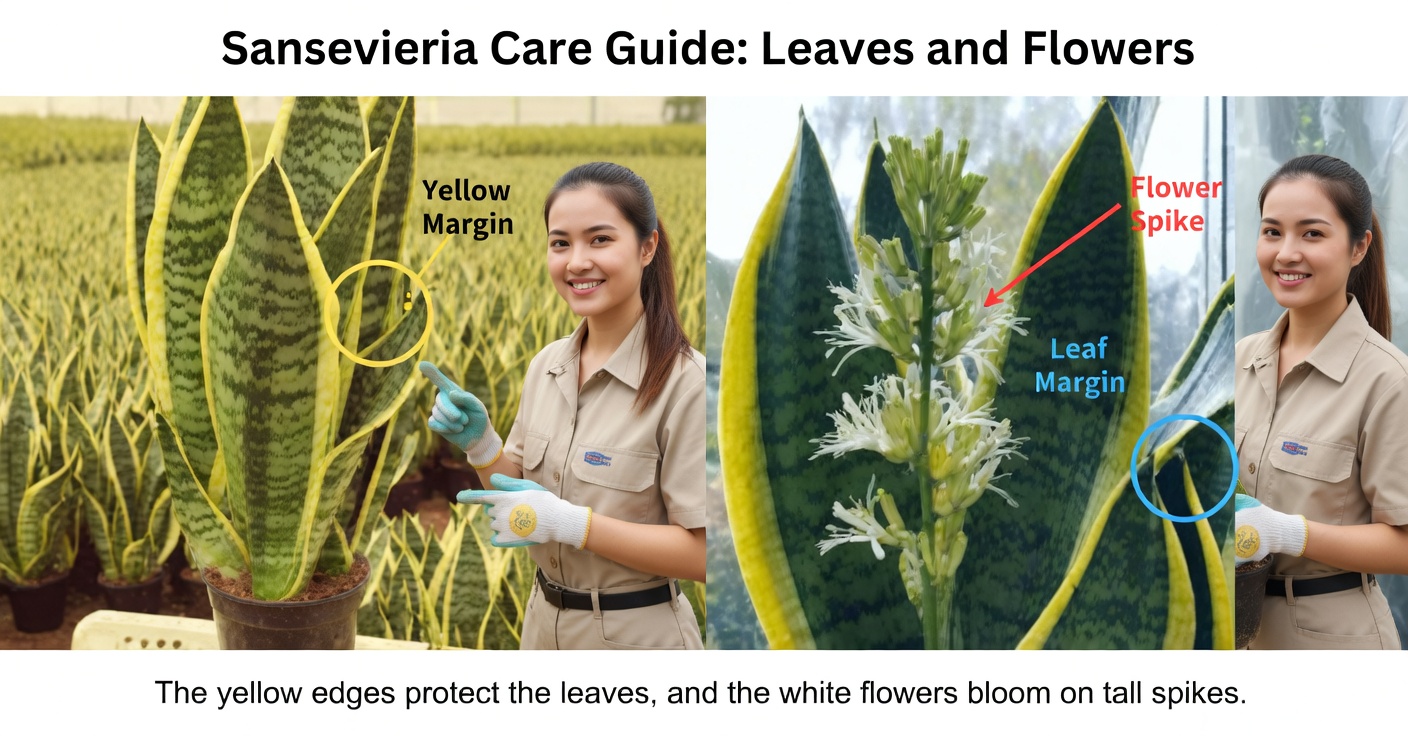
When a snake plant does bloom, it produces slim, vertical flower stalks lined with clusters of small flowers.
- Flowers are typically white to pale green.
- They grow along tall, slender spikes rising from the center of the plant.
- The fragrance is sweet and often compared to jasmine, especially noticeable in the evening.
Flowering usually occurs in spring or summer. The blossoms can last for several weeks before drying out. Whether your plant blooms or not will depend on its age, overall health, and growing conditions.
Additional Tips for a Healthy, Flower-Ready Sansevieria
- Avoid moving the plant too often: Once you find a good spot with stable light and temperature, try not to change its location frequently. Constant relocation can stress the plant and slow its growth.
- Skip unnecessary pruning: Sansevieria doesn’t need regular pruning. Only remove leaves that are damaged, yellowed, or completely dry.
- Propagate when it’s thriving: If your plant is robust and producing new growth, you can propagate it by dividing the rhizomes or using leaf cuttings to create new snake plants.
By following these guidelines, you greatly improve your Sansevieria’s overall health and increase the chances of seeing it bloom. While flowering is never guaranteed, giving the plant optimal care will help it look fuller, stronger, and more beautiful year-round.