Why Walking Alone May Not Be Enough After 60
For many adults over 60, a daily walk is the go-to way to stay active and feel well. It is gentle on the joints, simple to maintain, and easy to build into everyday life. Still, specialists in orthopedics and healthy aging often point out that walking on its own may not train all the muscles needed for balance, joint protection, and long-term independence.
As we get older, normal age-related changes such as muscle loss, often called sarcopenia, and declining balance can make routine movements more difficult. Even if you walk consistently, that may not be enough to fully strengthen the stabilizing muscles in the hips, knees, core, and lower legs. Walking improves stamina, but it does not always provide the variety or resistance needed to reduce weakness or lower the risk of falling.
The encouraging part is that you do not need a gym membership, machines, or long workouts. By adding a few gentle exercises to your routine, you can support stronger joints, better balance, and greater confidence in daily movement. The goal is not to replace walking, but to make it work better for you.
Why Walking Can Leave Gaps in Fitness After 60
Walking remains one of the best activities for cardiovascular health, circulation, and mood. Health experts widely recommend it, and for good reason. But once you move into your 60s and beyond, the body begins to change in ways that walking alone cannot completely address.
Muscle mass typically declines by around 3% to 8% per decade after age 30, with the pace often increasing after 60. Because walking repeats the same basic movement pattern, it mainly works endurance rather than deeper strength. That means some of the important support muscles around the hips, knees, and ankles may not get enough challenge.
Over time, this can affect stability, make uneven ground harder to manage, and turn simple tasks like standing up from a chair into more of an effort. Orthopedic doctors and physical therapists often explain that while walking helps keep the legs moving, it does not always build the strength and power needed for climbing stairs, carrying groceries, or catching yourself if you lose balance.
That is why adding targeted movements can be so valuable. A few simple exercises can fill in the areas walking misses and help maintain strength in a safe, low-impact way.
5 Easy Movements Experts Often Recommend
These exercises are commonly used in senior fitness and rehabilitation programs. They are gentle, require little to no equipment, and focus on mobility, strength, and balance. A chair or wall is usually all you need.
A practical starting point is:
- 2 to 3 sets of 8 to 12 repetitions
- A few times per week
- Slow, controlled movement
- Rest whenever needed
Always begin gradually and pay attention to how your body feels.
1. Chair-Assisted Sit-to-Stand
This movement helps strengthen the quadriceps, glutes, and core, which are all important for getting up safely and reducing stress on the knees.
How to do it
- Sit on a sturdy chair with your feet flat on the floor and about hip-width apart.
- Lean your upper body slightly forward.
- Press through your heels and rise to standing slowly.
- If needed, lightly use the chair arms at first for support.
- Pause briefly at the top.
- Lower yourself back down with control.
The key is to move slowly rather than using momentum. Many older adults notice that this exercise makes standing up from chairs feel easier after a few weeks of regular practice.
2. Standing Hip Abduction
Also known as a side leg lift, this exercise targets the outer hip muscles, especially the gluteus medius. These muscles help stabilize the pelvis and support proper knee alignment while walking.
How to do it
- Stand beside a chair or wall and hold it lightly for balance.
- Keep your body upright.
- Lift one leg out to the side about 6 to 12 inches.
- Keep your toes facing forward.
- Hold for 2 to 3 seconds.
- Lower the leg slowly and repeat.
- Switch to the other side.
This simple move can help reduce that unsteady or shaky feeling while walking and improve control through the hips.
3. Single-Leg Balance Hold
Balance training is essential after 60, and this is one of the easiest ways to improve it. It also helps strengthen the ankles, which play a major role in preventing trips and falls.
How to do it
- Stand near a chair or wall for safety.
- Shift your weight onto one foot.
- Lift the other foot slightly off the floor.
- Keep the lifted knee bent or straight, whichever feels more comfortable.
- Hold the position for 10 to 30 seconds.
- Breathe normally and stay relaxed.
- Repeat on the other side.
If needed, start with very short holds and gradually build up. Research has shown that balance-focused exercises like this can help reduce fall risk in older adults.
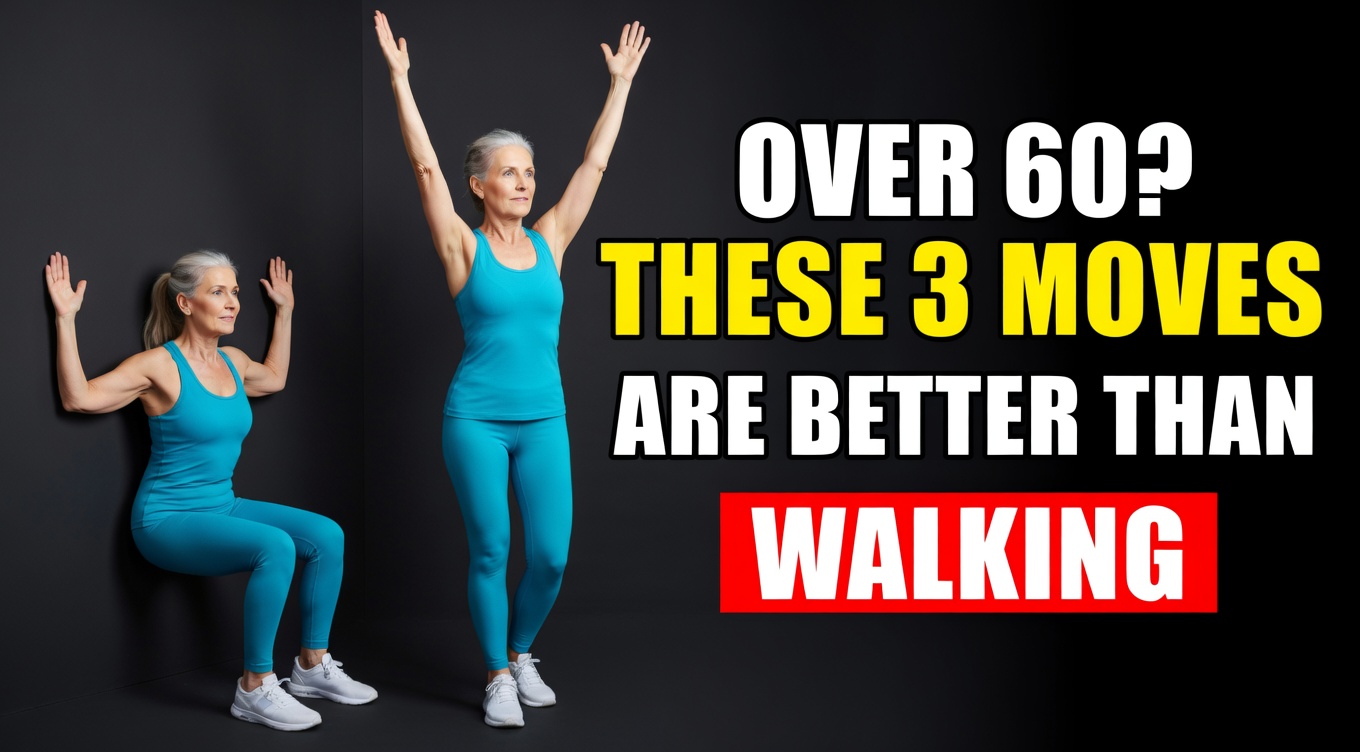
4. Wall Push or Wall Angels
This gentle upper-body movement supports posture and activates the shoulders, back, and core. Good posture is important for overall stability and can make walking feel easier and more efficient.
Option 1: Wall Angels
- Stand with your back against a wall.
- Place your feet a few inches away from it.
- Keep your head, shoulders, and lower back lightly touching the wall.
- Raise your arms into a wide "Y" shape.
- Slowly slide them up and down like making a snow angel.
Option 2: Wall Push
- Stand facing a wall.
- Place your palms on the wall at shoulder height.
- Press gently into the wall and hold.
Both versions can help open the chest and strengthen the muscles that keep you upright.
5. Seated or Standing Calf Raises
Strong calves are important for pushing off while walking and for keeping the ankles stable. This can help reduce extra strain on the knees and hips.
How to do it standing
- Stand behind a chair and hold it for support.
- Slowly lift your heels and rise onto your toes.
- Pause for a second at the top.
- Lower your heels back down with control.
How to do it seated
- Sit upright in a chair.
- Keep your toes on the floor.
- Lift your heels up and then lower them.
This exercise is especially useful for maintaining lower-leg strength in a simple, joint-friendly way.
Walking Alone vs. Walking Plus Strength and Balance Work
Here is a quick way to understand the difference.
Walking by itself
- Supports heart health
- Boosts mood and energy
- Builds endurance in major leg muscles
- Low-impact and easy to stick with
Walking combined with these 5 movements
- Trains stabilizing muscles more effectively
- Improves balance and body control
- Helps maintain strength for daily activities
- Supports the knees, hips, and ankles
- May lower the risk of falls
Putting the two together offers a more complete approach to healthy aging.
How to Begin Safely
A good starting point is just 10 to 15 minutes total, 3 times per week. Before doing the exercises, warm up with gentle marching in place or easy movement around the room.
Keep these tips in mind:
- Move slowly and with control
- Breathe steadily throughout each exercise
- Never hold your breath
- Stop if you feel pain beyond mild muscle effort
- Speak with your doctor if you have concerns or existing joint problems
As the exercises become easier, you can gradually increase the number of repetitions or extend how long you hold each position.
What matters most is consistency, not intensity. Many people begin to notice steadier walking, less stiffness, and improved confidence within a few weeks.
Final Thoughts: Small Additions Can Create Big Benefits
Walking is still one of the best habits you can keep after 60, so there is no reason to give it up. But adding a few focused movements can strengthen the areas walking does not fully reach. That means better support for the knees and hips, stronger legs, improved balance, and greater ease with everyday activities.
The idea is simple: keep walking, and make your routine more complete.
Start small by choosing just one or two of these exercises this week. Over time, those small steps can lead to more strength, better stability, and greater confidence in how you move each day.
FAQ
Is walking still beneficial after age 60?
Yes. Walking remains excellent for heart health, mood, circulation, and overall activity. The goal is not to stop walking, but to add variety so your body gets more complete support.
How often should I do these exercises?
Try to do them 2 to 3 times per week, with rest days in between. Even a short 10-minute session can be helpful.
What if I already have knee or hip problems?
It is best to talk with your healthcare provider before starting. They can recommend the safest options based on your condition and mobility level.