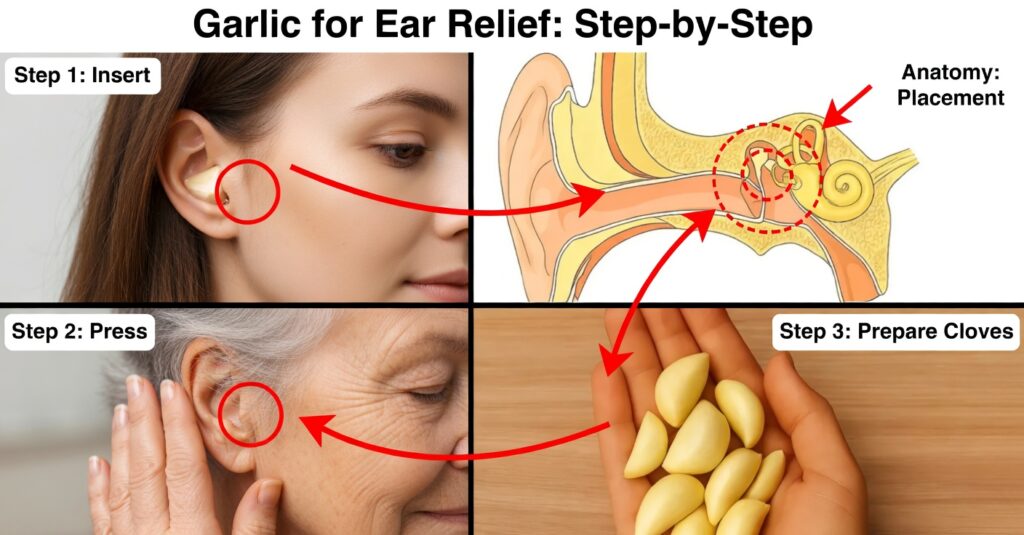
Garlic for Ear Health: How to Ease Infections and Support Hearing
Many people reach for a home remedy when they feel a blocked ear, mild pain, internal pressure, or a temporary drop in hearing. In folk medicine, garlic for the ear has long been used because of its antimicrobial and anti-inflammatory properties. It is not a miracle cure and it never replaces a medical diagnosis, but when used correctly, it can sometimes provide relief in mild cases where there are no warning signs.
Garlic (Allium sativum) is rich in bioactive compounds, especially allicin and other sulfur-containing molecules, known for their potential antibacterial and antifungal activity. For that reason, some people use it to ease minor discomfort linked to mild outer ear infections or a feeling of congestion related to inflammation. Garlic may also help promote circulation, which is important for inner ear structures and overall hearing wellness.
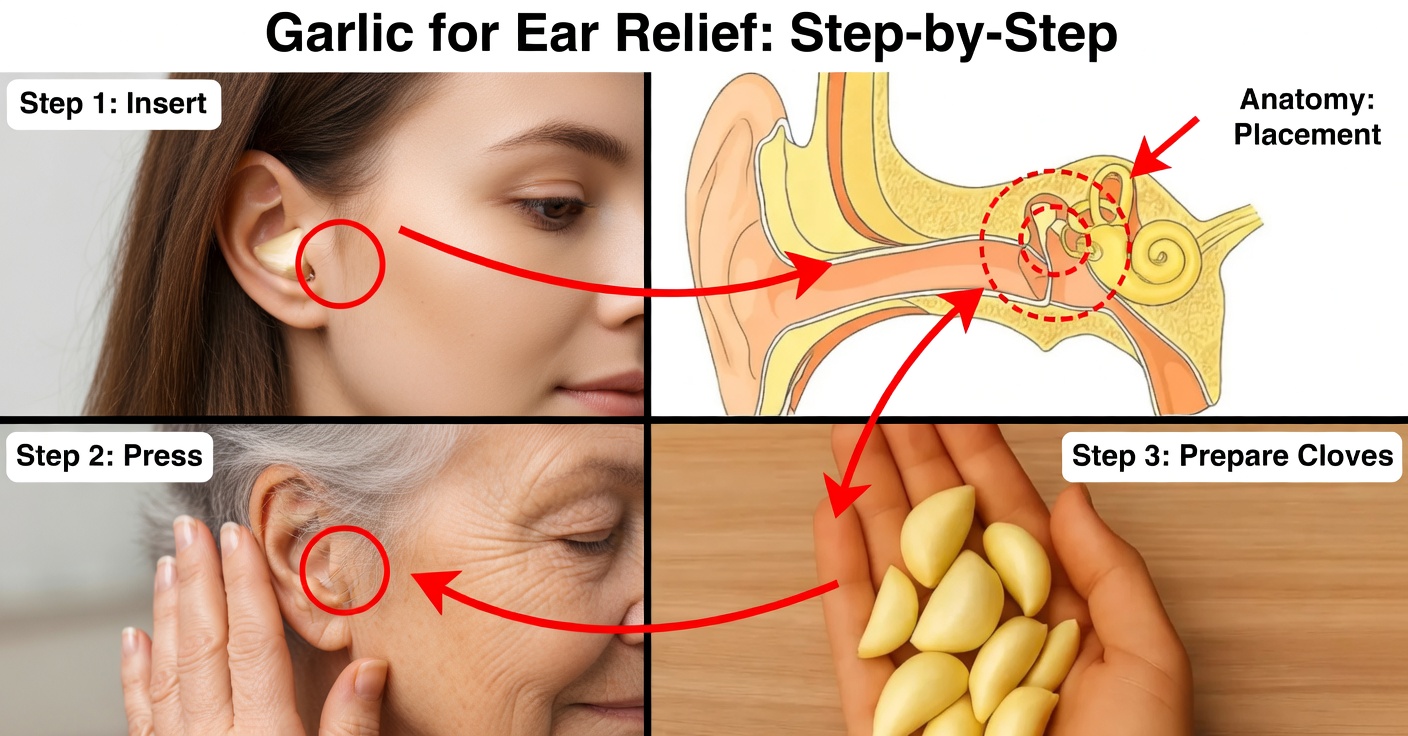
However, one rule is non‑negotiable: raw garlic should never be placed directly inside the ear canal. Doing so can irritate the delicate skin, worsen inflammation, and increase the risk of complications. The most common and safest traditional approach is to prepare a warm garlic oil and apply it carefully, or to use a gentle cotton/gauze method that does not push anything into the ear.
Key Properties of Garlic and Why It’s Used for Ear Care
Garlic is valued in traditional remedies for several reasons related to ear health:
- Antimicrobial action: Its compounds may help combat certain bacteria and fungi involved in mild ear discomfort.
- Anti‑inflammatory effect: Garlic can potentially reduce feelings of pressure, inflammation, and moderate pain.
- Antioxidant support: Its antioxidants help counter oxidative stress, a factor associated with cellular aging.
- Circulation support: Sulfur compounds in garlic have been traditionally linked to improved blood flow, which is important for the sensitive structures of the inner ear.
These properties explain why “garlic for ear pain” or “garlic oil for ear infection” appears frequently in home remedy discussions. Still, the realistic goal is to soothe mild symptoms and support natural recovery—not to cure severe hearing loss or an advanced infection.
Safe Recipe: Traditional Garlic Oil for the Ear
Ingredients
- 1 fresh clove of garlic (preferably without the inner sprout)
- 2 tablespoons of extra virgin olive oil
- Sterile cotton or gauze
- A clean dropper (or a needle‑free syringe)
- Optional: 1 vitamin E capsule (for traditional/cosmetic use)
Step‑by‑Step Preparation
- Peel the garlic clove and crush it thoroughly so it releases its juices.
- Gently warm the olive oil over very low heat (do not let it boil). The oil should become lukewarm, never hot.
- Add the crushed garlic to the warm oil and let it infuse for about 10 minutes.
- Strain the mixture to remove all pieces of garlic and allow the oil to cool.
- (Optional) Pierce a vitamin E capsule and mix the contents into the oil.
- Store the oil in a clean, tightly closed container in a cool place.
Important: The oil must be only lukewarm when applied. If it is hot, it can irritate the skin or cause discomfort.
How to Apply Garlic Oil to the Ear Safely
- Clean only the outer part of the ear with a clean piece of gauze.
- Warm the garlic oil slightly so it reaches body temperature—never hot.
- Lie on your side with the affected ear facing up.
- Using a dropper, place 1–2 drops into the ear canal, without touching the inside of the ear with the dropper tip.
- Stay in this position for 15–20 minutes.
- Then tilt your head so the oil can drain out naturally.
- Gently wipe away any excess from the outer ear.
Suggested frequency: Once a day for 3–5 days.
If you notice burning, strong itching, or increased pain, stop using it.
Gentle Alternative: Garlic with Cotton (No Drops)
If you prefer not to use drops inside the ear, you can try this milder traditional method:
- Peel a clove of garlic and wrap it in a small piece of gauze or cotton.
- Place the wrapped garlic at the entrance of the ear, without pushing it inside.
- Leave it there for 30–60 minutes.
- Remove it and clean the outer area of the ear.
This technique aims to benefit from the volatile compounds and aroma of garlic without direct contact with the inner ear canal, reducing the risk of irritation.
When Might You Notice Improvement?
For very mild issues—such as light pressure, minor inflammation, or slight congestion—some people report relief after the first or second application. However, if the problem is due to a deeper infection, a large wax buildup, or any damage to the eardrum, garlic will not be enough and may even be unsafe.
A practical guideline: if there is no clear improvement within 48–72 hours, or if symptoms get worse, you should stop home treatment and seek medical advice.
Commonly Reported Benefits of Garlic for the Ear
Without guaranteeing results, traditional use often mentions the following potential benefits:
- May help ease mild ear discomfort.
- May assist in reducing slight inflammation.
- Supports gentle external ear hygiene without the drying effect of harsh products.
- May lessen the feeling of a “blocked ear” in cases of minor inflammation.
- Offers some local support thanks to its antimicrobial profile.
Important Precautions (Read This Carefully)
Do not use garlic in or around the ear if:
- There is bleeding, pus, foul-smelling discharge, or fever.
- You suspect a perforated eardrum (severe pain, sudden hearing loss, fluid leaking from the ear).
- The pain is intense, or you experience dizziness, vertigo, or pronounced ringing in the ears.
- The patient is a young child (especially under 3 years old).
- You have a known allergy to garlic or very sensitive skin.
Sensitivity test: Place a small drop of the prepared garlic oil on the inner forearm. If redness, burning, or irritation appears, do not use it in or near the ear.
Additional Tips to Protect Your Hearing
- Avoid very loud noises and take listening breaks if you use headphones.
- Stay well hydrated and eat a balanced diet rich in zinc, vitamin B12, and magnesium.
- Do not insert cotton swabs into the ear canal; they tend to push earwax deeper.
- If you are prone to earwax plugs or recurrent ear issues, schedule periodic check‑ups with a healthcare professional.
Conclusion
Garlic for the ear can be a traditional supportive remedy for mild discomfort, as long as it is used carefully and nothing is forced into the ear canal. The safest approaches are usually lukewarm garlic oil applied properly or the gauze method at the entrance of the ear, always following hygiene and time‑limit guidelines. If warning signs appear or symptoms fail to improve within a few days, the safest option is to see a doctor to rule out a deeper infection, eardrum damage, or other causes of hearing problems.
Important notice: This article is for informational purposes only and does not replace professional medical advice. If you experience severe, persistent, or worrying symptoms, consult a qualified healthcare provider.