Herbs to Improve Circulation in the Legs
Poor circulation in the legs is a very common complaint and can seriously affect daily comfort. Many people experience heaviness, swelling, tingling, night-time cramps, or a constant feeling of fatigue in the lower limbs. Although it is often linked to aging, a sedentary lifestyle, or standing for long periods, it can also be a signal that blood flow needs extra support.
In recent years, more people have become interested in natural approaches, including herbs that may support leg circulation. Certain medicinal plants have a long history of traditional use to promote venous return, support microcirculation, and ease the sensation of tired legs. However, these natural options should never replace medical evaluation, especially if there is intense pain, marked skin discoloration, severe swelling, or suspicion of a serious vascular problem.
Why Does Poor Circulation in the Legs Occur?
When blood does not circulate efficiently, it tends to pool more easily in the lower extremities. This can lead to symptoms such as:
- Heavy or aching legs
- Warmth or burning sensations
- Cold feet
- Swelling (edema)
- Tiredness, especially at the end of the day
Spending long hours seated, excess body weight, lack of physical activity, tight clothing, and certain hormonal changes can all aggravate the problem.
Within this context, some herbs are used as complementary support as part of a healthy lifestyle. Their role is not to “cure” circulation problems on their own, but to assist overall circulatory well-being when combined with appropriate habits.
Nettle: A Traditional Ally for Heavy Legs
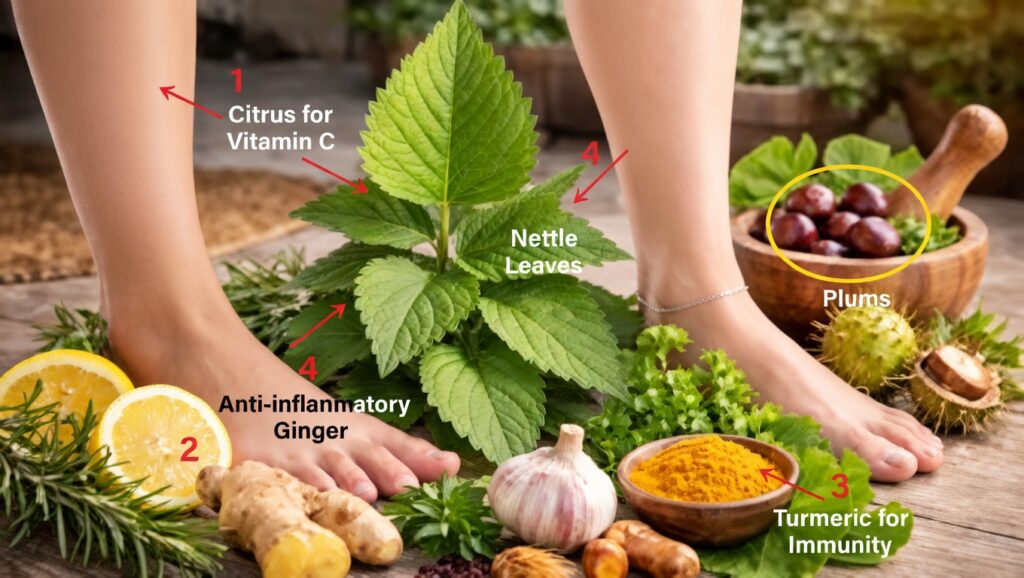
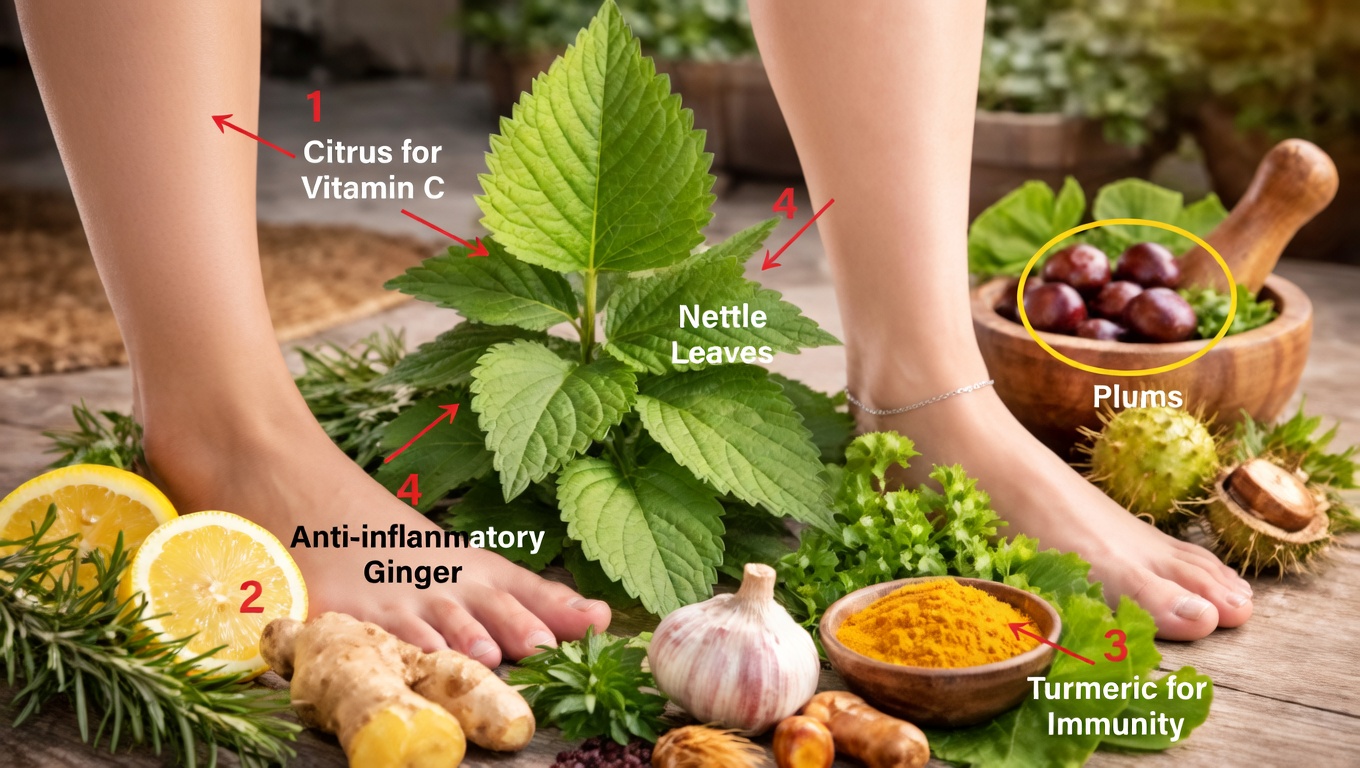
Nettle is one of the most frequently mentioned plants among herbs for leg circulation. Traditionally, it has been valued for its antioxidant compounds and its potential to support the elimination of retained fluids—particularly useful when heaviness and swelling are present.
A common way to use nettle is as an herbal tea. It can be combined with ginger, rosemary, and a splash of lemon juice to create a more complete blend:
- Nettle contributes plant compounds associated with fluid balance.
- Ginger provides a warming, stimulating effect.
- Rosemary is often linked with support for peripheral circulation.
- Lemon adds freshness and a pleasant flavor.
How to prepare it:
- Bring about 1½ cups of water to a boil.
- Add 1 tablespoon of dried nettle, a thin slice of fresh ginger, and a sprig of rosemary.
- Lower the heat and simmer for a few minutes.
- Remove from the heat, let it steep, then strain.
- Add a bit of fresh lemon juice before drinking.
This beverage is usually consumed in moderation as part of a broader natural support plan for leg circulation.
Horse Chestnut: A Classic Herb for Vein Health
When talking about herbs to improve circulation in the legs, horse chestnut is one of the best-known options. Traditionally, it has been associated with helping to strengthen vein walls and supporting venous return. For this reason, it is frequently recommended when someone feels leg fatigue or wants to care for the appearance of mild varicose veins.
Horse chestnut can be used in:
- Mild infusions (always following professional guidance on dose and duration)
- Topical products, such as gels or creams
In external applications, it is often combined with aloe vera or included in gels designed for upward massage on the legs. Gently massaging from the ankles toward the thighs can provide a comforting sense of lightness and freshness.
Despite being a popular plant, horse chestnut must be used with caution. It may not be suitable for:
- People taking anticoagulant medications
- Individuals with chronic illnesses
- Anyone under ongoing medical treatment
In such cases, medical advice is essential before using horse chestnut in any form.
Garlic: Natural Support for Blood Flow
Garlic is a mainstay in traditional natural remedies and is well known for compounds such as allicin, which have been studied in the context of cardiovascular health. Within a balanced diet, garlic can be a helpful addition for those looking to support overall circulation, including in the legs.
A simple preparation uses garlic alongside other commonly used spices:
- Crush fresh garlic cloves.
- Mix with a small amount of turmeric powder, a pinch of black pepper, and extra-virgin olive oil.
This combination brings together ingredients widely used in natural health circles for their antioxidant profile and their traditional role in supporting peripheral circulation.
Garlic should not be viewed as a miracle cure. Instead, it can be one more element in a comprehensive strategy to care for leg health and the cardiovascular system in general.
Herbal Foot Baths to Relax Tired Legs
Beyond herbal teas and internal remedies, foot baths can offer localized relief for tired legs. A warm soak using nettle, rosemary, bay leaves, and sea salt is often used to relax the legs after a long day.
Although these baths do not replace any medical treatment, they may provide:
- A sense of relaxation
- A feeling of lightness in the legs
- Comfort in cases of mild tiredness or strain
How to make an herbal foot bath:
- Boil water with nettle, rosemary, and bay leaves for a few minutes.
- Allow the infusion to cool down to a comfortable, warm temperature.
- Pour the liquid into a basin and add a handful of sea salt.
- Soak your feet and lower legs for 15–20 minutes.
This simple ritual is one many people incorporate into their evening routine to rest and soothe their legs.
Habits That Enhance the Effects of Herbs
Herbs for leg circulation are much more effective when combined with healthy daily habits. Some key practices include:
- Walking regularly: Even a brisk 20–30 minute walk most days helps stimulate venous return.
- Avoiding long periods of sitting or standing: Take short breaks to move around and stretch.
- Elevating the legs: Raising the feet above heart level for a few minutes can help reduce pooling of blood.
- Staying well hydrated: Proper fluid intake supports circulation and overall health.
- Reducing excess salt and ultra-processed foods: This may help decrease fluid retention, which often worsens swelling.
- Wearing comfortable footwear: Shoes that support the feet without constriction can ease leg strain.
- Moving the ankles regularly: Simple ankle rotations and flexion exercises can stimulate blood flow.
- Avoiding crossing the legs for long periods: This simple change can decrease pressure on blood vessels.
These everyday measures, combined with appropriate herbal support, may significantly improve how the legs feel by the end of the day.
Important Precautions
Despite the popularity of natural remedies, not all circulatory discomfort should be managed solely with herbs. It is crucial to seek medical attention if you experience:
- Severe or sudden leg pain
- One leg that is noticeably more swollen than the other
- Redness, warmth, or significant tenderness
- Difficulty walking
- Marked changes in skin color or temperature
These signs may indicate a serious condition that requires prompt professional evaluation.
Extra caution is also needed if:
- You are pregnant
- You take blood-thinning (anticoagulant) medication
- You have cardiovascular, kidney, or liver disease
In these situations, any medicinal plant—whether used internally or externally—should first be discussed with a healthcare professional.
Conclusion
Herbs to improve circulation in the legs can offer gentle, natural support when you experience heaviness, mild swelling, or tiredness in the lower limbs. Nettle, horse chestnut, and garlic stand out among the best-known traditional options and can be used in teas, mixtures, or herbal baths as part of a broader self-care routine.
Even so, the most effective approach is to combine these natural remedies with daily movement, adequate hydration, and medical supervision when needed. Nature can be a valuable ally for circulatory comfort, but it does not replace professional diagnosis or treatment. When used wisely and alongside healthy lifestyle habits, these herbs can become useful companions in naturally caring for your legs.