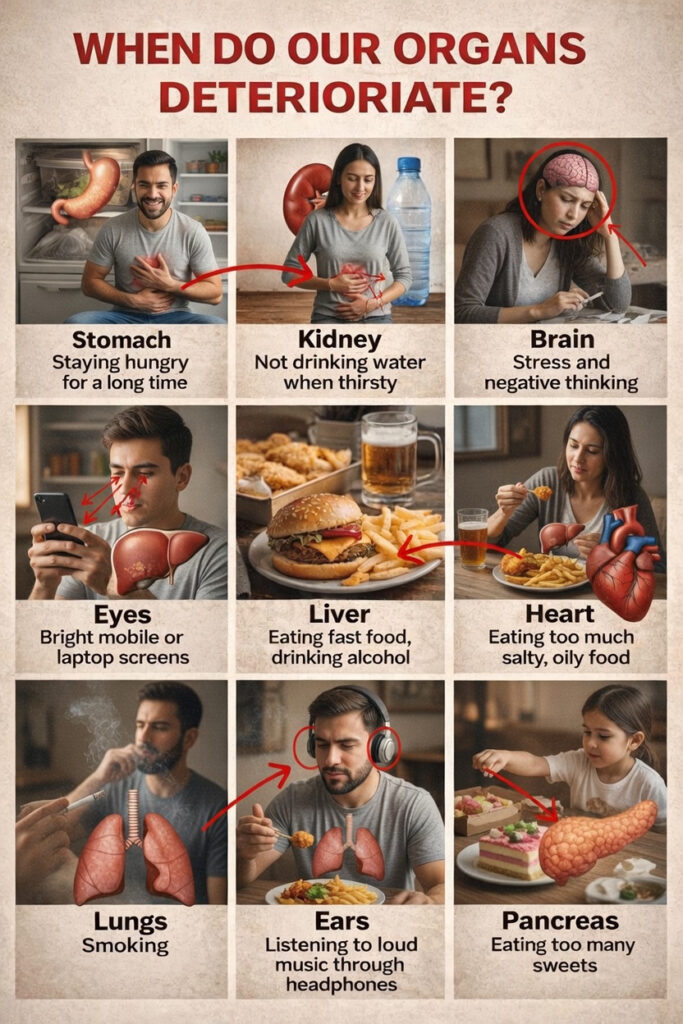
9 Everyday Habits That Can Put Stress on Your Organs
Most people move through the day without paying much attention to small routines such as postponing meals, brushing off thirst, or using a phone late into the night. These actions may seem insignificant at the time, yet repeated daily, they can gradually increase the burden on important organs throughout the body.
The encouraging news is that simple awareness can lead to meaningful improvement. A few realistic changes in your routine can go a long way toward protecting long-term health.
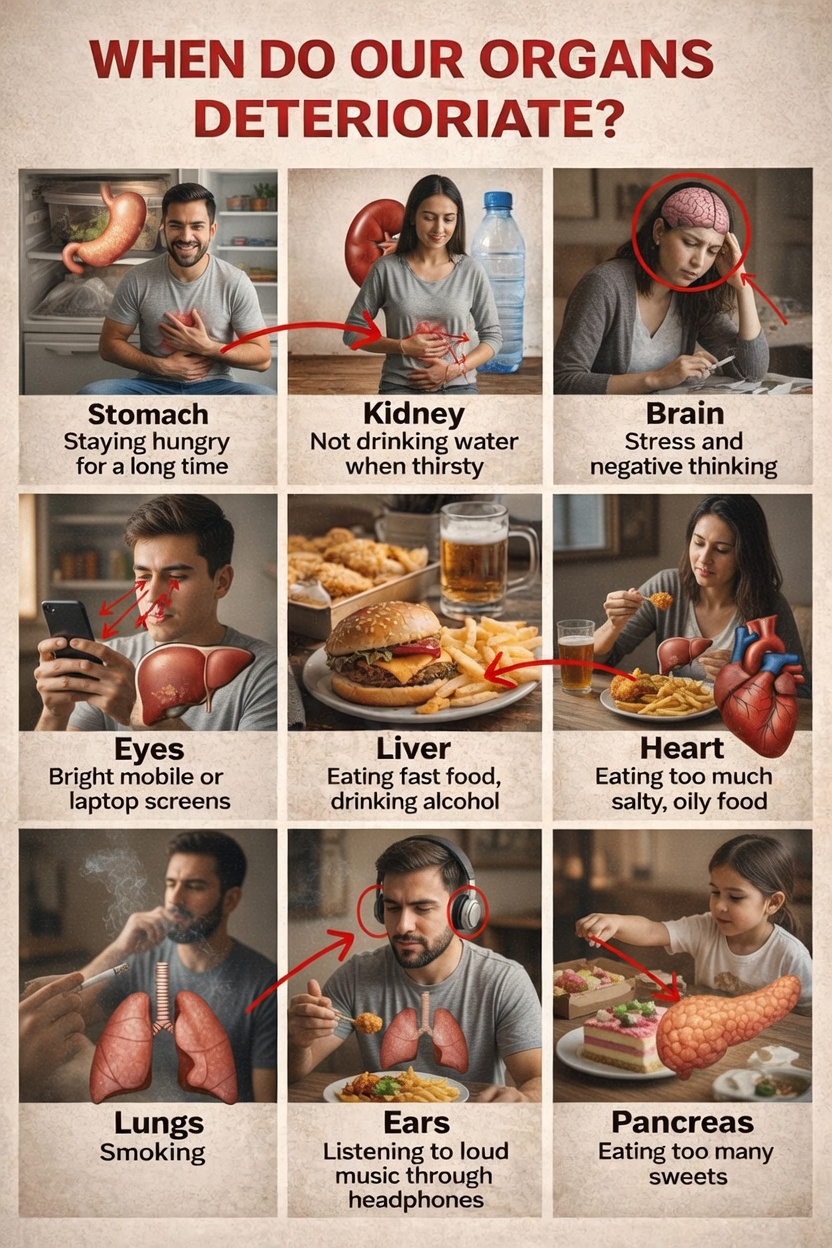
In this article, you’ll learn about nine common habits associated with added stress on the stomach, kidneys, brain, eyes, liver, heart, lungs, ears, and pancreas. You’ll also find practical tips that are easy to apply in everyday life. Be sure to read to the end for an important insight that connects many of these habits.
Why Daily Routines Have a Bigger Impact Than You Realize
Organs usually do not decline suddenly. In most cases, changes happen slowly over time as a result of repeated lifestyle patterns. Research suggests that beginning around age 30, the body’s organ reserve—the extra ability organs have to respond to physical stress—starts to decrease gradually. In systems such as the kidneys, lungs, and heart, that reserve may drop by roughly 1% each year.
That does not mean decline is unavoidable. It simply shows that daily behaviors matter. Repeated strain can speed up this process, while healthy habits may help preserve organ function for longer.
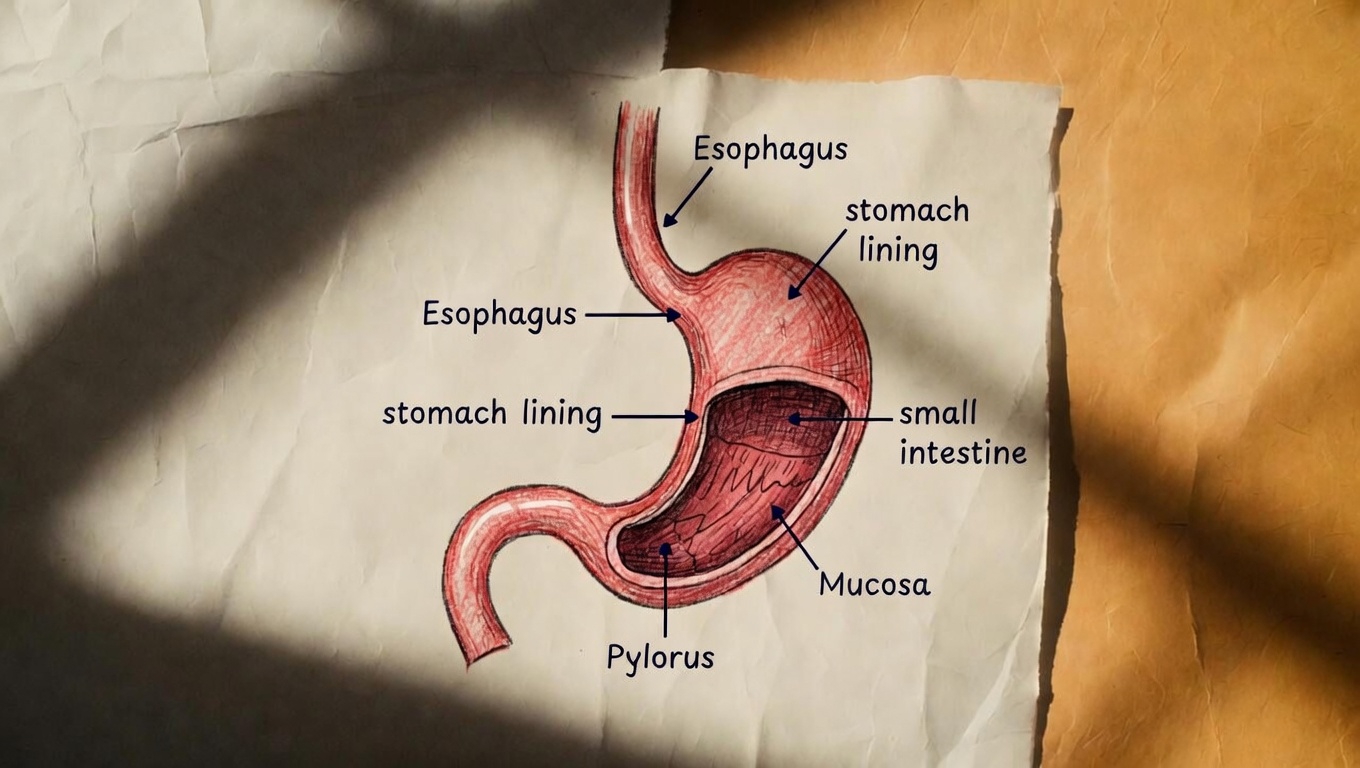
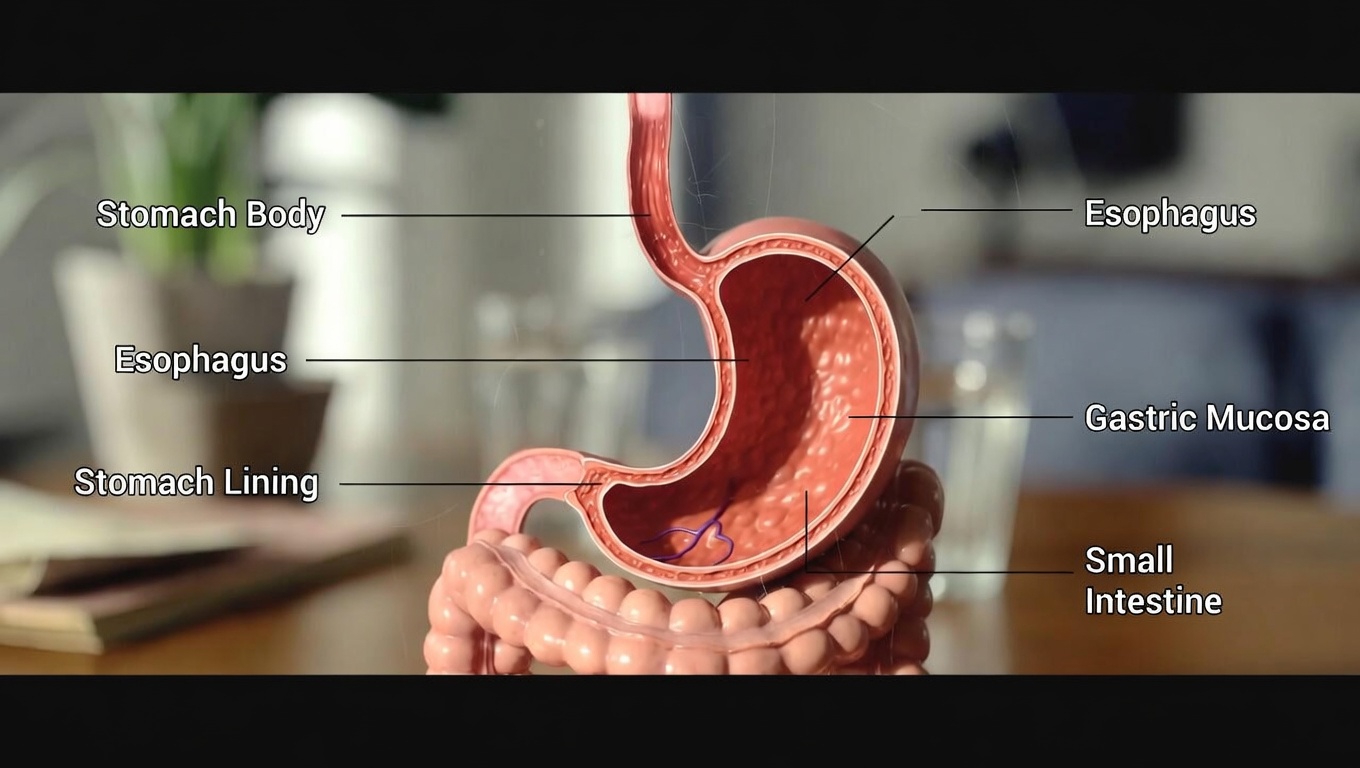
1. Skipping Meals or Waiting Too Long to Eat Can Affect the Stomach
Frequently missing meals, delaying lunch for hours, or regularly skipping breakfast may irritate normal digestive rhythms. When the stomach remains empty for long periods, acid can accumulate and contribute to discomfort or digestive upset over time.
Easy Ways to Support Stomach Health
- Try to eat balanced meals on a regular schedule, ideally every 4 to 5 hours.
- Add more fiber-rich foods such as vegetables, fruits, and whole grains.
- Slow down during meals and avoid eating in a rush whenever possible.
2. Ignoring Thirst Can Place Extra Pressure on the Kidneys
The kidneys work continuously to filter waste and maintain fluid balance in the body. If you often go too long without drinking water, dehydration can make that job more difficult and may contribute to added strain over time.
Simple Hydration Habits
- Keep a refillable water bottle with you during the day.
- Start the morning with a glass of water and drink another before meals.
- Aim for around 8 cups, or about 2 liters, per day, while adjusting for weather and activity level.
3. Ongoing Stress and Negative Thought Patterns May Influence Brain Health
Long-term stress causes the body to release hormones that can affect the brain when elevated repeatedly. Studies have linked chronic stress and persistent negative thinking with changes in brain structure, mood, and cognitive performance.
Practical Ways to Reduce Mental Strain
- Spend 5 to 10 minutes each day doing deep breathing, meditation, or quiet reflection.
- Make time for enjoyable activities such as walking outdoors, reading, or creative hobbies.
- Protect your sleep and aim for 7 to 9 hours of quality rest each night.
4. Too Much Screen Time, Especially in Dim Lighting, Can Tire the Eyes
Looking at bright screens for long periods—especially in a dark room—can lead to digital eye strain. Reduced blinking, screen glare, and blue light exposure often contribute to dry, tired, and irritated eyes.
Better Habits for Eye Comfort
- Use the 20-20-20 rule: every 20 minutes, look at something 20 feet away for 20 seconds.
- Turn on night mode or use blue-light filtering settings in the evening.
- Make sure the room is properly lit when using phones, tablets, or computers.
5. Fast Food and Frequent Alcohol Intake Can Burden the Liver
The liver helps process everything you eat and drink. A diet heavy in processed foods, combined with regular alcohol use, can overwork this organ and may contribute over time to fat buildup, inflammation, or reduced efficiency.
Liver-Friendly Choices to Consider
- Keep alcohol intake moderate, or avoid it altogether if possible.
- Choose whole, minimally processed foods more often than fast food.
- Include foods often associated with liver support, such as leafy greens, beets, and cruciferous vegetables.
6. Excess Salt and Processed Fatty Foods Can Increase Heart Strain
A diet high in sodium and unhealthy fats may raise blood pressure and support plaque buildup in the arteries over the years. Fried foods and heavily processed meals are common contributors.
Smart Swaps for Heart Health
- Check nutrition labels and try to stay under 2,300 mg of sodium per day.
- Flavor food with herbs and spices instead of relying heavily on salt.
- Use healthier fats, such as olive oil, and fill half your plate with fruits and vegetables.
7. Smoking and Secondhand Smoke Can Damage the Lungs
Tobacco smoke exposes the lungs to toxic substances that can irritate tissue, reduce elasticity, and impair oxygen exchange. With continued exposure, lung function may decline progressively.
Steps That Support Better Lung Function
- If you smoke, seek help to quit through counseling, support groups, or evidence-based programs.
- Avoid environments where secondhand smoke is common.
- Add light cardio or breathing exercises to your routine to help maintain lung capacity.
8. Loud Headphone Use for Long Periods Can Harm the Ears
Listening to music or videos at high volume for extended stretches can damage the delicate hair cells inside the inner ear. Because these cells do not regenerate, hearing loss can develop gradually and permanently.
Safer Listening Tips
- Follow the 60/60 guideline: no more than 60% volume for no longer than 60 minutes at a time.
- Give your ears regular breaks throughout the day.
- Consider noise-canceling headphones so you can listen clearly at lower volume levels.
9. Too Much Sugar Can Overwork the Pancreas
The pancreas plays a key role in blood sugar regulation by producing insulin. Frequently eating sugary snacks, desserts, and sweetened drinks can trigger repeated insulin surges, which may place extra demand on this organ.
Smarter Ways to Cut Back on Sugar
- Replace candy or pastries with whole fruit, nuts, or other less processed snacks.
- Watch for hidden sugars in packaged foods and beverages.
- Build meals around protein, fiber, and healthy fats to help keep blood sugar more stable.
Quick Summary: Common Habits and the Organs They Affect
- Stomach → Skipping meals or waiting too long between meals
- Kidneys → Not drinking enough water
- Brain → Chronic stress and persistent negative thinking
- Eyes → Long screen exposure, especially in low light
- Liver → Processed foods and regular alcohol intake
- Heart → Too much salt and unhealthy fats
- Lungs → Smoking and tobacco smoke exposure
- Ears → Loud headphone use for extended periods
- Pancreas → High intake of sugary foods and drinks
The Overlooked Link Behind Many of These Habits
A surprising number of these behaviors have one thing in common: they interfere with the body’s natural signals and recovery systems. When you repeatedly dismiss hunger, thirst, fatigue, or the need for rest, the body has fewer chances to restore balance.
The positive side is that even a few healthy routines can create benefits across multiple organs at once. Drinking more water, eating on schedule, reducing stress, and taking short screen breaks may seem small, but together they can have a powerful ripple effect.
Final Thoughts
Your organs work nonstop to keep you functioning every day. When you become more mindful of ordinary habits and make small, sustainable changes, you give your body better support for the future.
You do not need to change everything at once. Start with one or two improvements this week—perhaps better hydration, more regular meals, or less screen time at night. Small steps today can make a meaningful difference over the years.
FAQ
How quickly do unhealthy habits begin to affect organ health?
In most cases, the effects build slowly over months or years, depending on how often and how intensely the habits occur. Consistent healthy choices can help reduce or counter some of that long-term strain.
Is it too late to improve organ health through lifestyle changes?
No. Research shows that positive lifestyle changes can be beneficial at any age, often improving function and lowering risk factors even later in life.
If I already have several of these habits, where should I begin?
Start with the easiest change to maintain, such as drinking more water, taking breaks from screens, or reducing sugary snacks. Once that becomes routine, build on it gradually.