Spotting These Signs Early Can Help Prevent a Stroke — Your Body Warns You First
Have you ever noticed something “off” — sudden dizziness, unusual fatigue, or a headache that feels different — and brushed it aside? What if those small changes were actually a quiet warning of something far more serious?
Stroke is one of the leading causes of death and long-term disability worldwide. What many people don’t realize is that warning signs can appear days before a major event. Because these symptoms can look like stress, aging, or simple exhaustion, they’re often ignored.
The reality is straightforward: your body often sends alerts in advance.
Why “Mild” Symptoms Matter So Much
Before a major stroke, some people experience temporary disruptions in blood flow to the brain, known as a TIA (Transient Ischemic Attack)—sometimes called a “mini-stroke.” These episodes may resolve quickly, but they are a serious red flag.
Ignoring them can allow the underlying problem to progress silently. Recognizing early stroke symptoms in time can dramatically improve outcomes.
The 9 Early Warning Signs of Stroke
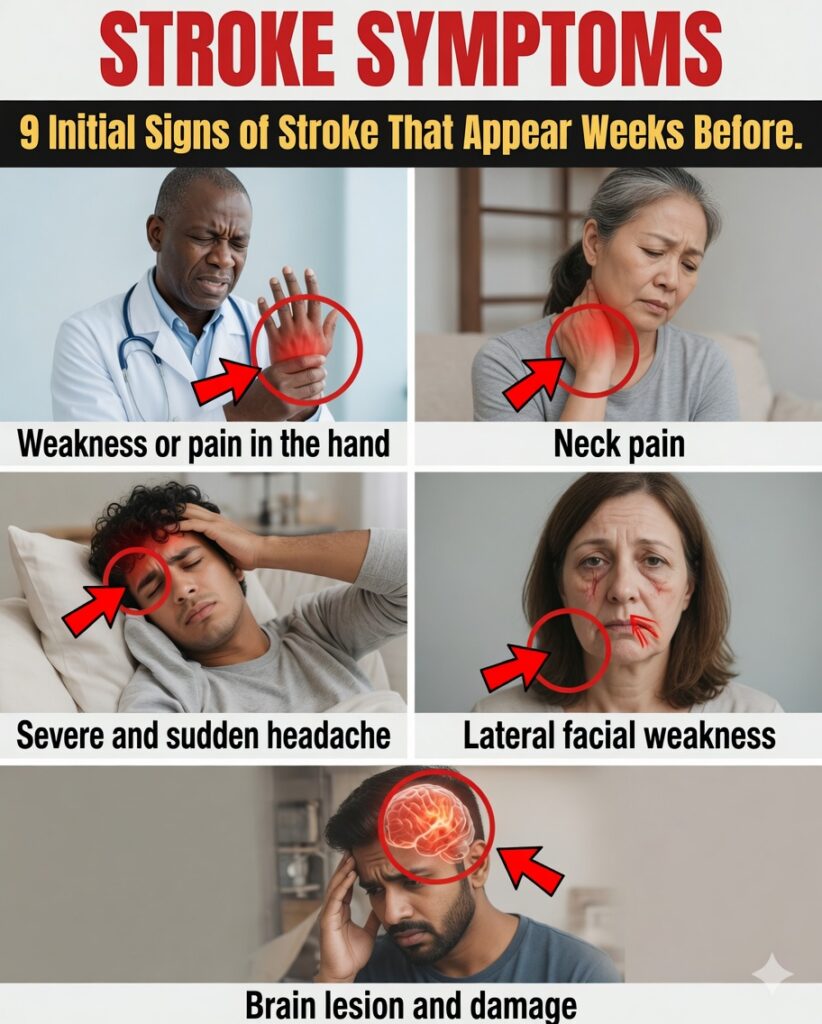
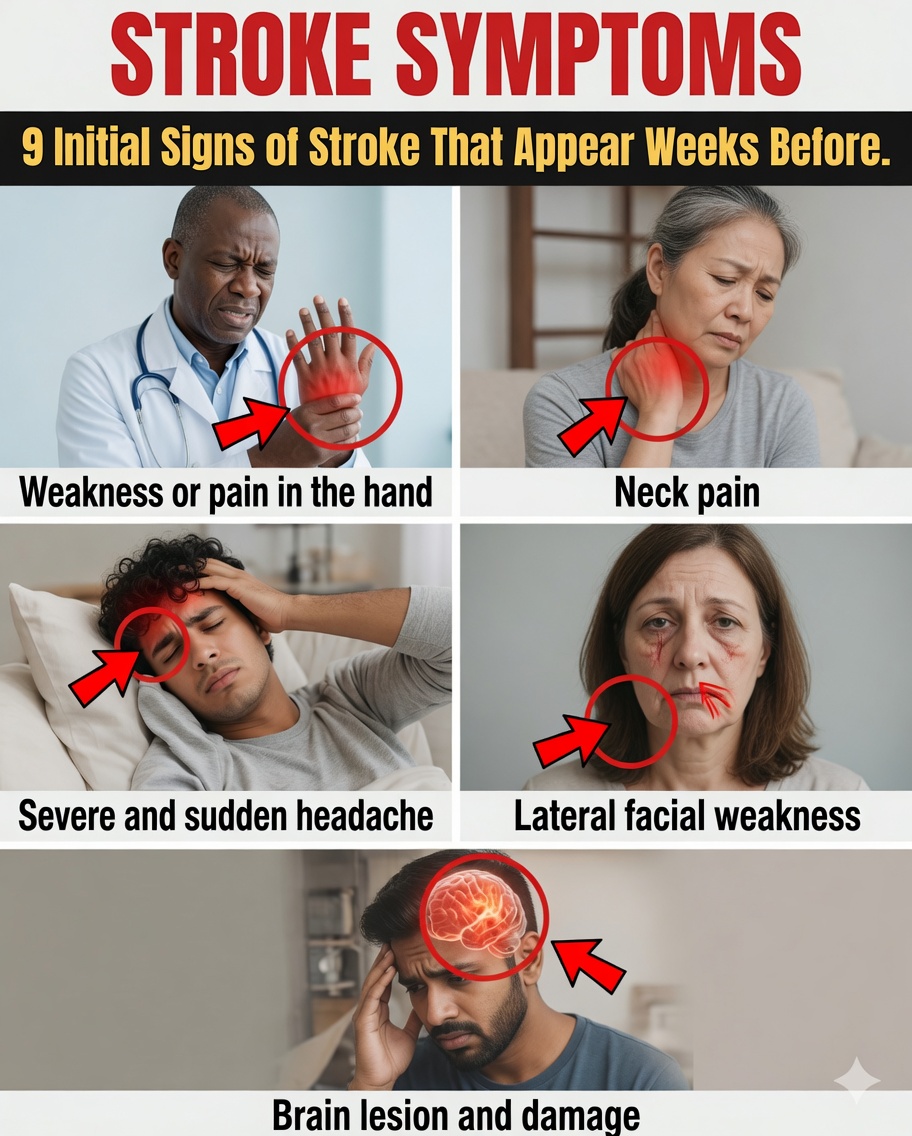
9) A sudden, severe headache
A powerful headache that feels unlike your usual headaches can signal a problem in the brain’s blood vessels.
8) TIA (mini-stroke) symptoms
Brief episodes such as facial weakness, trouble speaking, or vision loss that disappear within minutes are still medical emergencies.
7) Dizziness or loss of balance
Unexplained unsteadiness, vertigo, or difficulty walking can indicate reduced blood flow in the brain.
6) Vision changes
Blurred vision, double vision, or partial vision loss—especially on one side—should never be dismissed.
Pause for a moment: have you experienced any of these lately? If yes, keep reading—the next signs can be even more urgent.
5) Trouble speaking
Slurred speech, difficulty forming words, or confusion while talking (even temporarily) is a serious stroke warning sign.
4) Weakness or numbness on one side of the body
A strange sensation or loss of strength in the face, arm, or leg—especially on one side—can be a key indicator, even if it passes quickly.
3) Extreme fatigue or mental confusion
Sudden, unusual exhaustion or difficulty thinking clearly may reflect stress on the brain.
2) Sudden hearing loss (with dizziness)
A sudden drop in hearing—particularly in one ear—especially when paired with dizziness, may be linked to circulation problems affecting the brain.
The Most Critical Warning Sign
1) Multiple symptoms happening at once
A combination of symptoms—confusion, nausea, fainting, weakness, speech changes, and more—can signal immediate high risk and requires urgent action.
What to Do Immediately
-
Use the FAST method:
- F — Face: Is one side of the face drooping?
- A — Arm: Is one arm weak or drifting downward?
- S — Speech: Is speech slurred or unusual?
- T — Time: Act now—call emergency services immediately.
-
Seek urgent medical care even if symptoms disappear. A TIA can be a warning before a major stroke.
-
Write down when symptoms started and how long they lasted.
-
Tell family and close friends about these warning signs so they can act quickly if needed.
Common Questions
“Don’t strokes happen suddenly?”
Many seem sudden, but a significant number are preceded by warning signs in the hours or days before.
“If it went away quickly, is it still serious?”
Yes. A symptom that resolves may still be a TIA—and it can be a clear warning of a larger stroke ahead.
“I’m young and healthy. Should I worry?”
Yes. Stroke can affect younger adults too—especially with risk factors like high blood pressure, diabetes, smoking, high cholesterol, certain medications, or chronic stress.
One Simple Action That Can Save a Life
Today, teach someone close to you how to recognize early stroke symptoms. Tomorrow, listen more carefully to your own body.
Ignoring warning signs can cost everything. Acting quickly can change everything.
Disclaimer: This content is for informational purposes only and does not replace professional medical advice. If you notice stroke symptoms, seek emergency medical care immediately.