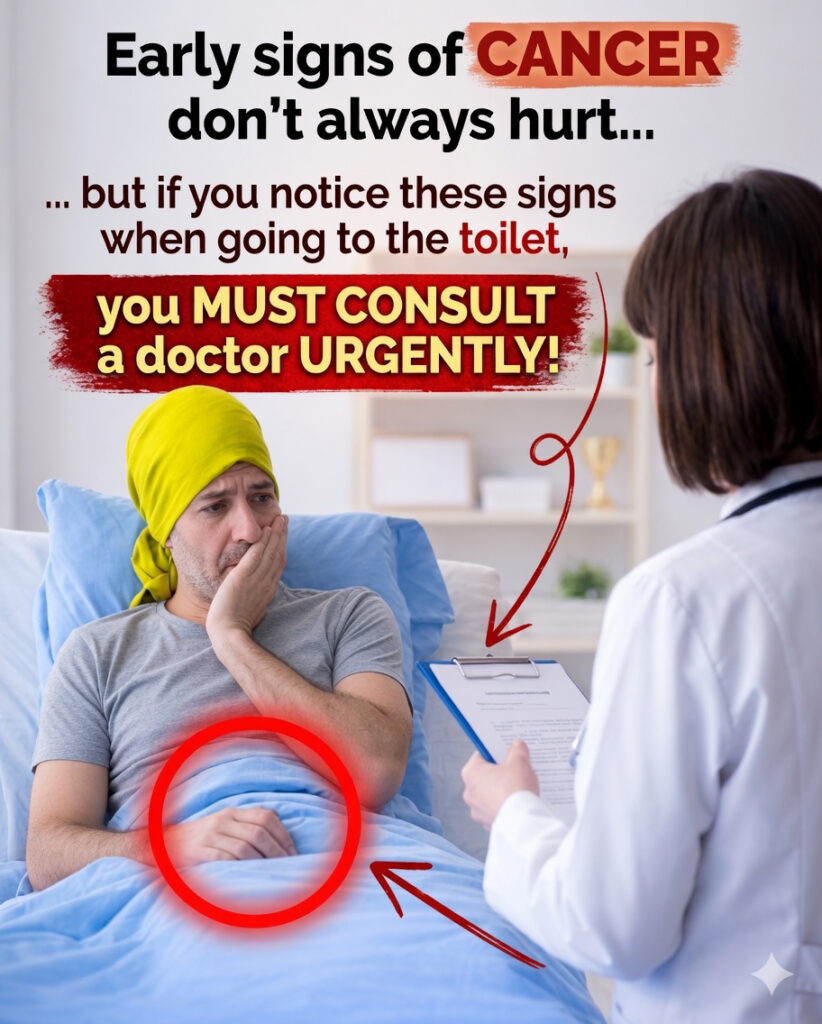
Could a Trip to the Bathroom Reveal a Serious Illness Before It’s Too Late?
Many people assume cancer always causes pain from the very beginning. In reality, it often develops quietly for a long time, with no obvious warning signs.
What if your body is already trying to alert you, even during something as routine as using the bathroom? These subtle symptoms are easy to dismiss because they can look like ordinary digestive or urinary issues.
Recognizing early warning signs can make a major difference. The sooner a problem is detected, the better the chances of effective treatment. So which signals deserve your attention?
Why Early-Stage Cancer Does Not Always Cause Pain
Cancer can grow gradually without immediately affecting nerves or sensitive tissues. That is one reason it may remain unnoticed in its early stages.
For this reason, doctors often advise paying close attention to small physical changes, especially those involving bowel movements and urination.
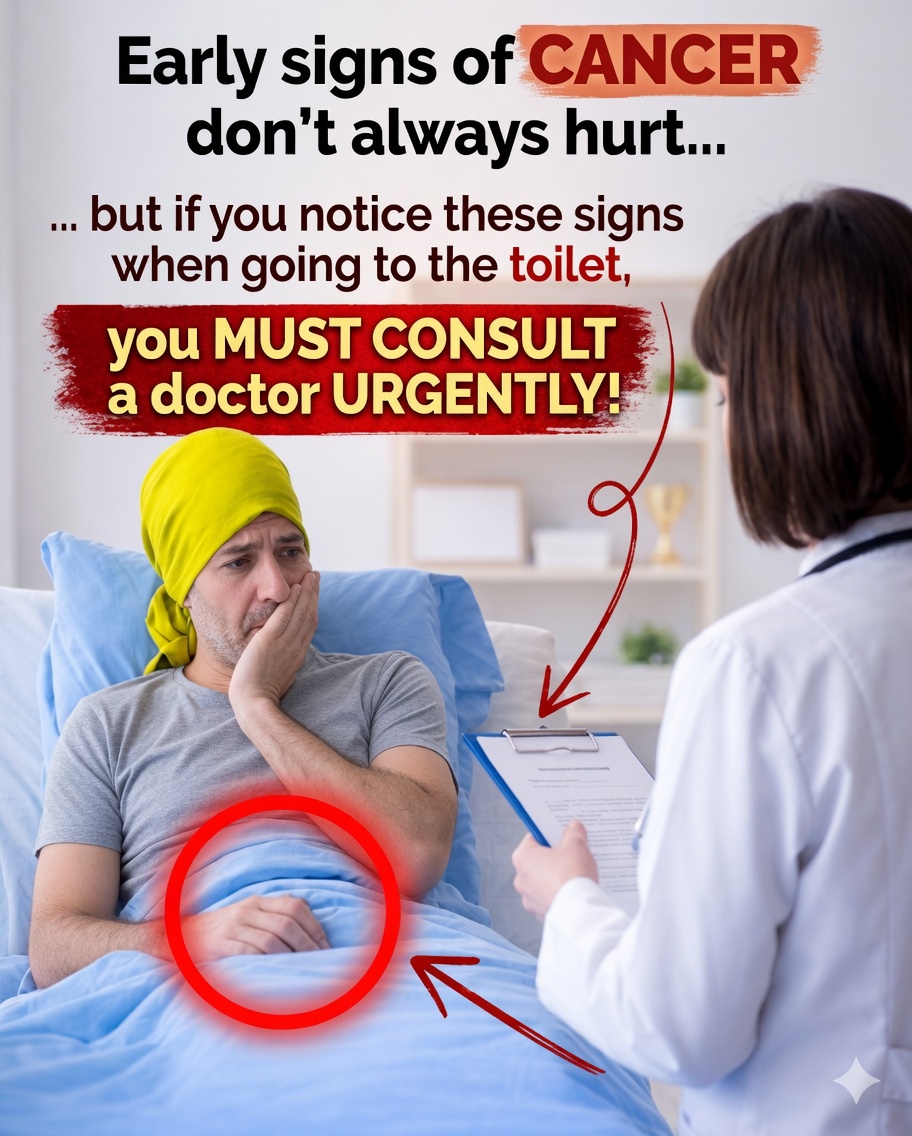
8 Bathroom-Related Warning Signs to Watch For
1. Blood in the stool or urine
This is one of the most important signs to take seriously. You may notice:
- Bright red blood
- Black or very dark stools
- Pink, red, or rust-colored urine
While these symptoms can have harmless causes, they may also be linked to colorectal, bladder, or kidney cancer.
2. Sudden changes in bowel habits
Frequent diarrhea, ongoing constipation, or a noticeable change in stool shape can be warning signs, especially when they continue over time.
3. A constant urge to have a bowel movement
If you still feel like you need to go even after using the toilet, it may point to inflammation or an abnormal condition in the intestines.
4. Pain or burning during urination
This feeling is often associated with infection, but if it does not go away, it could signal a more serious health issue.
5. A feeling of incomplete emptying
If it seems like your bowels never fully empty, this may suggest a partial blockage or another digestive problem.
6. Needing to urinate more often than usual
Waking up repeatedly at night to urinate or feeling frequent urgency may be related to bladder or prostate problems.
7. Unusually thin stools
Narrow, ribbon-like stools can sometimes suggest a partial obstruction in the colon.
8. Unexplained weight loss and fatigue
When these symptoms appear along with other changes, they may indicate that the body is struggling with a more serious illness.
When Should You See a Doctor?
These symptoms do not automatically mean cancer, but medical advice is strongly recommended if:
- The symptoms last longer than 2 to 3 weeks
- Blood appears regularly in stool or urine
- You notice unusual changes that do not go away
Natural Ways to Help Lower Your Risk
A healthy lifestyle can support your body and reduce certain risks. Helpful habits include:
- Eating more fruits and vegetables rich in antioxidants
- Staying physically active on a regular basis
- Avoiding tobacco and limiting alcohol intake
- Supporting digestive health with fiber and proper hydration
- Paying attention to the signals your body sends
Conclusion
Cancer does not always begin with pain. Sometimes the earliest clues show up in the most ordinary daily habits.
Ignoring these signs may delay diagnosis. Acting early and staying alert, however, can make a life-changing difference.
Your body may be speaking quietly. Take the time to listen.