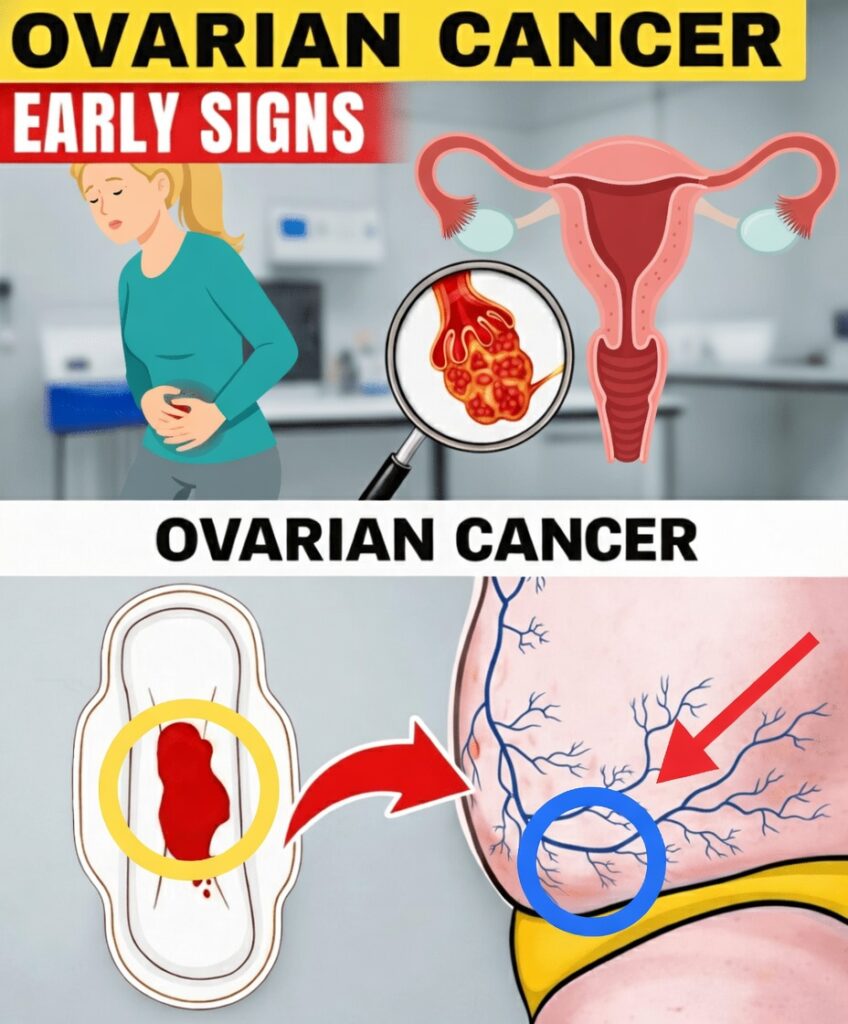
Subtle Symptoms You Shouldn’t Ignore: Early Clues of Ovarian Cancer
Many women live with occasional bloating, tiredness, or mild pelvic discomfort and chalk it up to stress, hormones, aging, or something they ate. In many cases, that’s exactly what it is. But sometimes, these everyday annoyances can be the first quiet warnings of something more serious — including ovarian cancer.
Ovarian cancer is often called a “silent” or “hidden” disease because it frequently goes undetected until it has already advanced. That’s why noticing small but persistent changes in your body can be so important.
What if some of the symptoms you’ve been dismissing are actually your body’s way of asking you to pay closer attention? Below are 8 early signs that many women later diagnosed with ovarian cancer remember experiencing — often for months before getting a clear answer.
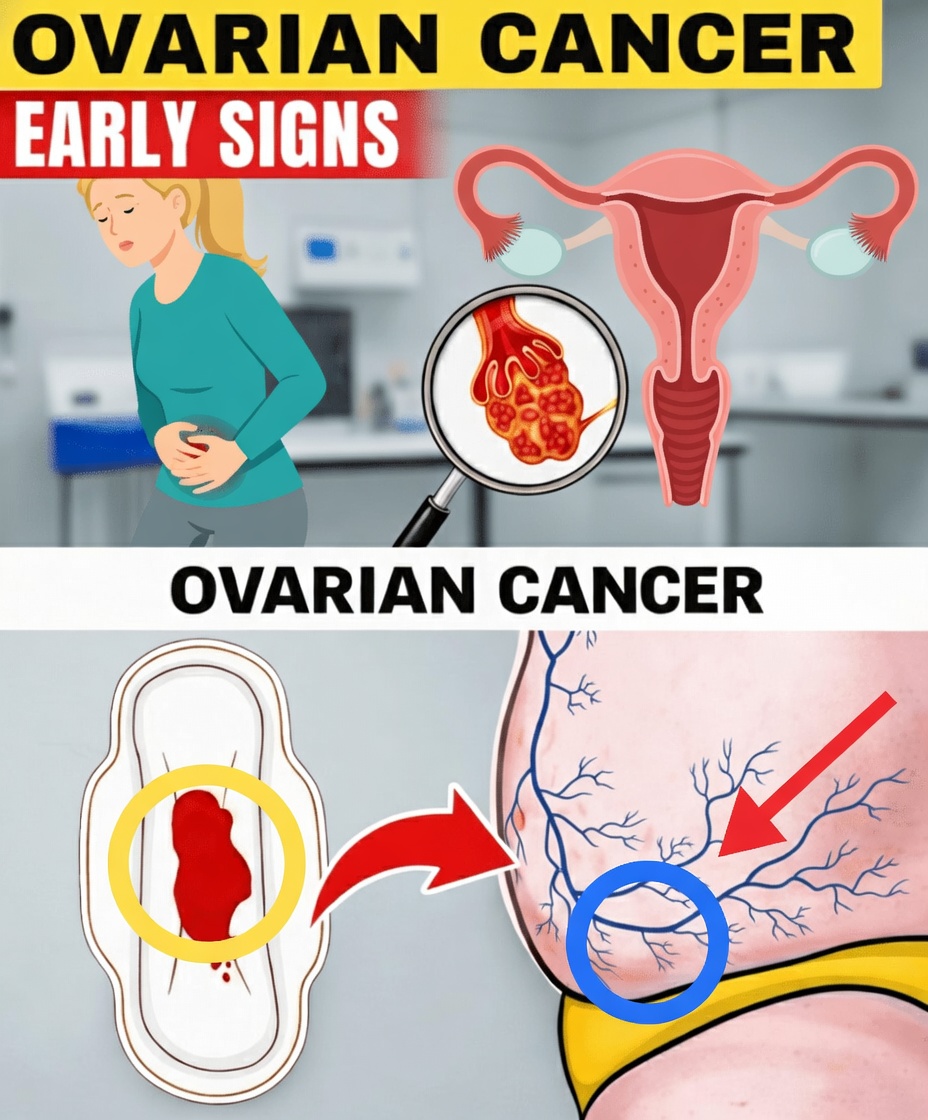
Why Early Ovarian Cancer Is So Difficult to Detect
Ovarian cancer develops in the ovaries or the nearby fallopian tubes. These organs sit deep within the pelvis, so small tumors can grow and spread before causing obvious or severe symptoms.
Unlike breast cancer (mammograms) or cervical cancer (Pap tests), there is currently no reliable, widely used screening test for ovarian cancer in women at average risk. This makes being aware of symptoms one of the most powerful early detection tools available.
The encouraging part: when ovarian cancer is found at an earlier stage, treatment tends to be more effective and may be less aggressive. Recognizing which “normal-seeming” symptoms deserve a closer look can truly make a difference.
8 Early Signs of Ovarian Cancer Many Women Overlook

1. Persistent Bloating That Feels Unusual
Almost everyone feels bloated from time to time — after a heavy meal, before a period, or during certain phases of the menstrual cycle. Bloating linked to ovarian cancer, however, often has a different pattern:
- It lasts for weeks or longer instead of coming and going quickly.
- Your abdomen looks visibly larger or swollen.
- Clothes feel tighter around the waist, even if your weight hasn’t changed much.
- It doesn’t improve with passing gas or having a bowel movement.
Many women describe this as “looking pregnant” or “suddenly having a hard belly” despite knowing they are not pregnant.
2. Ongoing Pelvic or Abdominal Pain
This pain is usually not a sharp, stabbing sensation like a sudden cyst rupture. Instead, women often report:
- A dull ache, pressure, or sense of heaviness in the lower abdomen or pelvic area
- Discomfort that lingers for weeks or months
- Pain that may ease and return, but never fully goes away
At first, it’s easy to blame period cramps, digestive problems, or muscle strain — until the discomfort becomes a constant background presence.
3. Feeling Full Very Quickly (Early Satiety)
You sit down to a meal, take only a few bites, and suddenly feel like you’ve had enough — or too much. Yet you know the portion was small. This “early fullness” can happen when a mass in the pelvis presses on the stomach or intestines, reducing the space available for food.
Women often say things like, “I can’t eat as much as I used to,” or “I get full so fast I can’t finish even half my usual meal.”
4. Needing to Urinate More Often or More Urgently
A sudden change in your urinary habits can also be a clue. Ovarian growths can put pressure on the bladder, causing:
- More frequent trips to the bathroom, day or night
- A strong, urgent feeling that you need to urinate, even when little urine comes out
- Night-time urination that is new or noticeably increased
If these changes are new and persist, especially together with bloating or pelvic discomfort, they shouldn’t be ignored.
5. Unusual, Ongoing Fatigue
Everyone feels worn out at times, especially with busy schedules, family responsibilities, and stress. Cancer-related fatigue, however, is often described differently:
- Deep, overwhelming tiredness that doesn’t improve with rest
- Feeling exhausted even after a full night’s sleep
- A sense that this fatigue is “not normal” for you
Many women say they had a strong feeling that something was off because the exhaustion felt heavier and more persistent than anything they’d experienced before.
6. Changes in Bowel Habits (Constipation or Diarrhea)
A tumor in the pelvic area can press on the intestines, leading to noticeable changes in digestion:
- New or more frequent constipation
- Alternating constipation and diarrhea
- A sensation that your bowels never feel completely empty after going to the bathroom
- Increased abdominal discomfort or cramping
These changes often appear along with bloating, fullness, or pelvic pressure.
7. Unexplained Lower Back Pain
Persistent lower back pain that does not seem linked to injury, posture, or physical activity can sometimes be a symptom. This is especially concerning when:
- The pain is new for you
- It continues for weeks or months
- It appears together with pelvic pain, bloating, or urinary changes
Many women later wish they had mentioned this ongoing back pain to their doctor earlier.
8. Abnormal Vaginal Bleeding or Discharge
Any vaginal bleeding after menopause should be evaluated promptly. For younger women, warning signs can include:
- Periods that are much heavier than usual
- Bleeding between periods
- Bleeding after sex
- Unusual vaginal discharge, especially when combined with other symptoms
On its own, irregular bleeding can have many causes, but when it appears with other signs listed above, it deserves careful attention.
How Are These Symptoms Different from “Normal” Issues?
Most of these symptoms are common and are usually caused by non-cancerous conditions such as irritable bowel syndrome (IBS), fibroids, endometriosis, hormonal changes, urinary tract infections, or perimenopause.
The key questions are:
- Are these symptoms new for you?
- Have they been persistent, lasting more than a few weeks?
- Do they feel different from your usual patterns?
A guideline many doctors use:
“If symptoms are new, persistent (more than a few weeks), and unusual for you — talk to your doctor.”
Pay extra attention if you notice several of these signs at the same time.
Quick Checklist: 8 Ovarian Cancer Symptoms to Monitor
- Persistent bloating or an increase in abdominal size
- Ongoing pelvic or abdominal pain or pressure
- Feeling full quickly or eating much less than usual
- Frequent or urgent need to urinate
- Unusual, deep, or long-lasting fatigue
- New changes in bowel habits (constipation, diarrhea, or both)
- Persistent lower back pain without a clear cause
- Abnormal vaginal bleeding or discharge, especially after menopause
What to Do If These Symptoms Sound Familiar
If you recognize several of these signs in yourself, consider taking these steps:
-
Keep a symptom diary
Note when symptoms start, how often they occur, how long they last, and anything that seems to improve or worsen them. -
Schedule a medical appointment
Make an appointment with your primary care provider or gynecologist, even if you feel unsure or worry you might be “overreacting.” -
Describe your symptoms clearly
Be specific. For example:
“I’ve had bloating and pelvic pressure almost every day for the last 8 weeks, and it isn’t getting better.” -
Ask about appropriate tests
Request a pelvic exam, and if symptoms continue, ask whether imaging (such as a pelvic or transvaginal ultrasound) or blood tests (like CA-125) might be appropriate for you.

Frequently Asked Questions
Can ovarian cancer be found early?
Yes, it can — but not usually through routine screening in average-risk women. Early detection often depends on:
- Noticing persistent, unusual symptoms
- Seeking medical evaluation without delay
- Following through with recommended tests and follow-up appointments
Does having one of these symptoms mean I have ovarian cancer?
No. Each of these symptoms is far more commonly caused by benign conditions. However:
- If symptoms are new
- If they do not go away after a few weeks
- If several occur together
…it’s important to get them checked, rather than assuming they’re harmless.
Who is at higher risk for ovarian cancer?
Factors that can increase risk include:
- Age (risk is higher after age 50)
- Family history of ovarian or breast cancer
- Inherited genetic mutations (such as BRCA1 or BRCA2)
- Never having been pregnant
- Endometriosis
However, many women diagnosed with ovarian cancer do not have obvious risk factors, which is why symptom awareness matters for everyone.
Final Thoughts
Ovarian cancer is challenging to detect early, but it is not invisible. Paying attention to your body, especially to new symptoms that linger for weeks rather than days, is a powerful form of self-care.
You know your body better than anyone else. If something feels off and isn’t improving, trust that inner signal and talk to a healthcare professional.
Your health is worth the time, attention, and follow-up it takes.