How to Manage Common Amlodipine Side Effects More Comfortably
Many people take amlodipine to support healthy blood pressure and protect their heart, but the medication can sometimes come with unwanted effects that interfere with daily life. Swollen ankles, sudden flushing, dizziness, or unusual tiredness may make ordinary activities feel more difficult and leave you feeling concerned about continuing treatment.
The encouraging part is that these side effects can often be eased with simple, practical habits while you still benefit from the medication.
There is also one easy daily routine that many people miss, even though it can make a real difference in how manageable these symptoms feel. We will get to that later in the article.
What Amlodipine Does and Why Side Effects Happen
Amlodipine is a commonly prescribed calcium channel blocker. It works by relaxing and widening blood vessels, which helps lower blood pressure and improves blood flow. Although it is effective for many people, the same mechanism can also lead to side effects related to circulation and fluid distribution.
According to trusted medical sources such as the NHS and Mayo Clinic, these reactions are usually mild, though the experience can differ from one person to another.
Understanding the most common side effects can help you respond early and manage them more effectively.
1. Swollen Feet and Ankles
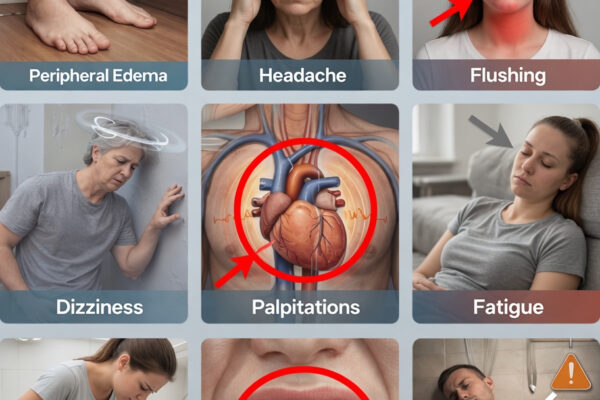
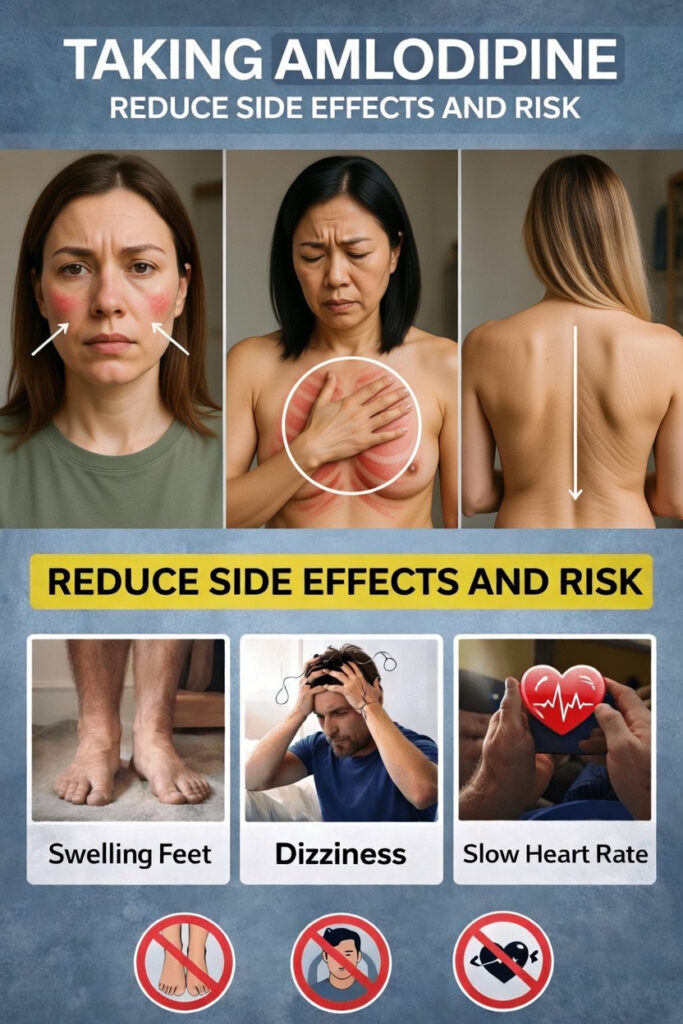
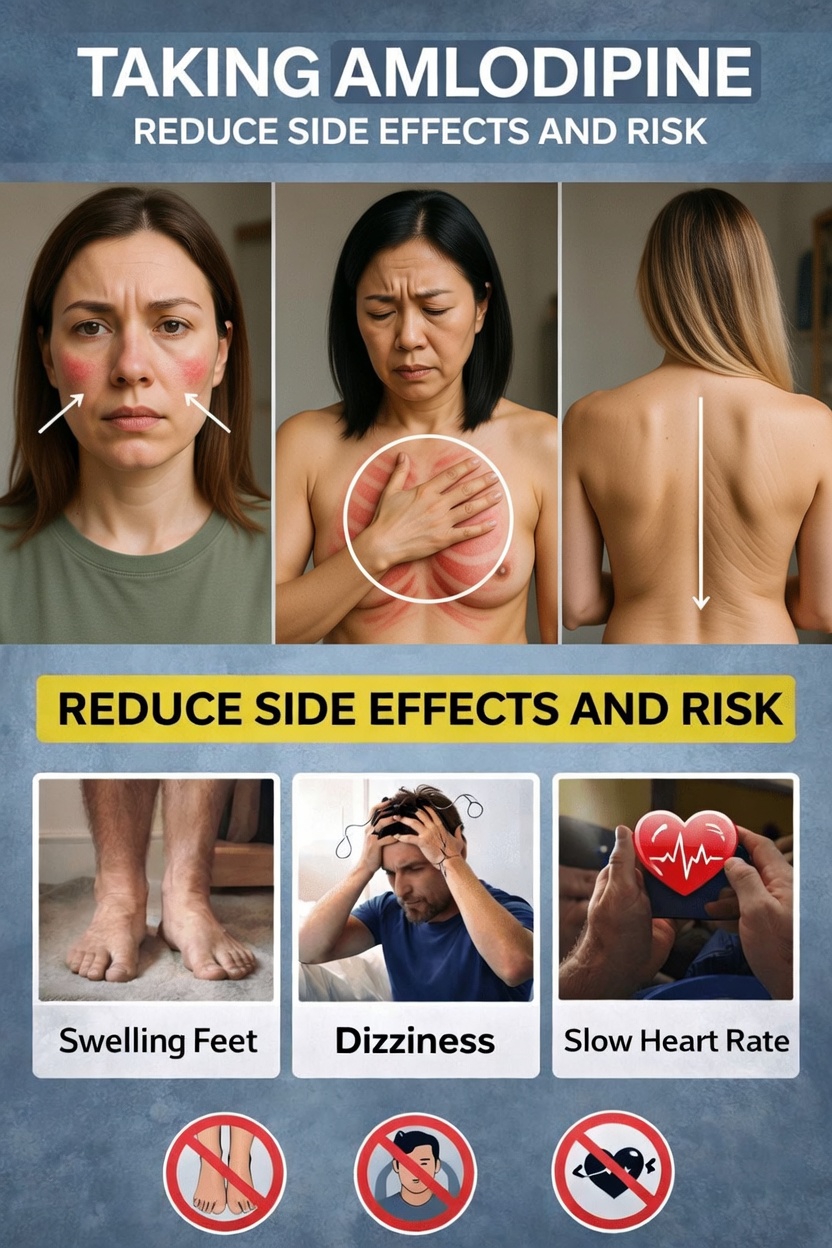
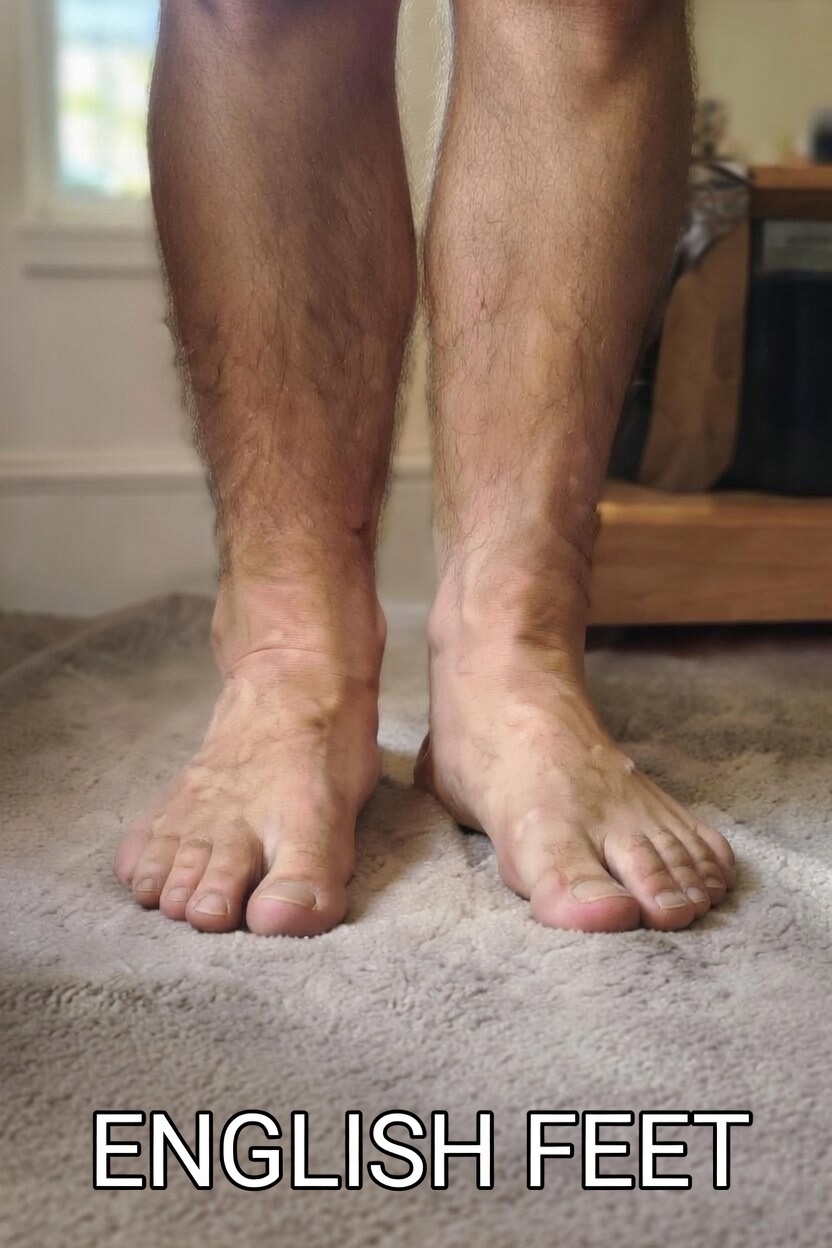
One of the best-known side effects of amlodipine is peripheral edema, which means swelling in the lower legs, ankles, or feet. This happens because widened blood vessels can allow fluid to move into nearby tissues, especially in the lower part of the body.
You might notice that your shoes feel tighter than usual or that your ankles look puffy by evening. For many people, this can make standing or walking less comfortable.
Ways to reduce swelling
- Raise your legs above heart level for 15 to 30 minutes several times a day, especially later in the day.
- Avoid staying seated or standing in one position for too long. Short walks can help improve circulation.
- Ask your healthcare provider whether compression stockings are appropriate for you.
- Drink enough water and cut back on excess salt, since sodium can worsen fluid retention.
- If the swelling continues, speak with your doctor about whether a dosage adjustment or another treatment option may help.
2. Facial Flushing and Redness
Some people taking amlodipine experience flushing, which often feels like sudden warmth and causes visible redness in the face, neck, or chest. This happens when blood vessels close to the skin expand.
Although it is usually harmless, it can feel awkward or uncomfortable, especially in social settings or hot weather.
Ways to ease flushing
- Reduce triggers such as alcohol, caffeine, and spicy foods.
- Keep your surroundings cool and use a fan or a cool compress if needed.
- Avoid direct heat, hot showers, and overly warm rooms when possible.
- Cold drinks may help calm the sensation quickly for some people.
3. Dizziness or Lightheadedness
Dizziness is another common issue, particularly when standing up too fast after sitting or lying down. Because amlodipine lowers blood pressure, sudden position changes can sometimes make you feel faint or unsteady.
This is important to manage carefully because it may increase the risk of falls.
Ways to manage dizziness
- Get up slowly, pausing as you move from lying down to sitting and then to standing.
- Stay hydrated throughout the day, since dehydration can make dizziness worse.
- Avoid driving or using machinery until you know how the medication affects you.
- If symptoms do not improve, your doctor may want to review your dose or check for other causes.
4. Palpitations or a Strong Heartbeat Sensation
Some users notice that their heart feels like it is beating harder or faster than usual. These sensations are often described as palpitations. Even when they are not serious, they can still feel alarming.
Some people also describe an uncomfortable awareness of their heartbeat or mild chest uneasiness along with it.
Ways to reduce palpitations
- Try relaxation methods such as deep breathing, meditation, or gentle yoga.
- Keep track of when symptoms happen so you can discuss patterns with your doctor.
- Limit stimulants, including nicotine and too much caffeine.
- Make sleep and stress management a priority, as both can affect how your heart feels.

5. Headaches
Headaches may appear when you first start amlodipine or while your body is adjusting to changes in blood flow. In many cases, they are temporary, but they can still disrupt work, rest, and concentration.
Ways to relieve headaches
- Drink plenty of water and keep a regular sleep schedule.
- Use over-the-counter pain relief only as recommended by a pharmacist or healthcare professional, and check that it is safe to combine with your medication.
- Try gentle neck stretches or place a cool cloth on your forehead.
- Seek medical advice if headaches are severe, frequent, or long-lasting.
6. Fatigue and Low Energy
Some people feel more tired than usual while taking amlodipine. This general fatigue can affect productivity, motivation, and enjoyment of everyday activities.
Ways to fight fatigue
- Eat a balanced diet with enough nutrients to support your energy levels.
- Add light exercise, such as walking, to your routine if your doctor agrees.
- Build good sleep habits and aim for consistent rest.
- Ask your healthcare provider whether your tiredness is linked to amlodipine or another underlying issue.
Daily Habits That Can Make Side Effects Easier to Handle
There is more you can do beyond treating each symptom individually. Small lifestyle changes can improve overall comfort and may help with several side effects at once.
Helpful habits to include
- Do moderate exercise regularly if your doctor says it is safe.
- Follow a heart-healthy eating plan that is lower in sodium.
- Keep a symptom journal so you can spot patterns and possible triggers.
- Attend regular follow-up appointments for tailored medical advice.
One simple but often overlooked strategy is taking your medication at the same time each day and combining that routine with good hydration and regular leg elevation. Many people find this approach surprisingly helpful, especially for swelling and dizziness.
When to Call Your Doctor
Most amlodipine side effects are manageable, but you should contact your healthcare provider if symptoms become worse, new symptoms appear, or you develop severe swelling, chest pain, or trouble breathing.
Do not stop taking amlodipine suddenly unless your doctor tells you to. Stopping without guidance can affect blood pressure control and may create additional risks.
Conclusion
Amlodipine side effects can be frustrating, but they are often easier to handle when you understand why they happen and take practical steps to reduce them. Raising your legs, staying well hydrated, avoiding personal triggers, and keeping open communication with your doctor can all help you stay more comfortable while continuing treatment.
Each person responds differently, so the best approach may take some adjustment over time with professional guidance.
Frequently Asked Questions
Can lifestyle changes really help with amlodipine side effects?
Yes. Many people notice improvement with simple habits such as elevating the legs, drinking enough water, and reducing sodium intake. These strategies should support, not replace, advice from your healthcare provider.
How long do amlodipine side effects usually last?
Some side effects improve within a few weeks as your body adapts to the medication. If they continue or become bothersome, your doctor may consider changing the dose or exploring another treatment.
Is it safe to keep taking amlodipine if I have mild side effects?
Mild side effects are often considered manageable, but you should still report them to your doctor. They can help decide whether the benefits of the medication outweigh the discomfort and whether any changes are needed.