14 Subtle Health Warning Signs Many Women Overlook
Many women move through busy days brushing off small changes in their bodies—telling themselves, “It’s probably nothing,” or “I’m just tired, stressed, or overworked.”
The concerning reality is that some of these everyday symptoms can actually be early warning signs that something more serious is going on. The sooner we notice and act on them, the better the chances of getting timely medical care.
In this guide, you’ll learn about 14 commonly ignored signs in women’s health—several of them surprisingly easy to dismiss.
Why Do Women Often Miss These Early Symptoms?
There are several reasons why important warning signs get overlooked:
- They appear very gradually, so you adapt to them.
- They’re common symptoms that can have many harmless explanations.
- Women are often focused on caring for others, leaving little time to check in with their own health.
- Many don’t want to “overreact”, make a fuss, or seem anxious.
What matters most is this:
A symptom becomes more significant when it is new, persistent, and gradually getting worse over time.
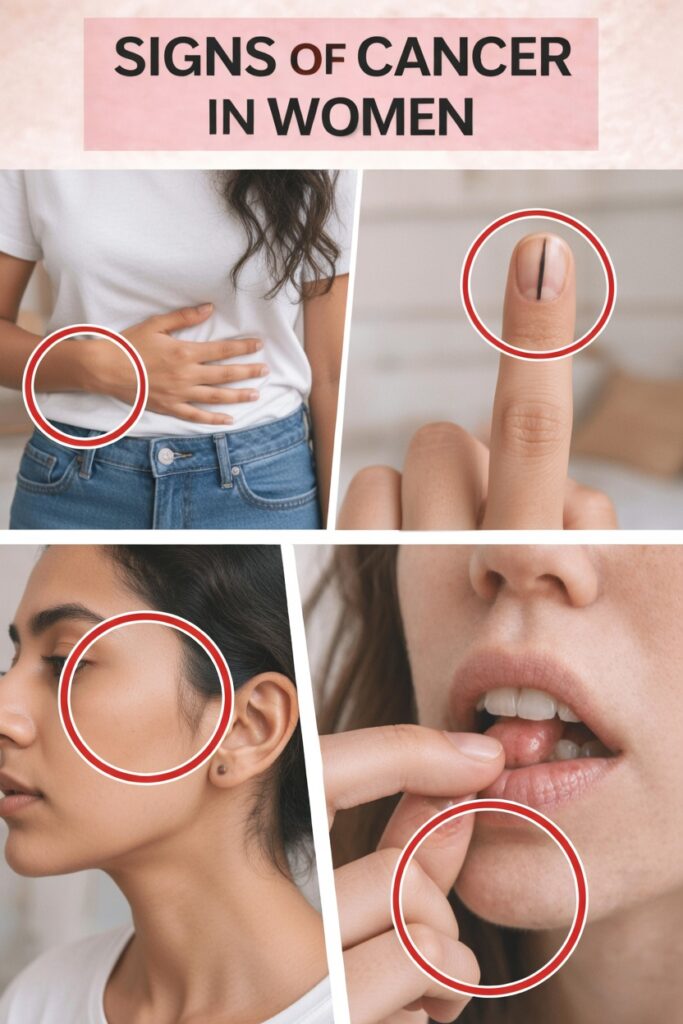
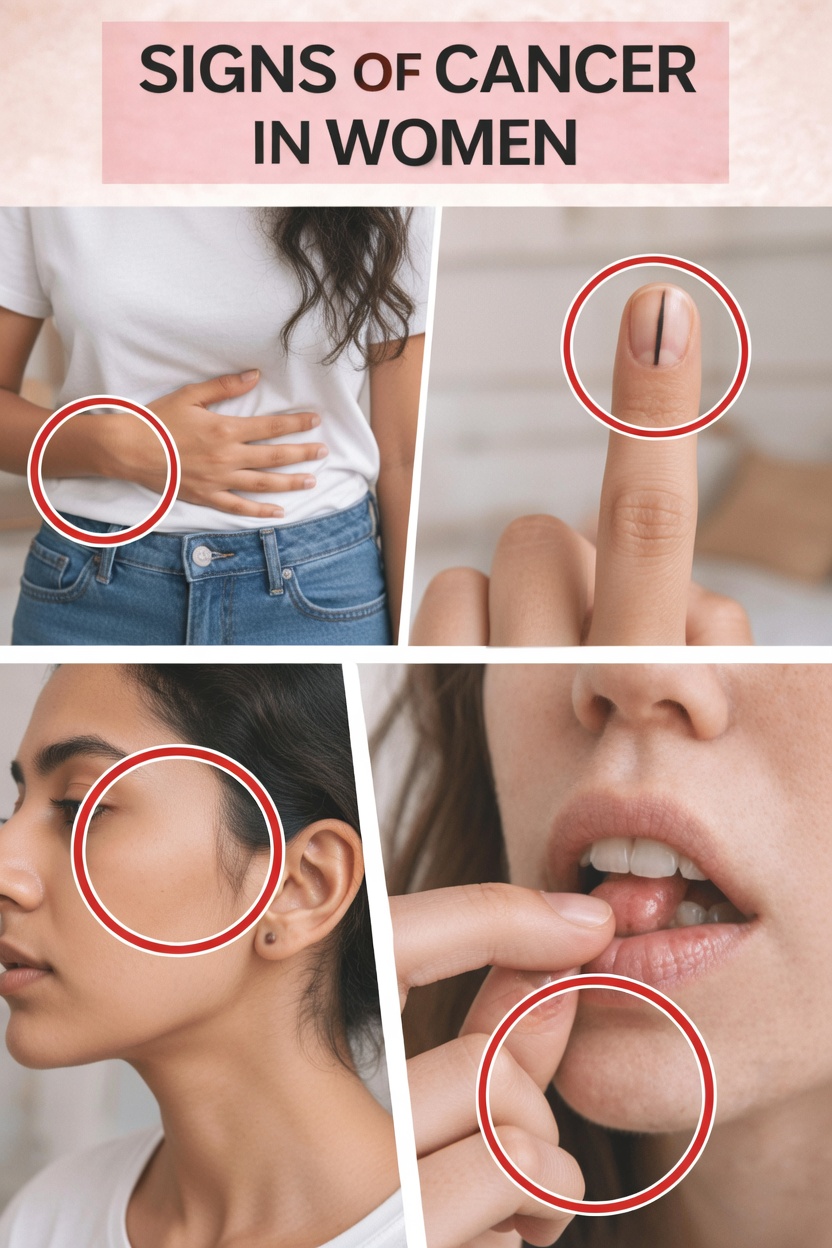
1. Persistent Bloating That Doesn’t Go Away
Occasional bloating is normal. But it becomes more concerning when:
- Your abdomen feels swollen, tight, or distended most days for several weeks.
- The bloating happens even when you’re not eating large meals.
It’s especially important to pay attention if the bloating comes with:
- Feeling full very quickly when eating
- Pelvic or abdominal pain or pressure
- Needing to urinate more often than usual
2. A Dark Vertical Line on a Nail (Melanonychia)
A new dark stripe running vertically along a single fingernail or toenail is something you should never ignore, particularly when:
- The line is getting wider over time
- The edges are irregular or blurred
- The pigment appears to spread into the surrounding skin
Almost no one associates this kind of nail change with skin cancer until a specialist points it out.
3. Ongoing Abdominal or Pelvic Discomfort (Not Period-Related)
This is usually not a sharp, stabbing pain, but rather a:
- Dull
- Vague
- Constantly annoying discomfort
Warning features include:
- It never fully goes away
- It tends to worsen after meals
- You’ve had it for many weeks or months
Many women assume it’s “just digestion” or “a gynecological issue that will settle,” and delay getting it checked.
4. A New or Changing Mole – Especially After Age 30
Skin changes are among the most important warning signs. Watch for the “ugly duckling” mole—the one that looks different from all the others.
Key features to monitor:
- A mole that stands out from your other moles
- Asymmetrical shape (one side doesn’t match the other)
- Uneven or blurred borders
- Multiple colors within the same mole
- Size larger than about 6 mm (similar to a pencil eraser)
- Any evolution: change in size, shape, color, surface, or sensation
5. A Mouth Sore That Will Not Heal (More Than 3 Weeks)
Concerning changes in the mouth include:
- A white or red patch that doesn’t go away
- A small ulcer or sore on the tongue, cheek, gum, or floor of the mouth
- An area that bleeds easily when touched or brushed
Many people blame smoking, spicy food, stress, or dental issues and wait far too long to see a doctor or dentist.
6. Hoarseness or Voice Changes Lasting Several Weeks
A temporary hoarse voice is common with colds or after shouting. It becomes more serious when:
- You do not have a cold
- You don’t suffer from allergies
- You haven’t been overusing your voice (singing, teaching, public speaking)
Any hoarseness or voice change that lasts longer than 3–4 weeks should be evaluated.
7. Unexplained Bleeding After Menopause
Any vaginal bleeding after you have gone 12 months without a period (natural menopause) is considered abnormal until proven otherwise.
Other important bleeding patterns to take seriously:
- Bleeding between periods if you are still menstruating
- Bleeding after intercourse
These symptoms do not automatically mean cancer, but they always warrant prompt medical assessment.
8. A Lump in the Breast or Armpit – Even If It’s Painless
When it comes to breast health, both painful and painless lumps matter.
Important points:
- Many painful breast lumps are not cancer.
- Most painless lumps are also benign.
- But any new lump in the breast or armpit that you can feel should be checked by a professional.
Do not wait to see if it disappears on its own.
9. Constant Fatigue That Feels “Different” From Usual Tiredness
This is more than being worn out after a long week. Concerning fatigue often:
- Is present from the moment you wake up
- Does not improve with rest, sleep, or time off
- Has been ongoing for weeks or months
- Feels much more intense than your typical tiredness
Persistent, unexplained fatigue can have many causes—including anemia, thyroid problems, chronic infections, mental health issues, and more serious illnesses.
10. Unintentional Weight Loss (Without Trying)
Weight loss can be positive when it’s intentional. It’s more concerning when you:
- Lose 5–10% of your body weight within 6–12 months
- Have not changed your diet
- Have not increased your physical activity
- Are not recovering from a major illness that could explain it
Unintentional weight loss is a symptom that should never be ignored.
11. Generalized Itchy Skin Without a Rash
Widespread itching can sometimes signal a deeper problem, especially when:
- The itch is intense
- It’s worse at night
- There is no obvious rash, eczema, or psoriasis
- You haven’t started any new soaps, detergents, perfumes, or foods
Persistent, unexplained itching can be related to skin issues, allergies, liver or kidney problems, blood disorders, or other internal causes.
12. Swollen Lymph Nodes That Don’t Shrink
Lymph nodes often swell temporarily during infections. They become more worrying when:
- They are located above the collarbone, in the armpit, or in the neck
- They remain enlarged for more than 3–4 weeks
- They feel firm or continue to grow
Not all swollen nodes are serious, but long-lasting enlargement always deserves evaluation.
13. Frequent Headaches That Are New or Very Different
Most headaches are not life-threatening, but certain headache patterns should raise suspicion, especially when:
- You develop a completely new type of headache after age 40–45
- You experience the worst headache of your life
- Headaches are accompanied by nausea or vomiting in the morning
- Headaches come with neurological symptoms such as:
- Vision changes
- Weakness or numbness
- Difficulty speaking
- Loss of balance
Any sudden, severe, or progressively worsening headache pattern should be discussed with a doctor.
14. Lasting Changes in Bowel Habits
Your digestion naturally changes from time to time, but long-term changes can be significant. Warning patterns include:
- Alternating diarrhea and constipation over several weeks
- Very narrow, “pencil-thin” stools
- Constant feeling that you cannot fully empty your bowels
- Blood in the stool:
- Bright red on the toilet paper or in the bowl
- Very dark, tar-like stools
These signs don’t always indicate cancer but should always be taken seriously.
Quick Recap: Commonly Ignored Warning Signs in Women
Some of the most frequently overlooked red flags include:
- Persistent bloating plus feeling full quickly
- A new dark vertical line on a single nail
- A new, changing, or asymmetrical mole
- Any vaginal bleeding after menopause
- Hoarseness or voice change lasting more than 3–4 weeks
- Mouth sore, ulcer, or red/white patch that persists over 3 weeks
- Unintentional weight loss without trying
- Extreme fatigue that rest does not relieve

What Should You Actually Do If You Notice These Symptoms?
To respond calmly yet proactively:
-
Write it down
Note the date when you first noticed the symptom and how often it occurs. -
Give it a reasonable time frame
Many minor issues improve within 2–3 weeks. -
Reassess after 3–4 weeks
If the symptom is still present, is happening more often, or is getting worse → book a medical appointment. -
Trust your intuition
If you find yourself thinking, “This feels different” or “This is not normal for me,” listen to that instinct.
Frequently Asked Questions (FAQ)
1. I have several of these symptoms. Does that mean I definitely have cancer?
No. Many mild or overlapping symptoms are caused by benign conditions such as infections, hormonal changes, stress, or other common issues.
What makes symptoms more concerning is the combination of persistence and progression—lasting for weeks or months and slowly getting worse. That’s when it’s especially important to get checked.
2. At what age should I take these warning signs more seriously?
There is no strict cutoff, but after around age 40, the risk of many serious conditions increases.
This means that the threshold for seeking medical advice should be lower as you get older, especially if you have a family history of cancer or other chronic diseases.
3. My doctor keeps saying “it’s nothing.” Should I push for more tests?
If a symptom is:
- Persistent (doesn’t go away)
- Progressive (getting worse or more frequent)
- And your intuition tells you “something isn’t right”
…then it is reasonable to:
- Ask your doctor for further investigation (tests, imaging, referral), or
- Consider getting a second opinion from another qualified professional.
You know your own body better than anyone else. Respect your instincts, pay attention to changes, and give yourself permission to seek answers.