You May Be Overlooking Silent Signs of Breast Cancer—Learn How to Spot Them Before It’s Too Late
Breast cancer affects millions of women every year, and it often begins quietly—without obvious symptoms. Many people feel perfectly fine and continue with daily life until they notice small changes that seem harmless, yet may point to something more serious. The most concerning part? Subtle breast cancer symptoms are easy to dismiss as normal aging or hormonal shifts, which can delay action when early steps could matter most.
The good news is that learning what’s normal for your body is one of the most effective ways to protect your health. In this article, you’ll also learn a simple habit that can meaningfully support early breast cancer detection.
Early detection is crucial. When breast cancer is found in its early stages, treatment outcomes are often far better. Knowing your baseline breast appearance and texture helps you recognize unusual changes sooner.
A key reminder: many of the signs below can also be caused by benign (non-cancerous) conditions. The goal isn’t panic—it’s awareness and responsible follow-up with a medical professional when something feels off.
Why Recognizing Early Warning Signs Matters
Breast cancer does not always produce clear symptoms. In some cases, it’s discovered only through routine screening tests.
That’s why understanding the normal look and feel of your breasts is one of the most practical ways to catch potential changes early. Most changes won’t be cancer—but ignoring them is never the safest option.
Women who check their breasts regularly are more likely to notice differences early, supporting earlier evaluation and diagnosis when needed.
10 Breast Cancer Warning Signs to Watch For
Pay attention to any of the following breast changes—whether they appear alone or together:
-
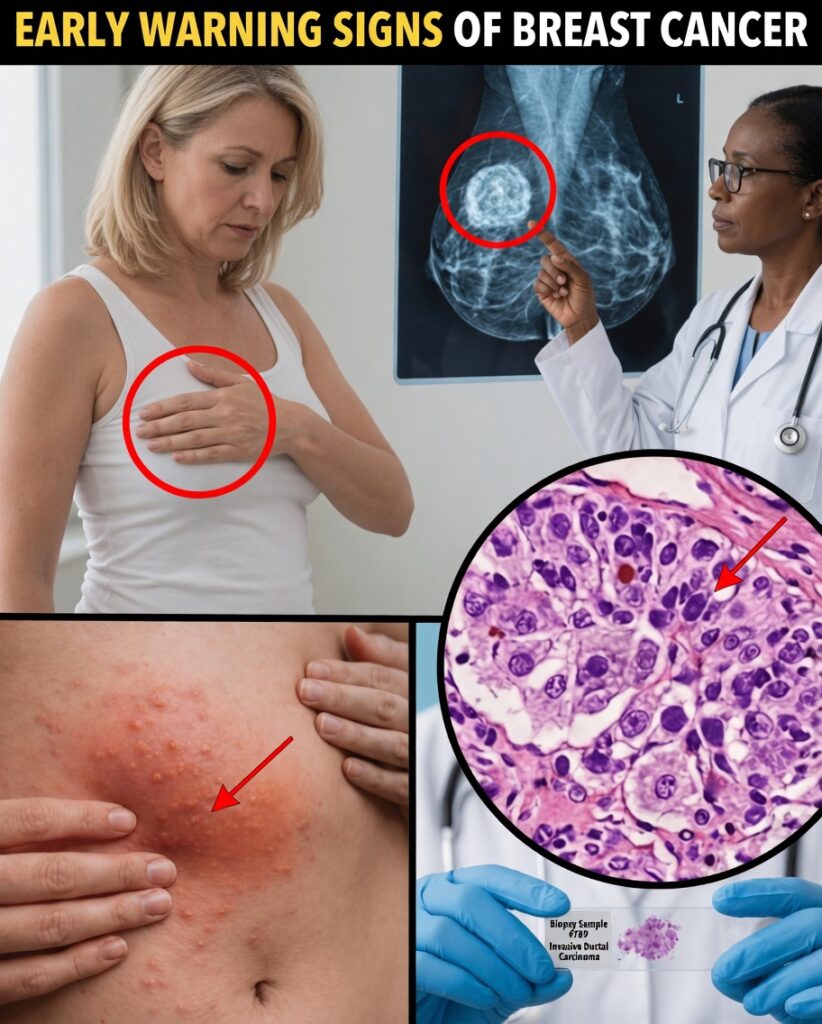
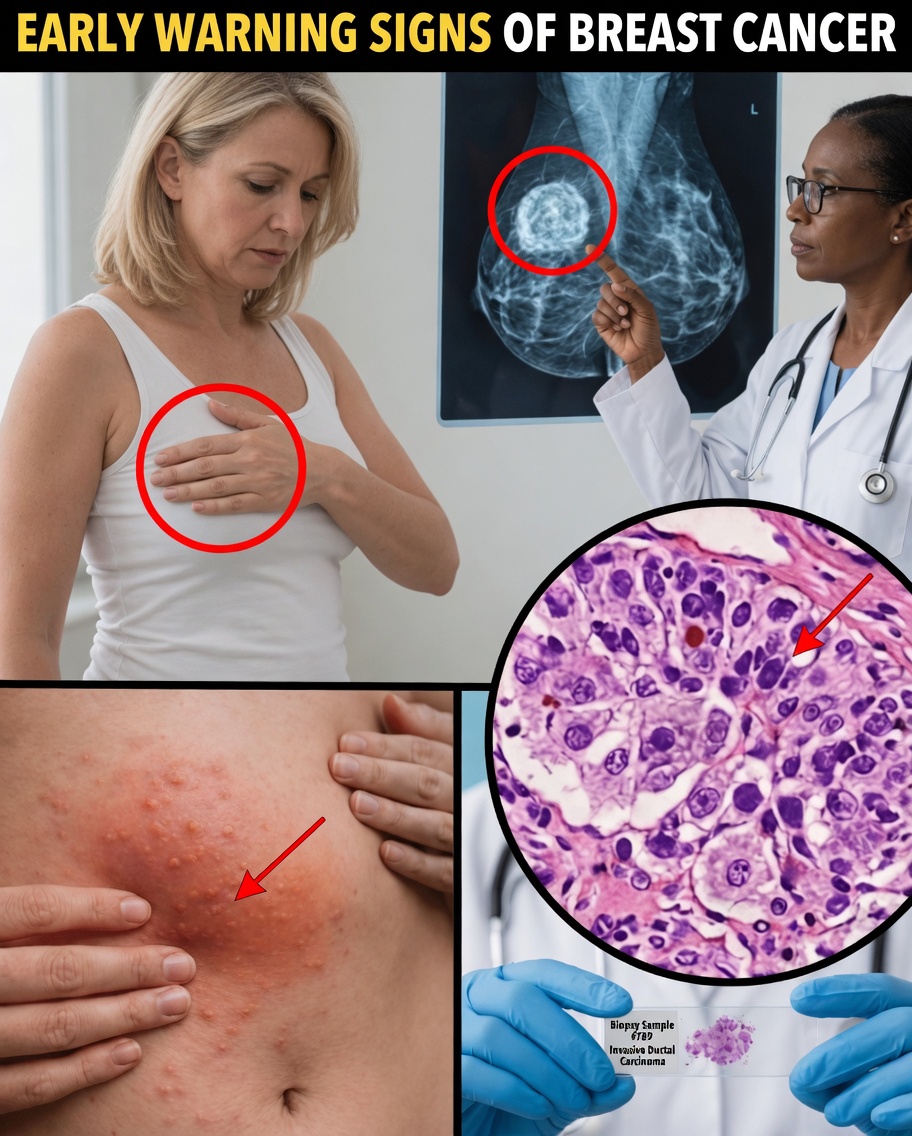
A new lump in the breast or armpit
- It may feel hard or irregular, and it can be painless or tender. Not every lump is cancer, but any new lump should be checked.
-
Changes in breast size or shape
- One breast may suddenly look larger, heavier, or more droopy without a clear reason.
-
Skin texture changes (orange-peel appearance)
- Dimpling, puckering, redness, wrinkling, or uneven texture can signal an underlying issue.
-
Nipple changes or unusual discharge
- A nipple that turns inward, flattens, or produces unexpected discharge—especially bloody discharge—should be evaluated.
-
Swelling in the breast or armpit
- You might notice thickening or swelling even without a distinct lump.
-
Persistent breast pain in one area
- Breast pain is not the most common sign, but localized, ongoing pain deserves attention.
-
Red, flaky, or peeling skin
- Irritation that resembles eczema and does not improve with typical treatments may require medical assessment.
-
Nipple retraction
- When the nipple begins to pull inward and this is new for you.
-
Ongoing itchiness
- Persistent itching, especially around the nipple, can be linked to rare conditions and should not be ignored.
-
More visible veins or surface changes
- A sudden appearance of prominent veins or unusual surface changes may indicate something abnormal.
How to Do a Monthly Breast Self-Exam
A simple habit you can start today is a monthly breast self-exam. It’s not a replacement for screening, but it can help you notice changes earlier.
In the shower
- Using your fingertips, move in small circles across the entire breast and into the armpit area.
In front of a mirror
- Look with your arms relaxed at your sides, then raised overhead.
- Watch for changes in shape, swelling, dimpling, or nipple position.
Lying down
- Place a pillow under one shoulder.
- Use circular motions to examine the breast thoroughly.
Best timing:
- If you menstruate, do the exam a few days after your period ends.
- If you’re postmenopausal, choose the same day each month for consistency.
Why Regular Screening Exams Still Matter
While self-checks are helpful for awareness, mammography remains one of the most effective tools for early breast cancer detection.
Many women should consider regular screening starting around age 45, or earlier depending on family history and personal risk factors. Screening tests can detect changes years before they are noticeable by touch.
Conclusion: Knowledge Is Protection
Finding breast cancer early isn’t about living in fear—it’s about caring for yourself with clarity and responsibility.
The “secret” is simple: consistency. People who monitor their breasts routinely and keep up with recommended screening have a much better chance of catching problems early.
If something doesn’t look or feel right, don’t brush it off. Seeking medical guidance can make a major difference for both peace of mind and long-term health.
Frequently Asked Questions
-
At what age should I start paying attention to breast cancer signs?
Risk increases with age—especially after 40—but breast cancer can occur at any stage of life. -
Can men get breast cancer too?
Yes. It’s uncommon, but it does happen. The warning signs are similar and should be evaluated. -
Does finding a lump mean it’s breast cancer?
Not necessarily. Most lumps are benign, but every new lump should be assessed by a healthcare professional.
Disclaimer: This content is for informational purposes only and does not replace medical advice. Always consult a qualified healthcare professional for proper evaluation and guidance.