Fatigue, Dizziness, Joint Pain… It Might Not Be “Just Stress”
Waking up in your 40s or 50s and feeling like your body is suddenly “off” is more common than many women realize. Maybe your heart races during a sudden wave of heat, exhaustion shows up without a clear reason, or you notice strange sensations that are hard to put into words. It’s easy to blame stress, aging, or simply a bad day.
But sometimes your body is signaling something more specific.
In many cases, these shifts are linked to hormonal changes during perimenopause or early menopause. As estrogen and progesterone begin to fluctuate—and gradually decline—your entire body can respond. And it doesn’t always look like the classic hot flashes or night sweats. Some symptoms are unexpected and often overlooked, which is why they can feel confusing.
The encouraging part: recognizing these signs earlier can help you take action sooner and start feeling like yourself again.
What Are Perimenopause and Early Menopause?
Perimenopause is the transition phase leading up to menopause. It often begins around the early-to-mid 40s, though some women notice changes even earlier.
Menopause is confirmed after 12 consecutive months without a period, and it typically occurs around age 51.
During this transition, estrogen levels may rise and fall unpredictably before decreasing more consistently. Because estrogen influences multiple systems—such as the brain, skin, eyes, joints, and nervous system—hormonal shifts can create a wide range of symptoms.
Research suggests that up to 80% of women experience noticeable symptoms during this stage, yet many don’t immediately connect them to hormonal changes.
10 Less-Known Signs of Perimenopause and Early Menopause
Hot flashes get most of the attention, but subtler symptoms can also disrupt daily life. Here are ten that are frequently missed.
-
Burning mouth sensation or a metallic taste
If coffee suddenly tastes “off,” or you notice a lingering metallic taste or burning feeling, it may be tied to lower estrogen levels affecting oral tissues and saliva production. -
Dry, irritated eyes
Burning, itching, or light sensitivity can happen as tear production decreases. Many women develop dry eye symptoms during this phase. -
Voice changes or recurring hoarseness
Your voice may feel weaker, raspier, or tire more quickly. Estrogen helps maintain hydration in the vocal cords, so changes can affect vocal quality. -
Ringing in the ears (tinnitus)
A persistent buzzing or whistling sound can appear unexpectedly. Hormonal shifts may influence auditory nerves and inner-ear balance. -
Dizziness or vertigo
Feeling like the room spins when you stand up or move your head can be linked to hormonal effects on circulation and the vestibular (balance) system. -
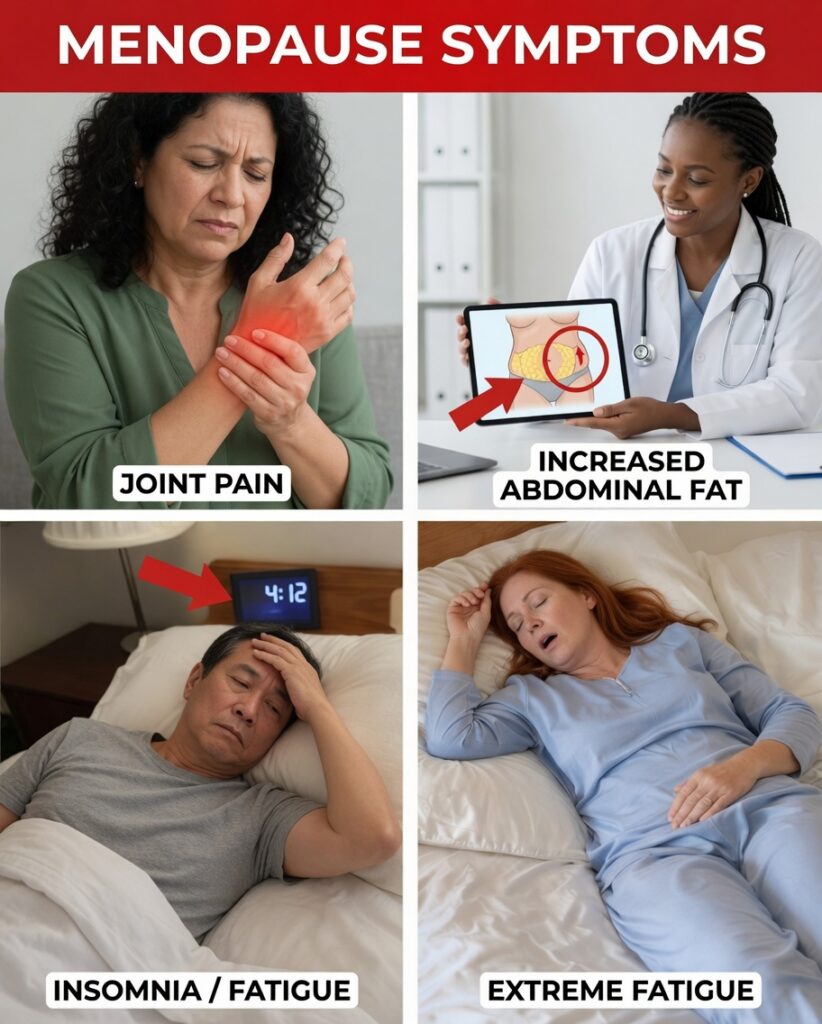
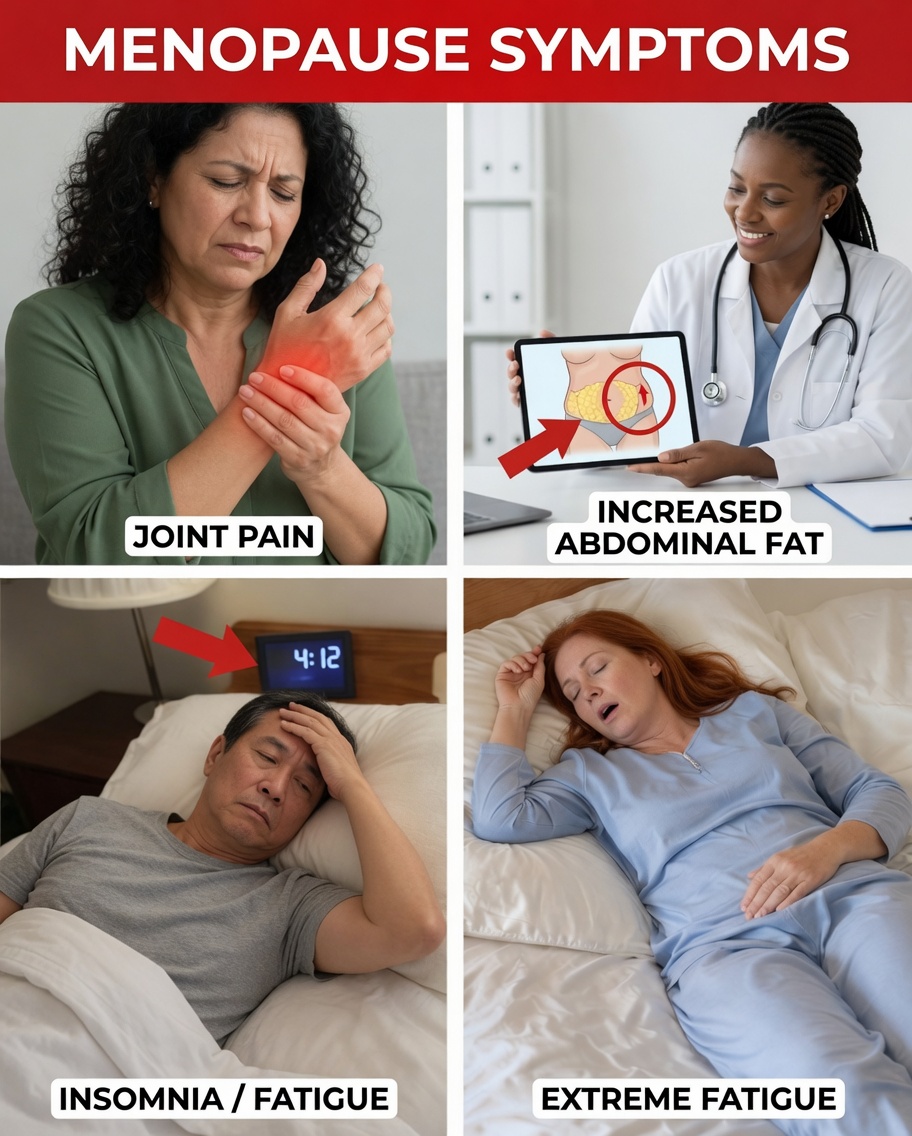
Joint pain and stiffness
Knees, shoulders, fingers, and hips may ache or feel rigid. Declining estrogen can increase inflammation and may impact cartilage health. -
Tingling or “electric shock” sensations
Brief tingles or zap-like feelings in the arms or legs can occur, often connected to hormonal impacts on the nervous system. -
Brain fog and memory slips
Trouble focusing, forgetting names, or losing track of tasks is common. Estrogen plays an important role in cognitive function and mental clarity. -
Changes in body odor
Some women notice stronger or different-smelling sweat. Hormones can influence sweat glands and how the body regulates temperature and scent. -
Digestive changes
Bloating, slower digestion, or irregular bowel habits may show up as metabolism and gut bacteria shift during this hormonal transition.
What You Can Do Starting Today
Small, consistent lifestyle changes can ease multiple symptoms at once. Consider focusing on the basics first:
- Track your patterns: Write down symptoms and possible triggers like caffeine, alcohol, stress, or poor sleep.
- Protect your sleep: Keep a steady schedule and limit screens before bed.
- Move every day: Walking, yoga, and swimming can support joints, mood, and energy.
- Eat for hormone support: Choose a balanced diet with omega-3s, magnesium, and fiber-rich foods.
- Stay well-hydrated: Drinking enough water can reduce several types of discomfort.
Conclusion
The lesser-known symptoms of perimenopause and early menopause can be unsettling—especially when they don’t match what you expected. But they’re often far more common than people think.
Understanding what’s happening inside your body is the first step toward restoring balance and quality of life. With solid information, daily self-care, and professional support when needed, this phase can feel more manageable—and far less mysterious.
Your body is changing. That doesn’t mean you’re losing control—it means learning how to listen in a new way.